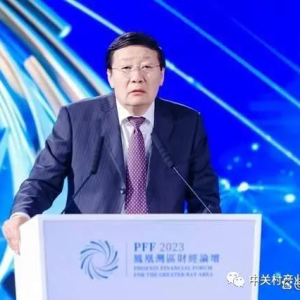
中国债务危机的风险,主要是房地产需求不足,一些房地产商流动性困难,甚至出现债务违约,地方政府隐性债务需要逐步化解。未来一年,将是防范金融危机的关键一年,我的总体看法是谨慎乐观的。同时也应看到,既然是危机总有不可预测的一面,而且都有全球外溢性,这需要各国通力合作,防范发生危机。
——楼继伟
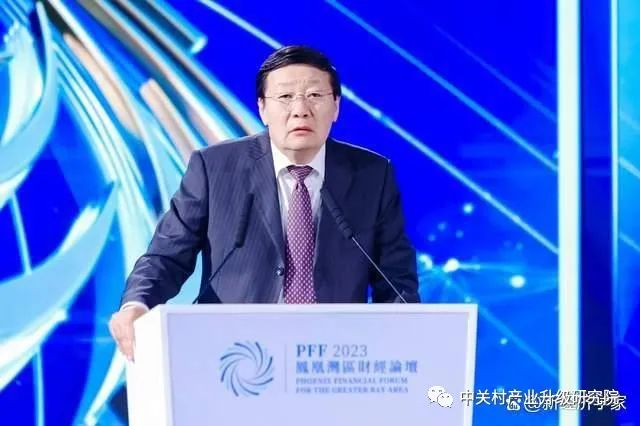
未来一年,是防范金融危机的关键一年
楼继伟 | 文
受一系列负面因素制约,目前全球经济正处于弱复苏状态。这些制约因素主要包括五个方面:
第一,从五年前开始,逆全球化思潮泛滥,民粹主义、民族主义、保护主义在全球兴起。
全球产业链供应链正在重构,不再按照比较效益原则配置,这损失效率、不利于经济复苏。
第二,世纪疫情爆发对各国经济都从供给和需求两端造成打压。虽然新冠疫情已经不再作为国际卫生事件,但三年产生的疤痕效应是严重的。
第三,俄乌冲突爆发到现在已经超过一年半,造成全球能源和粮食供应紧张,价格高企,对全球通货膨胀起到了推动作用。目前能源价格逐步回落,但核心通胀率回归到正常,需要一个过程。
第四,从2020 年开始欧美各国都采取了史无前例的扩张性财政货币政策,避免了经济衰退。但通货膨胀快速攀升。2022 年3 月以来,美联储和欧央行相继快速加息,通货膨胀率逐步回落,但也延缓了经济复苏的过程。
第五,当今世界,中美关系是最重要的双边关系。比较长的时期,中美是竞争合作关系。五年前中美关系出现了转折性变化,从竞争合作转为竞争对抗,对全球经济复苏产生不利影响。最近中美成立经济和金融两个工作组,希望能建立起有效的沟通机制。 CXO UNION-CXO联盟(cxounion.cn)
以上提到这些负面因素,有些属于长期结构性的,需要长周期化解,而经济复苏主要依靠逆周期中短期调节政策。近一年半以来,主要发达国家通过消减财政政策扩张力度,收紧货币政策,在控制高通胀和防止经济衰退之问,进行两难选择。目前己产生了一定的的效果。通胀已经开始下降,经济并未陷入衰退,但欧洲因结构性弱点,陷入衰退的可能性相对大一些。
中国的经济情況同发达国家不同。在疫情期问,中国没有采取发达国家那样激进的财政政策,货币政策扩张的力度也远小于发达国家。今年经济处于恢复性阶段,上半年经济增长率为 5.5%。但也面临新的困难挑战,主要是国内需求不足,一些企业经营困难,重点领域风险隐患较多,外部环境复杂严峻,特别是房地产投资和销售不足,地方隐性债务需要逐步消化。 CXO UNION-CXO联盟(cxounion.cn)
二季度经济恢复不及预期, 7月、8月宏观经济出现边际改善。目前已采取一些措施,例如,加大对房地产企业流动性支持,降低购房者利息负担,地方隐性债务由省级统一化解,国家分配一定数量的置换债额度给予支持,等等。这些问题是一定时间的积累,解决问题还需要一个过程。
总之,我对全球经济复苏的前景持谨慎乐观的态度。
全球通胀、债务危机会否引发新一轮金融危机?对于这一主题我分两个方面分析。一是金融监管框架的有效性。二是高通胀对金融危机的影响。
一、相对稳定的金融监管框架已经建立
金融监管体系的改进通常由危机触发,以防范类似的系统性风险再度爆发。但经济金融生态不断演进,难免产生新的危机,推动金融监管体系进一步改进。这是一个循环演进不断优化的过程。我重点分析中美两国的情況。
美国长期奉行金融自由主义,对加强金融监管很难形成共识。本世纪初,商业银行将高风险次级贷款证券化,而且未做任何风险留存流入金融市场,叠加各种衍生工具加杠杆,最终导致 2008 年金融危机。同时系统性危机也促成共识,经过一年多时间的多轮妥协,多德-弗兰克法案得以通过,为保护纳税人和消费者利益,防止金融危机再次发生,建立起监管架构。 CXO UNION-CXO联盟(cxounion.cn)
中国与美国不同,是以间接金融为主,金融资产集中于商业银行,但长期以来对利率进行管制,对资本市场监管薄弱。2013 年后,银行为了获得高利润,通过各种办法将资产和风险出表,催生出各种类型的“影子银行”,实为“银行的影子”,推出的金融资产主要是“高息刚兑” 产品。房地产价格高企和地方隐性债务扩大有更为深刻的原因,但这些“高息刚兑”产品也起到了推波助澜的作用。2015 年底中央陆续提出经济去杠杆、防范和化解金融风险,金融回归本源为实体经济服务,要守住不发生系统性金融危机的底线。在此之后,2018 年资产管理新规正式实施。这是多个监管部门共同拟定的监管框架,解决了以往监管不协调,出现监管套利问题。新规要求银行的资产必须撤出理财资产,银行设立的资产管理部门必须子公司化,同商业银行机构隔离、风险隔离。理财资产必须净值化,不得新发行“高息刚兑”产品。还规定了三年的过渡期,防止在化解风险时产生系统性风险。
今年5 月,国家金融监督管理总局正式成立,统一负责除证券业之外的金融业监管,由于整合了各监管机构的职能和人员,监管框架的统一性和监管能力都获得了增强。在完善金融监管框架的同时,还扩大了金融业的改革开放,已解除了对商业银行利率的管制,改革股票市场原有的上市审批制度,在加强信息披露的基础上,实行注册制。可以说中国相对稳定的金融监管框架已经建立。 CXO UNION-CXO联盟(cxounion.cn)
二、高通胀对金融危机的影响
目前世界各国都在收紧货币政策抑制高通胀,很可能触发金融危机风险。典型的是硅谷银行破产事件。硅谷银行在资产端主要是长久期证券,而负债端主要是短期存款。美联储连续加息,致使证券价格大幅下跌,硅谷银行产生大量浮亏。消息一经宣布,24 小时之内形成挤兑,硅谷银行宣布破产,被联邦存款保险公司接管,并对所有存款加以保护,阻断了对中小银行传染的链条。这一典型事件有如下几点启示:一是,抑制高通胀特别是快速加息,引发资产价格发生急剧变化,容易触发金融风险。二是,数字经济、数字社会使风险传播的速度是以往难以想象的。三是,政府部门必须快速介入,防止金融风险事件转变为金融危机。
发达国家为抑制高通胀,普遍采取了快速加息的政策。这会引导资金快速从脆弱国家流出,债务危机从而产生。但这些国家经济规模小,全球外部性低,不大会引发全球金融危机。美国债务危机是另外一个极端,美债违约将会严重打压美国经济,还很可能引发全球金融危机。虽然通过政治妥协提高了国债上限,没有发生美债违约,估计类似的博弈还会发生。 CXO UNION-CXO联盟(cxounion.cn)
中国也有发生债务危机的风险。主要是房地产需求不足,一些房地产商流动性困难,甚至出现债务违约,地方政府隐性债务需要逐步化解。如前所述,已经采取了一些措施,可以看到效果正在逐步显现。相信还会进一步采取措施,而且大型商业银行资产负债表基本健康。无论如何,消化债务风险需要有一个周期,但不会发生全局性债务危机。
未来一年,将是防范金融危机的关键一年,我的总体看法是谨慎乐观的。同时也应看到,既然是危机总有不可预测的一面,而且都有全球外溢性,这需要各国通力合作,防范发生危机。

翻译:
Lou Jiwei: Overall thinking on the economic situation in 2024
The main risks of China’s debt crisis are insufficient demand for real estate, liquidity difficulties of some real estate companies, and even debt defaults. The hidden debts of local governments need to be gradually resolved. The year ahead will be crucial in preventing a financial crisis, and my overall view is cautiously optimistic. At the same time, it should be noted that since crises always have an unpredictable side and a global spillover, all countries need to work together to prevent crises.
— Lou Jiwei
The coming year will be crucial for preventing a financial crisis
By Lou Jiwei |
Constrained by a series of negative factors, the global economy is currently in a weak recovery state. These constraints mainly include five aspects: CXO UNION-CXO联盟(cxounion.cn)
First, since five years ago, anti-globalization has been rampant, and populism, nationalism and protectionism have been on the rise around the world.
Global industrial and supply chains are being restructured and are no longer allocated according to the principle of comparative benefits, which loses efficiency and is not conducive to economic recovery.
Second, the outbreak of epidemics in the 21st century has exerted pressure on the economies of all countries from both supply and demand. Although the COVID-19 pandemic has ceased to be an international health event, the scarring effect of three years is severe.
Third, it has been more than a year and a half since the outbreak of the conflict between Russia and Ukraine, which has caused global energy and food supply to be strained and prices to be high, which has played a role in promoting global inflation. At present, energy prices are gradually falling, but core inflation will return to normal, and it will take a process.
Fourth, since 2020, both European and American countries have adopted unprecedented expansionary fiscal and monetary policies to avoid economic recession. But inflation is rising fast. Since March 2022, the Federal Reserve and the European Central Bank have successively raised interest rates rapidly, and the inflation rate has gradually fallen, but it has also delayed the process of economic recovery.
Fifth, the China-Us relationship is the most important bilateral relationship in today’s world. For a long time, the relationship between China and the United States was one of competition and cooperation. Five years ago, China-Us relations turned a turning point, from competitive cooperation to competitive confrontation, which adversely affected global economic recovery. Recently, China and the US have set up two economic and financial working groups, hoping to establish an effective communication mechanism.
Some of these negative factors mentioned above are long-term structural and need to be resolved in a long-term cycle, while economic recovery mainly relies on counter-cyclical short-term adjustment policies. For nearly a year and a half, major developed countries have been choosing between controlling high inflation and preventing economic recession by reducing the expansion of fiscal policy and tightening monetary policy. At present, it has produced a certain effect. Inflation has started to fall and the economy is not in recession, but structural weaknesses make it more likely in Europe.
China’s economic situation differs from that of developed countries. During the epidemic period, China did not adopt as aggressive a fiscal policy as developed countries, and the intensity of monetary policy expansion was much smaller than that of developed countries. The economy is in a recovery stage this year, with a growth rate of 5.5 percent in the first half of the year. However, we also face new difficulties and challenges, mainly due to insufficient domestic demand, difficulties in the operation of some enterprises, many hidden risks in key areas, a complex and severe external environment, especially insufficient real estate investment and sales, and hidden local debts that need to be gradually digested.
The economic recovery in the second quarter was less than expected, and the macro economy showed marginal improvement in July and August. At present, some measures have been taken, such as increasing liquidity support for real estate enterprises, reducing the interest burden of home buyers, local hidden debt is resolved by the provincial level, and the state allocates a certain number of replacement debt lines to support, and so on. These problems are the accumulation of a certain period of time, and it takes a process to solve them. CXO UNION-CXO联盟(cxounion.cn)
All in all, I am cautiously optimistic about the prospects for a global economic recovery.
Will global inflation and debt crises trigger a new round of financial crisis? I divide this topic into two aspects. The first is the effectiveness of the financial regulatory framework. Second, the impact of high inflation on the financial crisis.
First, a relatively stable financial regulatory framework has been established
Improvements in financial regulatory systems are usually triggered by crises to prevent similar systemic risks from erupting again. However, as the economic and financial ecology continues to evolve, new crises will inevitably arise, and further improvement of the financial supervision system will be promoted. This is a process of circular evolution and continuous optimization. I will focus on China and the United States. CXO UNION-CXO联盟(cxounion.cn)
The United States has long pursued financial liberalism, and it is difficult to reach a consensus on strengthening financial regulation. At the beginning of this century, commercial banks securitized high-risk subprime loans and kept them in the financial market without any risk, superimposing various derivatives and leverage, which eventually led to the 2008 financial crisis. At the same time, the systemic crisis also produced consensus, and after more than a year of multiple rounds of compromise, the Dodd-Frank Act was passed, creating a regulatory framework to protect taxpayers and consumers and prevent financial crises from happening again.
Unlike the United States, China is dominated by indirect finance and its financial assets are concentrated in commercial banks, but it has long controlled interest rates and has weak supervision over the capital market. After 2013, in order to obtain high profits, banks put assets and risks off the table through various means, giving birth to various types of “shadow banking”, which is actually the “shadow of the bank”, and the financial assets launched are mainly “high-interest just-changed” products. High property prices and the expansion of hidden local debt have deeper causes, but these “high interest rate cash” products have also played a role. At the end of 2015, the central government successively proposed economic deleveraging, preventing and resolving financial risks, and returning finance to its source to serve the real economy, so as to hold the bottom line of no systemic financial crisis. After this, the new asset management regulations were formally implemented in 2018. This is a regulatory framework jointly formulated by a number of regulatory departments, which solves the problem of regulatory incoordination and regulatory arbitrage in the past. The new rules require that the assets of banks must be withdrawn from wealth management assets, and the asset management departments set up by banks must be subsidiaries, isolated from commercial banking institutions and isolated from risks. Wealth management assets must be net-worth, and no new “high-interest just-converted” products may be issued. It also provides for a three-year transition period to prevent systemic risks from being created as risks are resolved. CXO UNION-CXO联盟(cxounion.cn)
In May this year, the State Financial Supervision Administration was formally established to unify the supervision of the financial industry, except the securities industry, and due to the integration of the functions and personnel of various regulatory agencies, the unity of the regulatory framework and supervision capacity have been enhanced. While improving the financial regulatory framework, it has also expanded the reform and opening up of the financial sector, lifted the control over the interest rates of commercial banks, reformed the original approval system for listing in the stock market, and introduced a registration system on the basis of enhanced information disclosure. It can be said that China’s relatively stable financial regulatory framework has been established.
Second, the impact of high inflation on the financial crisis
At present, countries around the world are tightening monetary policy to curb high inflation, which may trigger the risk of financial crisis. Typical is the Silicon Valley bank bust. The assets of Silicon Valley Bank are mainly long-term securities, and the liabilities are mainly short-term deposits. The Fed continued to raise interest rates, resulting in a sharp decline in stock prices, Silicon Valley banks have a lot of floating losses. Within 24 hours of the announcement, there was a run, Silicon Valley Bank declared bankruptcy, was taken over by the Federal Deposit Insurance Corporation, and all deposits were protected, breaking the chain of contagion to small and medium-sized banks. This typical event has the following implications: First, curbing high inflation, especially rapid interest rate hikes, will trigger sharp changes in asset prices, which will easily trigger financial risks. Second, the digital economy and digital society have made the speed of risk transmission unimaginable in the past. Third, the government must step in quickly to prevent financial risk events from turning into financial crises.
In order to curb high inflation, developed countries have adopted rapid interest rate hikes. This leads to rapid outflows of capital from fragile countries, creating debt crises. But their small economies and low global externalities are unlikely to trigger a global financial crisis. The US debt crisis is at the other extreme, and a default on US debt would severely depress the US economy and likely trigger a global financial crisis. Although the debt ceiling was raised through a political compromise without a default, similar games are expected to play out again. CXO UNION-CXO联盟(cxounion.cn)
China is also at risk of a debt crisis. The main problem is the lack of real estate demand, some real estate companies have liquidity difficulties, and even debt defaults, and the hidden debt of local governments needs to be gradually resolved. As mentioned earlier, some measures have been taken and we can see that the effects are gradually showing. It is believed that further measures will be taken, and that the balance sheets of the large commercial banks are basically healthy. In any case, it will take a cycle to digest debt risk, but there will not be a general debt crisis.
The year ahead will be crucial in preventing a financial crisis, and my overall view is cautiously optimistic. At the same time, it should be noted that since crises always have an unpredictable side and a global spillover, all countries need to work together to prevent crises.
由CXO UNION-CXO联盟(cxounion.cn)转载而成,来源于中关村产业升级研究院;编辑/翻译:CXO UNIONCXO联盟小U。
如需加入CXO UNION(CXO联盟)高管社群,请联系社群小伙伴哦~
免责声明: 本网站(http://www.cxounion.cn/)内容主要来自原创、合作媒体供稿和第三方投稿,凡在本网站出现的信息,均仅供参考。本网站将尽力确保所提供信息的准确性及可靠性,但不保证有关资料的准确性及可靠性,读者在使用前请进一步核实,并对任何自主决定的行为负责。本网站对有关资料所引致的错误、不确或遗漏,概不负任何法律责任。
本网站刊载的所有内容(包括但不仅限文字、图片、LOGO、音频、视频、软件、程序等) 版权归原作者所有。任何单位或个人认为本网站中的内容可能涉嫌侵犯其知识产权或存在不实内容时,请及时通知本站,予以删除。
如需加入CXO UNION(CXO联盟)高管社群,请联系社群小伙伴哦~

免责声明: 本网站(http://www.cxounion.cn/)内容主要来自原创、合作媒体供稿和第三方投稿,凡在本网站出现的信息,均仅供参考。本网站将尽力确保所提供信息的准确性及可靠性,但不保证有关资料的准确性及可靠性,读者在使用前请进一步核实,并对任何自主决定的行为负责。本网站对有关资料所引致的错误、不确或遗漏,概不负任何法律责任。
本网站刊载的所有内容(包括但不仅限文字、图片、LOGO、音频、视频、软件、程序等) 版权归原作者所有。任何单位或个人认为本网站中的内容可能涉嫌侵犯其知识产权或存在不实内容时,请及时通知本站,予以删除。
Search
Popular Posts
-

2024数字化灯塔案例评选申报开启!
“2024数字化灯塔案例评选”于3月正式启动,诚挚欢迎业界同仁自荐和推荐,一起推动产业数字化进程,助力赋能企业…
-

2024 X-Award星盘奖申报通道已开启!
X-Award星盘奖是数字化转型服务、IT服务行业重要的商业奖项,旨在表彰行业里提供杰出数字化转型服务与IT服…
-

2024 N-Award星云奖申报通道已开启!
N-Award是数字化转型领域重要的商业奖项,旨在表彰那些以非凡的远见、超群的领导才能和卓越的成就来激励他人的…