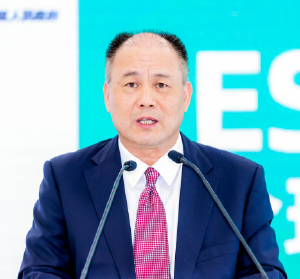
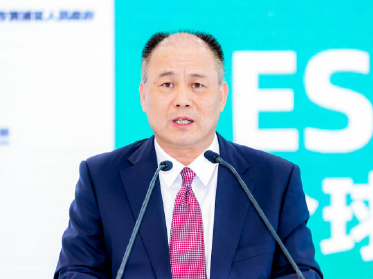
本文作者为兴业证券总裁。本文是作者在2024年3月2日举办的“促进绿色金融市场体系高质量发展的路径与对策”上的专题发言。(仅代表个人观点,不代表论坛立场)
【摘要】
尽管我国已经建立起多层次的绿色金融体系,但ESG投资在我国发展尚处早期,仍面临着诸多挑战,如绿色股票尚未形成统一标准、ESG评价体系和标准不完善等。针对这些问题,刘志辉提出几点建议:积极推进构建绿色证券体系,促进产业结构向绿色低碳转型,健全ESG投资生态引导机制,并呼吁资本市场在我国绿色金融体系发展过程中做出更大贡献。
一、证券公司对推动我国绿色金融发展的贡献
去年的中央金融工作会议明确将“绿色金融”作为建设金融强国的五篇大文章之一,作为证券行业的一线工作者,刘志辉在会议中同各位专家共同探讨了促进绿色金融高质量发展的对策建议,并分享了从业实践与思考。
绿色金融的一个重要内涵就是促进能源从资源依赖型向技术依赖型转变,这一转变对资本市场促进资本形成、促进技术升级提出了更高要求。作为连接资本市场与实体经济的桥梁和纽带,证券公司近年来深耕绿色金融,通过股权、债权融资,为促进实体经济的绿色发展发挥了积极作用。截至2023年末,证券公司作为绿色公司债券主承销商或绿色资产证券化产品管理人全年共承销(或管理)622只债券(或产品),合计金额7567.89亿元;共助力503家环保及电力设备企业在A股市场完成首发上市融资,首发合计募集资金4218.04亿元,再融资合计募集资金11518.31亿元。证券公司作为绿色金融的重要组织者和供应者,在推动资本流向绿色低碳领域发挥了巨大作用。
二、我国绿色证券金融体系现存的三大问题
现阶段在绿色融资及绿色投资领域,仍存在一些需要优化的问题,主要包括:
1. 我国在绿色股票方面尚未形成统一标准
当前我国各类绿色融资的标准仍存在较大差异,总体上看,绿色债券标准已较为成熟,而绿色股票的标准还未成型。例如绿色信贷融资领域,原中国银监会早在2013年就发布了《绿色信贷统计制度》;绿色债权融资领域,中国人民银行等部门也于2015年即发布了《绿色债券支持项目目录(2015)》,并于2021年进行了更新修订;而涉及绿色股权融资领域的相关标准却一直没有明确,致使相关业务无法有效统计,且相应配套政策也受限于激励范围的不清晰,很难形成有效的配套支持。 CXO UNION-CXO联盟(cxounion.cn)
2. 证券行业绿色金融政策支持力度仍显不足
银行业已对绿色信贷出台了较为全面完整的配套政策,对全国银行业存款类金融机构开展绿色信贷业绩评价,并明确将绿色信贷业绩评价结果纳入银行业存款类金融机构宏观审慎考核中,评价结果不仅直接影响各参评银行的法定存款准备金利率,甚至会影响参评银行在公开市场的交易商资格,这些措施在绿色信贷政策领域形成了较为明显的激励及约束效果。然而在证券业主导的绿色直接融资领域,较为有效的政策激励或约束指标,仅有中国证券业协会《证券公司履行社会责任专项评价》中的绿色债券(含ABS)一项,与银行业相比,证券业绿色金融支持政策的力度需进一步加强。
在业务层面,也需要尽快推动转型融资的发展,实现对绿色融资的有效衔接。现有的绿色融资体系更侧重于为新能源以及环保等碳排放量较低的绿色企业和项目提供资金支持,对煤电、石化、化工等传统的高碳行业,绿色金融目录中容纳的转型类经济活动并不充分;且在当前金融体系下,即使某些高碳企业有转型意愿和可行的转型计划,也很难获得必要的资金支持。以转型债券为例,截至2023年末,国内全年共计发行54只,发行规模仅为422.23亿元,发行数量同比减少16.92%,发行规模同比减少38.74%,明显难以满足转型融资所需的资金缺口,且相应的转型融资工具也有待丰富。
3. ESG投资需要“去芜存菁”
在双碳政策和我国经济高质量发展的趋势推动下,越来越多的市场参与者践行ESG投资,中国ESG产品规模和数量实现快速增长。但中国ESG发展仍处于起步阶段,从市场实际情况来看还存在一些不足:
一是ESG产品数量多,但“成色”不佳。目前国内市场ESG主题基金规模发展迅猛,但多为“概念型”的基金产品,资产配置的核心策略并不以ESG为主,通常只是用ESG评级对股票池部分标的进行负面剔除或者采用ESG的某个维度、议题进行筛选形成的主题型基金,ESG策略丰富度不够;ESG因素对标的权重的贡献度也不高,整体流于形式。且由于目前ESG信息披露规范不统一、ESG数据质量和评级标准较模糊等原因,容易出现实际投资行为与策略不符但仍贴上ESG标签;重仓股票与基金主题不符;对投资者夸大产品环境效益、可持续发展及抗风险能力等行为。
二是国内ESG评级缺乏投资指导性。由于国内ESG评级并未纳入监管,国家也未出台ESG评级体系相关的统一指南和程序,以至于国内ESG评级机构数量虽多,但均按照各自的逻辑开展评级,“自说自话”,导致结果差异性较大,评级客观性和科学性难以保证。目前市场上ESG评级机构有高校、金融机构、数据公司、指数公司、企业等,但整体难有明显突出的行业优势和权威性。在投资应用中,评级机构给出的ESG评级难以合理地反映ESG为企业所带来风险与机遇,更难在ESG与企业财务表现之间建立有机的联系。同时,评级的认可度低也难以发挥其本应具备的促进企业改善自身ESG治理水平的作用,不利于形成投资端引导融资端的良性生态。 CXO UNION-CXO联盟(cxounion.cn)
三是国际市场影响力有待提升。ESG已成为全球竞争能力的重要体现,但由于国内在该领域起步较晚、信息披露基础薄弱,在国际ESG领域的领导力、话语权尚未建立。目前,国外ESG评价体系已在国际上占主导地位,且因制度、文化等差异,国外评级机构难以根据中国的实际情况更加全面准确地衡量中国企业的ESG表现,最终的评级结果也呈现系统性偏低现象。国内ESG评级机构普遍遵循借鉴国际最佳实践和中国实际的有机结合,制定本土化的评级体系,但整体进度比较滞后,缺乏国际影响力,影响了中国企业海外ESG评价和估值水平。未来要着力打造中国自己的ESG评价体系,并将中国ESG评价标准国际化,而非过度强调将国际标准进行本土化。
三、对进一步建立完善绿色金融体系和ESG体系的四点建议
1. 积极推进构建绿色证券体系的四梁八柱
证监会已经着手推进《证券期货业绿色证券业务标准规划》的编制工作,该标准有鲜明的证券行业特点,涵盖了绿色债券、绿色股票、绿色投资、信息披露以及绿色证券的质量管理等方面,相比目前的标准,本套标准范围更大、更全面。今年,这个课题组就会正式启动,,兴业证券作为绿色发展委员会的主任委员,也将全力参与该项课题研究。我们相信,随着这套标准体系的出台,将极大提升证券行业绿色金融业务发展,引导社会资源投向绿色产业,支持实体经济绿色转型。
2. 积极推动证券行业促进产业结构向绿色低碳转型
作为资本市场的重要参与者,证券行业在促进产业结构绿色低碳转型方面应发挥更重要的作用。去年,在中国证券业协会的指导下,绿色发展委员会对《证券行业促进产业结构低碳转型》内容进行了专项研究,并形成有效成果。下一步,委员会将结合这些研究成果,重点推动行业监管部门在转型类债券投资总体原则指导框架下,进一步连同行业协会细化行业转型的标准跟路径,提升标准的引导性。同时,积极推动管理部门完善低碳转型的激励举措,包括贴息、资金奖励等激励政策的运用,以及将符合要求的绿色债券、转型债券纳入合格抵押品等。证券机构还可以碳市场为切入点,积极创新与环境效益挂钩的债券产品,同时帮助产业对接外部资源,畅通政府、券商、企业三方的交流互动,促进资源整合,有效地引导资金支持低碳转型。 CXO UNION-CXO联盟(cxounion.cn)
3. 积极推动证券行业绿色债券的提质扩量
自去年10月起,沪深北三大交易所开始正式负责企业债券的发行审核,证券行业在绿色债券业务方面承担更重要的职责。在提质方面,证券行业应更好履职尽责,联合第三方认证机构严格把控绿色债券的评估质量,防止“漂绿”行为(“以绿色项目为名义募集来的资金未被用于绿色项目;或将原本不符合绿色标准的项目提升为符合标准,进而以绿色项目为名筹集资金”。中国绿色金融发展报告.(2021))。证券公司要督导发行人按规定或约定用途使用募集资金,通过提升质量来增强绿色债券类产品的投资吸引力。在扩量方面,证券公司要积极推动地方政府发行专项债券用于绿色项目,积极开展绿色债券产品创新,包括绿色ABS,绿色REITs和类REITs产品创新。
4. 积极推动健全ESG投资生态引导机制
在证监会的指导下,三大交易所同时发布了《上市公司可持续发展报告指引(试行)征求意见稿》,该《指引》对A股上市公司发布ESG报告的框架、内容提出具体要求,具有里程碑意义。只有完整准确地披露ESG,ESG评价才有依据、投资才有可靠参考。在此建议监管部门后续应进一步规范ESG评价业务,可参考早期类基金评价业务的管理办法,将ESG公开评价业务纳入监管范围,着重培育一批有能力的专业机构,形成本土化、具有市场公信力的ESG上市公司评价体系,加强对投资资金引导的有效性,提升对国内外资本市场的影响力。 CXO UNION-CXO联盟(cxounion.cn)

翻译;
Liu Zhihui, president of Industrial Securities, says ESG investment needs to “remove the weeds and save the young”
The writer is president of Industrial Securities This is a keynote speech by the author at the “Pathways and Countermeasures to Promote the high-quality Development of Green Financial Market System” held on March 2, 2024. (This is my personal view and does not represent the position of the Forum)
【 Abstract 】
Although China has established a multi-level green financial system, ESG investment is still in the early stage of development in China and still faces many challenges, such as green stocks have not yet formed a unified standard, ESG evaluation system and standards are not perfect. In response to these problems, Liu Zhihui put forward several suggestions: actively promote the construction of green securities system, promote the transformation of industrial structure to green and low-carbon, improve the ESG investment ecological guidance mechanism, and call on the capital market to make greater contributions in the development of China’s green financial system. CXO UNION-CXO联盟(cxounion.cn)
First, the contribution of securities companies to promoting the development of green finance in China
Last year’s Central Financial Work Conference clearly identified “green finance” as one of the five major articles on building a strong financial country. As a front-line worker in the securities industry, Liu Zhihui discussed the countermeasures and suggestions to promote the high-quality development of green finance with experts at the meeting, and shared his practice and thinking.
An important connotation of green finance is to promote the transformation of energy from resource-dependent to technology-dependent, which puts forward higher requirements for the capital market to promote capital formation and technological upgrading. As a bridge and link between the capital market and the real economy, securities companies have been deeply cultivating green finance in recent years, and have played a positive role in promoting the green development of the real economy through equity and debt financing. By the end of 2023, the securities company, as the main underwriter of green corporate bonds or the manager of green asset securitization products, had underwritten (or managed) 622 bonds (or products) in the whole year, with a total amount of 756.789 billion yuan; A total of 503 environmental protection and power equipment enterprises completed initial listing financing in the A-share market, raising a total of 421.804 billion yuan in the initial listing and 1.151.831 billion yuan in the refinancing. As an important organizer and supplier of green finance, securities companies have played a huge role in promoting capital flow to green and low-carbon fields.
Second, there are three existing problems in China’s green securities financial system
At this stage, in the field of green financing and green investment, there are still some problems that need to be optimized, mainly including: CXO UNION-CXO联盟(cxounion.cn)
1. China has not yet formed a unified standard in terms of green stocks
At present, there are still great differences in the standards of various types of green financing in our country. On the whole, the standard of green bonds has been relatively mature, while the standard of green stocks has not yet formed. For example, in the field of green credit financing, the former China Banking Regulatory Commission issued the “Green Credit Statistics System” as early as 2013; In the field of green debt financing, the People’s Bank of China and other departments also issued the “Green Bond Support Project Catalog (2015)” in 2015, and updated it in 2021. However, the relevant standards involved in the field of green equity financing have not been clear, resulting in the relevant business can not be effectively counted, and the corresponding supporting policies are also limited by the unclear scope of incentives, it is difficult to form effective supporting support.
2. The policy support for green finance in the securities industry is still insufficient
The banking industry has issued a relatively comprehensive and complete supporting policy on green credit, carried out green credit performance evaluation on the national banking deposit financial institutions, and clearly incorporated the results of green credit performance evaluation into the macro-prudential assessment of banking deposit financial institutions. The evaluation results not only directly affect the statutory deposit reserve interest rate of participating banks, but also directly affect the interest rate of participating banks. Even affect the participating banks in the open market dealer qualifications, these measures in the field of green credit policy has formed a relatively obvious incentive and constraint effect. However, in the field of green direct financing dominated by the securities industry, there is only one more effective policy incentive or constraint indicator, green bonds (including ABS) in the Special Evaluation of Securities Companies’ Performance of Social Responsibility of the Securities Association of China. Compared with the banking industry, the support policy for green finance in the securities industry needs to be further strengthened.
At the business level, it is also necessary to promote the development of transformation financing as soon as possible to achieve an effective connection to green financing. The existing green financing system is more focused on providing financial support for green enterprises and projects with low carbon emissions such as new energy and environmental protection. For traditional high-carbon industries such as coal power, petrochemical and chemical industries, the transformation economic activities included in the green finance catalog are not sufficient. And under the current financial system, even if some high-carbon enterprises have the willingness and feasible transformation plans, it is difficult to obtain the necessary financial support. Taking transformation bonds as an example, as of the end of 2023, a total of 54 were issued in China throughout the year, with an issue scale of only 42.223 billion yuan, a year-on-year decrease of 16.92% in the number of issues, and a year-on-year decrease of 38.74% in the scale of issuance, which is obviously difficult to meet the funding gap required for transformation financing, and the corresponding transformation financing tools also need to be abundant.
3. ESG investment needs to “separate the wheat from the chills”
Driven by the trend of dual-carbon policy and high-quality development of China’s economy, more and more market participants practice ESG investment, and the scale and quantity of China’s ESG products have achieved rapid growth. However, China’s ESG development is still in its infancy, and there are still some shortcomings from the actual market situation: CXO UNION-CXO联盟(cxounion.cn)
First, the number of ESG products is large, but the “color” is not good. At present, the scale of ESG theme funds in the domestic market is developing rapidly, but most of them are “conceptual” fund products. The core strategy of asset allocation does not focus on ESG, and themed funds usually only use ESG ratings to negatively exclude some targets of the stock pool or use certain dimensions and issues of ESG to screen, so the richness of ESG strategy is insufficient. The contribution degree of ESG factors to the weight of the target is not high, and the whole is just a formality. In addition, due to the inconsistency of current ESG information disclosure norms and the ambiguity of ESG data quality and rating standards, it is easy to attach ESG labels even though the actual investment behavior is inconsistent with the strategy. Heavy stock and fund theme is not consistent; Exaggerating the environmental benefits, sustainable development and anti-risk ability of products to investors.
Second, domestic ESG ratings lack investment guidance. As the domestic ESG rating is not regulated, and the country has not issued unified guidelines and procedures related to the ESG rating system, there are a large number of domestic ESG rating agencies, but they all carry out ratings according to their own logic, and “speak their own words”, resulting in large differences in results, and it is difficult to guarantee the objectivity and scientificity of ratings. At present, ESG rating agencies in the market include universities, financial institutions, data companies, index companies, enterprises, etc., but the overall industry is difficult to have obvious advantages and authority. In investment applications, it is difficult for ESG ratings given by rating agencies to reasonably reflect the risks and opportunities brought by ESG for enterprises, and it is more difficult to establish an organic relationship between ESG and corporate financial performance. At the same time, the low recognition of the rating is also difficult to play its role in promoting enterprises to improve their own ESG governance level, which is not conducive to the formation of a benign ecology on the investment side to guide the financing side.
Third, the international market influence needs to be improved. ESG has become an important embodiment of global competitiveness, but due to the late start in this field and the weak information disclosure foundation, the leadership and discourse power in the international ESG field have not been established. At present, foreign ESG evaluation systems have become dominant in the world. Due to differences in system and culture, it is difficult for foreign rating agencies to measure the ESG performance of Chinese enterprises more comprehensively and accurately according to the actual situation in China, and the final rating results are also systematically low. Domestic ESG rating agencies generally follow the organic combination of learning from international best practices and China’s actual conditions to develop a localized rating system, but the overall progress is lagging behind and lack of international influence, which affects the level of overseas ESG evaluation and valuation of Chinese enterprises. In the future, we should focus on building China’s own ESG evaluation system and internationalizing China’s ESG evaluation standards, rather than over-emphasizing the localization of international standards.
Third, four suggestions for further establishing and improving the green finance system and ESG system
1. Actively promote the construction of four beams and eight pillars of the green securities system
The China Securities Regulatory Commission has begun to promote the preparation of the “Green securities Business Standard Planning for the securities and futures Industry”, which has distinct characteristics of the securities industry, covering green bonds, green stocks, green investment, information disclosure and quality management of green securities, etc., compared with the current standard, this set of standards is larger and more comprehensive. This year, this research group will be officially launched, Industrial Securities as the chairman of the Green Development Committee, will also fully participate in the subject of research. We believe that with the introduction of this standard system, it will greatly enhance the development of green finance business in the securities industry, guide social resources to invest in green industries, and support the green transformation of the real economy.
2. Actively promote the securities industry to promote the transformation of industrial structure to green and low-carbon
As an important participant in the capital market, the securities industry should play a more important role in promoting the green and low-carbon transformation of the industrial structure. Last year, under the guidance of the Securities Association of China, the Green Development Committee conducted a special study on the content of the Securities Industry to promote the low-carbon transformation of Industrial structure, and formed effective results. In the next step, the committee will combine these research results and focus on promoting the industry regulatory authorities to further refine the standards and paths of industry transformation together with industry associations under the guidance of the overall principles of transformational bond investment, and improve the guidance of standards. At the same time, actively promote the management departments to improve the incentive measures for low-carbon transformation, including the use of incentive policies such as discount interest and financial incentives, and the inclusion of green bonds and transformation bonds that meet the requirements into qualified collateral. Securities institutions can also take the carbon market as the entry point, actively innovate bond products linked to environmental benefits, and at the same time help the industry to connect with external resources, smooth the communication and interaction between the government, securities brokerages and enterprises, promote resource integration, and effectively guide funds to support low-carbon transformation. CXO UNION-CXO联盟(cxounion.cn)
3. Actively promote the quality and volume of green bonds in the securities industry
Since October last year, the three major stock exchanges in Shanghai, Shenzhen and Northern China have been officially responsible for the issuance of corporate bonds, and the securities industry has assumed more important responsibilities in the green bond business. In terms of quality improvement, the securities industry should perform its duties better, cooperate with third-party certification bodies to strictly control the evaluation quality of green bonds, and prevent “green bleaching” behavior (” funds raised in the name of green projects are not used for green projects; Or raise funds in the name of a green project by elevating a project that does not meet green standards.” China Green Finance Development Report.(2021). Securities companies should supervise issuers to use the raised funds according to the regulations or agreed purposes, and enhance the investment attractiveness of green bond products by improving the quality. In terms of volume expansion, securities companies should actively promote local governments to issue special bonds for green projects, and actively carry out green bond product innovation, including green ABS, green REITs and REITs-like product innovation.
4. Actively promote and improve the ESG investment ecological guidance mechanism
Under the guidance of the China Securities Regulatory Commission, the three major exchanges simultaneously issued the “Guidelines for Sustainable Development Reports of Listed Companies (Trial) Draft for Comments”, which set out specific requirements for the framework and content of ESG reports issued by A-share listed companies, marking A milestone. Only when ESG is fully and accurately disclosed can ESG evaluation be based on a reliable reference for investment. It is suggested that the regulatory authorities should further standardize the ESG evaluation business in the future, refer to the management methods of early fund evaluation business, bring the ESG open evaluation business into the scope of supervision, focus on cultivating a group of competent professional institutions, form a localized evaluation system of ESG listed companies with market credibility, and strengthen the effectiveness of investment fund guidance. Enhance its influence on domestic and foreign capital markets.
本文由CXO UNION-CXO联盟(cxounion.cn)转载而成,来源于中国财富管理50人论坛;编辑/翻译:CXO UNIONCXO联盟小U。
如需加入CXO UNION(CXO联盟)高管社群,请联系社群小伙伴哦~
免责声明: 本网站(http://www.cxounion.cn/)内容主要来自原创、合作媒体供稿和第三方投稿,凡在本网站出现的信息,均仅供参考。本网站将尽力确保所提供信息的准确性及可靠性,但不保证有关资料的准确性及可靠性,读者在使用前请进一步核实,并对任何自主决定的行为负责。本网站对有关资料所引致的错误、不确或遗漏,概不负任何法律责任。
本网站刊载的所有内容(包括但不仅限文字、图片、LOGO、音频、视频、软件、程序等) 版权归原作者所有。任何单位或个人认为本网站中的内容可能涉嫌侵犯其知识产权或存在不实内容时,请及时通知本站,予以删除。
如需加入CXO UNION(CXO联盟)高管社群,请联系社群小伙伴哦~

免责声明: 本网站(http://www.cxounion.cn/)内容主要来自原创、合作媒体供稿和第三方投稿,凡在本网站出现的信息,均仅供参考。本网站将尽力确保所提供信息的准确性及可靠性,但不保证有关资料的准确性及可靠性,读者在使用前请进一步核实,并对任何自主决定的行为负责。本网站对有关资料所引致的错误、不确或遗漏,概不负任何法律责任。
本网站刊载的所有内容(包括但不仅限文字、图片、LOGO、音频、视频、软件、程序等) 版权归原作者所有。任何单位或个人认为本网站中的内容可能涉嫌侵犯其知识产权或存在不实内容时,请及时通知本站,予以删除。
Search
Popular Posts
-

2024数字化灯塔案例评选申报开启!
“2024数字化灯塔案例评选”于3月正式启动,诚挚欢迎业界同仁自荐和推荐,一起推动产业数字化进程,助力赋能企业…
-

2024 X-Award星盘奖申报通道已开启!
X-Award星盘奖是数字化转型服务、IT服务行业重要的商业奖项,旨在表彰行业里提供杰出数字化转型服务与IT服…
-

2024 N-Award星云奖申报通道已开启!
N-Award是数字化转型领域重要的商业奖项,旨在表彰那些以非凡的远见、超群的领导才能和卓越的成就来激励他人的…
