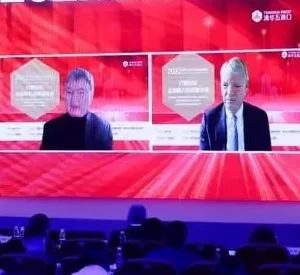
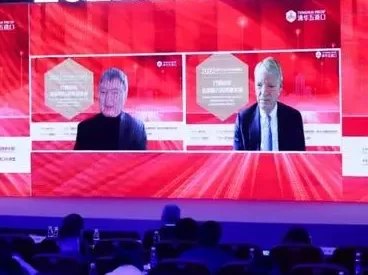
近日,在2024清华五道口全球金融论坛上,全球经济治理五十人论坛发起人,IMF原副总裁,中国人民银行原副行长朱民与2001年诺贝尔经济学奖获得者,斯坦福大学商学院Philip H. Knight教授及名誉院长迈克尔·斯宾塞进行了对话。全文整理如下。 CXO UNION-CXO联盟(cxounion.cn)
朱民:迈克尔·斯宾塞先生是2001年诺贝尔经济学奖获得者、斯坦福大学商学院Philip H. Knight 教授及名誉院长,他在发展委员会上非常受关注,他写了我们现在所使用的很多经济学理论教材。我非常高兴今天能够跟迈克尔开展高端对话,特别感谢您在那边很早的时候加入我们的对话,非常感谢迈克尔。
当然有很多关键的话题我们要讲,比如增长,我们要讲些关于未来的增长。在这之前我们回顾下历史,在过去十年之内我们有比较好的经济增长,这个强大的增长背后的主要动因是什么?
迈克尔·斯宾塞:非常感谢邀请我。如果我们回顾二战后的这段时期,刚开始有比较高的增长,投资额比较大。而且战后恢复的组织比较有效,所以能够改善经济发展,从战争的损害中恢复过来。
在过去30到40年中,世界经济高度增长来自于新兴经济体的增长,特别是中国经济的增长,这对全球的经济增长产生了直接的作用,非常大的影响。这个影响随着时间的流逝越来越大,因为这些新兴经济体的市场份额越来越大,它们从终端市场上升到高端市场,所以它们的市场经济也一直在发展,它们的经济增长更多是贡献到全球的经济增长上。
还有一个间接影响,即发达经济体的生产力增长到达某一个瓶颈,所以它们没有新兴经济体增长得那么快,即使是生产力比较缓慢的增长(发达经济体),还有一些供应端增长的限制,还有金融和货币政策的影响。新兴经济体在过去三四十年中对全球的经济增长带来很大的贡献,特别是新兴经济体生产力的发展也更快,非常迅速。
朱民:非常感谢您总结了这么长的历史时期,以这么精简的语言来表达。我们预测未来5年的经济增长是3.5%,是以PPP(购买力平价)来衡量的,世界银行使用的方式和它的预测不太一样。是怎样的改变导致了目前的低速增长期?
迈克尔·斯宾塞:有好几个原因交织在一起,比较复杂,把它分两部分来讲。未来5年增长的预测比较低,这种低预测比较精确。
首先,新兴经济体的效率之前比较强大,但是这样的效率慢慢衰减。导致这种情况的原因有好几个,虽然这些原因也都不是永久的。当新兴经济体增长,国内的需求也随之增长,这样一个模式之前在新兴经济体里发挥了很大作用,现在则并没有这么强大。 CXO UNION-CXO联盟(cxounion.cn)
第二,所有人都知道目前全球经济体遭受了很多冲击,来自气候变化、战争还有疫情,造成了供应端的限制,与此同时还有其他一些循环式的趋势有所增强,比如人口老龄化。全球75%到80%的经济体都受到了人口老龄化的影响,当然还有劳动力的短缺。在很多年之间我们也迎来比较严重的通货膨胀,而且货币政策并没有跟上脚步。
我目前描述的并不是中国的经济,中国的经济有所不同。但是发展中和发达的经济体目前面临这些问题是由通货膨胀带来,还有国内需求的不足,这些都造成了比较慢速的发展。但这不是永久的现象,有好几个原因。
我们看印度的发展,如果印度能够保持7%或更高的增长,这将是一个比较积极的趋势。但最重要的是,目前我们有一些非常先进的技术去扭转生产力增长不足的问题,在过去这十年的末期,我们看到了这一效应。另外一点,中国经济的一些问题也会得到解决,所以中国会再次成为可持续发展的重要来源。
简单总结一下:
目前增长面临很多问题,有一些政策并没有发挥其当时设计的作用。数字经济以及一些能源转型的技术在持续发展,还有生命科学也在不停进步,这也是一些好消息。
朱民:您讲得很好。增长速度在降低,新兴经济体面临国内需求不足问题,发达经济体的生产力不足,还有增长的高通胀。最重要的一点,您觉得这些因素不是永久的,而是短期的现象。但有些观点认为目前在一个长期周期的末端,在这个形势下造成目前的问题。但是您的看法更加积极,我们面临很多不利因素,但我们也看到过增长的强势反弹。所以您并不觉得这是一个长期趋势,您认为这是一个比较暂时的现象?
迈克尔·斯宾塞:我再换种说法讲讲。这是不是长期周期的末期,还有些循环的因素会发生很大的影响,比如人口的老龄化、生产力的下降,还有新兴经济体国内需求的不足,这些都是周期式的。
货币政策的制定方觉得多问题一开始来自于疫情所造成的混乱,但是后来发现并不是这样,转型期比所有人预期中更长,那些都是一些周期性的趋势,造成比较大的甚至永久性的全球经济的改变。我们目前发现,全球供应网络已经多样化,能够去响应短期地缘政治影响。很多国家把它的生产又转移回本国,还有各种各样其他的因素,看起来不像是短期周期。 CXO UNION-CXO联盟(cxounion.cn)
所以我经常会自问,这种情况是不是永久的?或者它会持续10年之久?我对这个问题的回应是,这个趋势可能结果上会有所改变,被技术所改变,这些技术会在生产力上带来很大改变。这是猜测,这不是确定的评论,但还是有可能性的。
朱民:要跟诺贝尔经济学奖来辩论很难,但是我尝试一下。技术的进展和对生产力的影响,您的一生都在研究这些情况。您说人口老龄化是周期性现象,并不是反全球化、逆全球化,只是全球化放缓是周期性问题,但是生产力降低并不一定是周期性的。您把很多希望放到了人工智能技术,还有其他相关的技术上,这些技术可以推进生产力发展,使我们最终解决人口老龄化和逆全球化的问题。
迈克尔·斯宾塞:您刚才说的是对的,您刚才讲的是一个非常好的总结。
我们处在比较困难和缓慢的经济增长期,我们处在一个高利率环境里,市场参与者会认为,当通货膨胀得以控制后,我们会回到低利率的环境里。如果这个是对的话,更低的利率,还有能源的转型,以及技术带来更加可持续的发展,还有主权债务规模目前高于全球GDP的100%,这个环境看起来并不是简单地利于投资的时代。
这可能是一幅比较负面的未来图景,而我要做的建议是,其实还有一些对抗性因素能够从根本上纠正这样的负面趋势。在所有大规模用工的行业里都存在劳动力短缺问题,我们有人口老龄化问题,在财政上也有问题,在投资方面也有问题,而且年轻的劳动人口要为老年人支付养老金来养活他们,靠什么可以去修正这样的问题呢?其实就是依靠能够让生产力得以改进的技术。 CXO UNION-CXO联盟(cxounion.cn)
朱民:您非常强调技术。首先,投资这些新的技术和新的基础设施,需要很大的投资,但是目前财政上赤字是较大的,而且存在不可持续的货币问题,我们从哪里获得资金去投资到新技术创新上,让生产力得以进步呢?
迈克尔·斯宾塞:这不是一蹴而就的事情,规划的财政空间是有的。我们可以做到一些事情去缓和目前的情况,但是短期是没有办法去增加生产力的,既使这10年的最后几年,既使有相对比较强大的技术改进或变革去让生产力增长,但是也不是一蹴而就的。目前我们要去关注的还是不利因素,未来几年还是要面临这些不利因素,这也是我认为IMF和它所做的预测还是比较精确的(原因)。
朱民:您重点讲了技术的进展和人工智能等。您可能有您自己的观察,您能不能给我们分享您的秘诀,您在看科技创新时,您用的什么指数?是怎样的衡量方式让您感觉技术在这10年的最后几年会有比较大的进展?
迈克尔·斯宾塞:两种方式考虑。科技界给我们提供非常强大的工具,这些工具经常是开源的,到处都有,而且成本在逐渐下降。我认为唯一问题是我们能否拿起这些工具去使用,让它给我们带来有益的增长,加快更加可持续的增长等。
目前科技上的颠覆和数字技术的生成式AI的改进,有非常清晰的特征,比如可以直接跟它对话,不需要对它进行任何技术上的培训,这是历史上第一次。它们有接近于人类的功能,比如我们可以直接跟它们谈中国的历史、意大利“文艺复兴”,也可以让它去写计算机代码,讲通货膨胀,什么都可以讲,这是比较大的让人觉得不可置信的技术增长,这需要巨大的算力。 CXO UNION-CXO联盟(cxounion.cn)
如果我们看经济,经济里面很多地方我们都能看到潜在生产力、能够增长的点,如果您去大街上和普通的民众去讨论,他们也都知道这些新的科技进展。给大家举个例子,比如30年前的医生需要自己写报告,而现在AI可以帮他们写初稿,这大概能节约他们80%的时间。我不知道这80%的时间他们用来干什么,可能打打高尔夫,或者学其他的理论知识。编码也是如此,人工智能可以先编一个初稿,这可以大大提高“码农”的生产力,同时可以在软件开发上做出贡献。
朱民:您的观点已经非常明确了。我想问,增长模型的资本部分是增加还是下降?但好像技术的比重是越来越大,您如果想来描述现在这样一种增长模式,今天的经济形势下您觉得您的这个增长模型是否要做出调整?
迈克尔·斯宾塞:这其实并不是新东西,有一些新的特点。在座的也知道,25年前我们看市场资本主义,比如说股票,那时候市值主要靠有形资产创造,现在大部分价值的创造来自于无形资产,我们这方面的衡量还不是特别好,比如像数据、软件还有各种能力。
从某种意义上来说,这是一个新的增长模式,投资会带来未来的增长,那么大部分的投资可能要投在无形资产上。因为时间有限,举个例子。在能源传输方面,需要有智能电网来实现更好的能源传输,包括太阳能、风能等。这样的电网靠人力来管理肯定是非常复杂的,我们需要非常有能力的人工智能来管理,这是一个例子。这是未来经济的基础设施,价值巨大,必须要建立这样的智能电网,但它不能算是硬件。
所以,我们必须学会如何对这种无形资产进行很好地评估,对我们的模型进行调整,让它更加透明。
朱民:虽然时间很短,但我们谈到了很多方面的话题,非常令人启发。我们在座每位都非常激动能够听到您的发言。大家和我一起对斯宾塞先生的精彩讲话鼓掌。 CXO UNION-CXO联盟(cxounion.cn)

翻译:
Zhu Min talks to Nobel Laureate Spencer: Reflections on Productivity and New Growth Models
Recently, at the 2024 Tsinghua Pudaokou Global Financial Forum, Zhu Min, initiator of the Global Economic Governance 50 Forum, former Deputy Managing Director of IMF and former Deputy Governor of the People’s Bank of China, had a dialogue with Professor Philip H. Knight and Dean Emeritus Michael Spencer, 2001 Nobel Prize winner in Economics at Stanford University Graduate School of Business. The full text is as follows. CXO UNION-CXO联盟(cxounion.cn)
Zhu Min: Michael Spencer is the 2001 Nobel Prize winner in economics and the Philip H. Knight Professor and Dean Emeritus of the Stanford Graduate School of Business. He is very much in the attention of the Development Committee, and he wrote many of the economic theory textbooks we use today. I’m very pleased to be able to have this high-level conversation with Michael today, and thank you especially for joining us there early on. Thank you very much, Michael.
Of course there are a lot of key topics that we’re going to talk about, like growth, and we’re going to talk a little bit about future growth. Before we go back to history, we have had relatively good economic growth in the past decade. What are the main drivers behind this strong growth?
Michael Spencer: Thank you so much for having me. If we look at the period after World War II, there was relatively high growth at the beginning, and investment was relatively high. And the organization of recovery after the war was more effective, so it was able to improve economic development and recover from the damage of the war. CXO UNION-CXO联盟(cxounion.cn)
In the past 30 to 40 years, the high growth of the world economy has come from the growth of emerging economies, especially the growth of the Chinese economy, which has had a direct effect on the global economic growth, a very big impact. This effect is growing over time because these emerging economies have a larger market share, they have moved from the end market to the high-end market, so their market economies have been developing, and their economic growth is more contributing to global economic growth.
There is also an indirect effect, which is that productivity growth in advanced economies reaches a certain bottleneck, so they don’t grow as fast as emerging economies, even if productivity growth is relatively slow (advanced economies), there are some supply-side growth constraints, and there are financial and monetary policy effects. Emerging economies have contributed a lot to global economic growth over the past 30 or 40 years, and in particular, productivity growth in emerging economies has been faster, very rapid. CXO UNION-CXO联盟(cxounion.cn)
Zhu Min: Thank you very much for summarizing such a long historical period and expressing it in such concise language. Our economic growth forecast for the next five years is 3.5%, measured in PPP (purchasing power parity), which the World Bank uses in a way that is not quite the same as its forecast. What changes have led to the current period of slow growth?
Michael Spencer: There are several reasons that are intertwined, it’s complicated, it’s in two parts. The growth forecast for the next five years is low, and this low forecast is more accurate.
First, the efficiency of emerging economies was previously strong, but this efficiency is slowly eroding. There are several reasons for this, though none of them are permanent. As emerging economies grow, so does domestic demand, a pattern that has worked so well in emerging economies in the past but is not so strong now. CXO UNION-CXO联盟(cxounion.cn)
Second, everyone knows that there are a lot of shocks to the global economy right now, from climate change, wars and pandemics, which are creating supply-side constraints, while other cyclical trends, such as population ageing, are increasing. 75 to 80 percent of the world’s economies are affected by aging populations and, of course, labor shortages. We also had a lot of inflation for a number of years, and monetary policy didn’t keep up.
I am not describing the Chinese economy, which is different. But the problems that developing and advanced economies are currently facing are caused by inflation and lack of domestic demand, which is causing slower growth. But this is not a permanent phenomenon, for several reasons.
If we look at the development of India, if India can maintain a growth rate of 7 percent or more, it will be a relatively positive trend. But most importantly, we have some very advanced technologies to reverse the lack of productivity growth that we saw at the end of the last decade. On the other hand, some of the problems in the Chinese economy will be solved, so China will become an important source of sustainable development again. CXO UNION-CXO联盟(cxounion.cn)
To summarize briefly:
There are a lot of problems with growth right now, and some policies are not working as they were designed to. The digital economy and some energy transition technologies continue to develop, and the life sciences continue to advance, which is also some good news.
Zhu Min: You speak very well. Growth is slowing, emerging economies face weak domestic demand, advanced economies face weak productivity, and rising inflation is high. The most important point is that you feel that these factors are not permanent, but short-term phenomena. But some argue that the current situation is at the end of a long cycle that created the current problems. But your view is more positive, we have faced a lot of headwinds, but we have also seen a strong rebound in growth. So you don’t see this as a long-term trend, you see this as a more temporary phenomenon?
Michael Spencer: Let me put it another way. Whether this is the end of a long cycle or not, there are cyclical factors that have a big impact, such as ageing populations, declining productivity and the lack of domestic demand in emerging economies. These are cyclical.
Monetary policy makers initially thought that many of the problems were due to the chaos caused by the pandemic, but later found that this was not the case, that the transition period was longer than anyone expected, and that those were cyclical trends that caused relatively large and even permanent changes in the global economy. We are now finding that global supply networks have diversified to respond to short-term geopolitical impacts. A lot of countries have moved production back home, and there are all sorts of other factors that don’t look like a short-term cycle. CXO UNION-CXO联盟(cxounion.cn)
So I often ask myself, is this a permanent situation? Or will it last as long as 10 years? My response to this question is that this trend may turn out to be altered by technologies that will make a big difference in productivity. That’s speculation, that’s not a definitive comment, but it’s a possibility.
Zhu Min: It’s hard to argue with the Nobel Prize in Economics, but I’ll try. The progress of technology and its impact on productivity, you study these situations all your life. You said that population aging is a cyclical phenomenon, not anti-globalization, anti-globalization, but the slowdown of globalization is a cyclical problem, but the decline in productivity is not necessarily cyclical. You put a lot of hope in artificial intelligence technology, and other related technologies, which can advance productivity and enable us to finally solve the problems of population aging and de-globalization.
Michael Spencer: What you just said is right, what you just said is a very good summary.
We are in a difficult and slow period of economic growth, we are in a high interest rate environment, and market participants will assume that when inflation is under control, we will return to a low interest rate environment. If that’s right, with lower interest rates, the energy transition, and technology making growth more sustainable, and sovereign debt now above 100% of global GDP, the environment doesn’t look like it’s simply an investment-friendly time.
This may be a rather negative picture of the future, and what I would suggest is that there are actually countervailing factors that can fundamentally correct this negative trend. We have a labor shortage in all the industries that employ large numbers of workers, we have an aging population, we have a financial problem, we have an investment problem, and we have a young working population that has to pay for the pensions of the elderly to support them, what’s going to fix that? It’s really about relying on technology that allows productivity to improve.
Zhu Min: You put a lot of emphasis on technology. First of all, investing in these new technologies and new infrastructure requires a lot of investment, but with a large fiscal deficit and an unsustainable currency problem, where are we going to get the money to invest in new technologies and innovations that will allow productivity to improve? CXO UNION-CXO联盟(cxounion.cn)
Michael Spencer: It’s not something that can be done overnight. There is fiscal room for planning. There are things we can do to alleviate the current situation, but there is no way to increase productivity in the short term, even in the last few years of this decade, even if there are relatively powerful technological improvements or changes to increase productivity, but it will not happen overnight. What we need to focus on now are the headwinds, and they will continue to be in the coming years, which is why I think the IMF and its forecasts are relatively accurate.
Zhu Min: You focused on the progress of technology and artificial intelligence. You may have your own observations, can you share your secrets with us, what indicators do you use when you look at technological innovation? What measures give you the feeling that technology will be more advanced in the last few years of this decade?
Michael Spencer: Two ways to think about it. The tech world gives us very powerful tools, which are often open source, available everywhere, and the cost is gradually falling. I think the only question is whether we can take these tools and use them to give us good growth, to accelerate more sustainable growth and so on. CXO UNION-CXO联盟(cxounion.cn)
The current technological disruption and the improvement of digital technology generative AI have very clear features, such as being able to talk to it directly, without any technical training for it, which is the first time in history. They have functions close to human beings, for example, we can directly talk to them about the history of China, the Italian Renaissance, and we can also let them write computer code, talk about inflation, and talk about anything, which is a relatively large and incredible technological growth, which requires huge computing power.
If we look at the economy, there are many places in the economy where we can see potential productivity, potential growth, and if you go out on the street and talk to ordinary people, they are aware of these new technological advances. To give you an example, for example, 30 years ago, doctors had to write their own reports, and now AI can write the first draft for them, which can save them about 80% of the time. I don’t know what they spend 80% of their time doing, maybe playing golf or learning some other theory. The same is true of coding, artificial intelligence can write a first draft, which can greatly improve the productivity of “code farmers” and can contribute to software development.
Zhu Min: Your point of view has been very clear. I want to ask, is the capital part of the growth model increasing or decreasing? But it seems that the proportion of technology is increasing. If you want to describe such a growth model now, do you think that your growth model should be adjusted under today’s economic situation? CXO UNION-CXO联盟(cxounion.cn)
Michael Spencer: It’s actually not new, there are some new features. As you know, 25 years ago, when we looked at market capitalism, such as stocks, the market value was mainly created by tangible assets, and now most of the value creation comes from intangible assets, and we are not very good at measuring this, such as data, software and various kinds of capabilities.
This is a new growth model in the sense that investment will lead to future growth, so most of the investment may have to be in intangible assets. Because time is limited, for example. In terms of energy transmission, there is a need for smart grids to achieve better energy transmission, including solar, wind and so on. Such a grid is certainly very complex to manage by humans, and we need very capable artificial intelligence to manage it, and this is an example. This is the infrastructure of the future economy, it’s of great value, you have to build this smart grid, but it’s not hardware.
So we have to learn how to do a good job of valuing this intangible asset, tweaking our model and making it more transparent. CXO UNION-CXO联盟(cxounion.cn)
Zhu Min: Although the time was short, we talked about many topics, which was very enlightening. We are all very excited to hear you speak. Everyone join me in applauding Mr. Spencer for his wonderful speech.
本文由CXO UNION-CXO联盟(cxounion.cn)转载而成,来源于New Economist;编辑/翻译:CXO UNIONCXO联盟小U。
如需加入CXO UNION(CXO联盟)高管社群,请联系社群小伙伴哦~
免责声明: 本网站(http://www.cxounion.cn/)内容主要来自原创、合作媒体供稿和第三方投稿,凡在本网站出现的信息,均仅供参考。本网站将尽力确保所提供信息的准确性及可靠性,但不保证有关资料的准确性及可靠性,读者在使用前请进一步核实,并对任何自主决定的行为负责。本网站对有关资料所引致的错误、不确或遗漏,概不负任何法律责任。
本网站刊载的所有内容(包括但不仅限文字、图片、LOGO、音频、视频、软件、程序等) 版权归原作者所有。任何单位或个人认为本网站中的内容可能涉嫌侵犯其知识产权或存在不实内容时,请及时通知本站,予以删除。
如需加入CXO UNION(CXO联盟)高管社群,请联系社群小伙伴哦~

免责声明: 本网站(http://www.cxounion.cn/)内容主要来自原创、合作媒体供稿和第三方投稿,凡在本网站出现的信息,均仅供参考。本网站将尽力确保所提供信息的准确性及可靠性,但不保证有关资料的准确性及可靠性,读者在使用前请进一步核实,并对任何自主决定的行为负责。本网站对有关资料所引致的错误、不确或遗漏,概不负任何法律责任。
本网站刊载的所有内容(包括但不仅限文字、图片、LOGO、音频、视频、软件、程序等) 版权归原作者所有。任何单位或个人认为本网站中的内容可能涉嫌侵犯其知识产权或存在不实内容时,请及时通知本站,予以删除。
Search
Popular Posts
-

2024数字化灯塔案例评选申报开启!
“2024数字化灯塔案例评选”于3月正式启动,诚挚欢迎业界同仁自荐和推荐,一起推动产业数字化进程,助力赋能企业…
-

2024 X-Award星盘奖申报通道已开启!
X-Award星盘奖是数字化转型服务、IT服务行业重要的商业奖项,旨在表彰行业里提供杰出数字化转型服务与IT服…
-

2024 N-Award星云奖申报通道已开启!
N-Award是数字化转型领域重要的商业奖项,旨在表彰那些以非凡的远见、超群的领导才能和卓越的成就来激励他人的…
