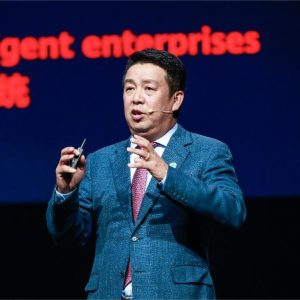
目前,华为在全球拥有18万名员工、900多个分支机构、15个研发中心和36个联合创新中心,还有百万级的合作伙伴,其中包括6万多家供应商;业务覆盖全球170多个国家,和运营商一起在全球建设了1500多张网络,帮助世界超过三分之一的人口实现联接,每年销售手机上亿部……
如此庞大、复杂的一个组织机构,华为内部业务到底如何运作?华为公司CIO、质量与流程IT管理部总裁陶景文为您解密。
当前,全球各行各业都在积极开展数字化建设,期望通过转型来支撑业务的长期、持续增长。之前,华为很少从自身的角度谈论公司的业务运作和转型,其实,作为一家拥有30年历史的企业,华为也同样有着数字化转型的强烈愿望。
2016年,华为在关注通过变革提升企业效率的同时,也开始思考面对企业的快速增长,如何实现从“中央集权”模式转变为“听得见炮火的组织”的需求拉动供给模式。面对未来的挑战,坚持ROADS(Real-time、On-demand、All-on-line、DIY和Social)体验驱动,提升内部效率和效益,让客户、合作伙伴和华为之间交易更快捷、更安全,提升客户满意度。
近几年来,华为的业务变革和IT建设沿着“提升用户体验”、“提升业务运作效率”、“构建轻量级IT架构”3条变革主线展开,在研发、销售、供应、交付等各业务领域进行了大量实践探索,并取得了可喜的成果。
一、数字化变革目标:促进企业发展和支撑业务高效运作
过去30年,华为不断地通过业务变革和流程IT建设,有效支持了自身业务的稳步发展和快速扩张,从国内走向全球,从单一业务走向业务的多元化,在此过程中,整个公司的运营没有出现大的瓶颈和障碍。
现在,人们已经在谈论未来的数字化社会和智能社会,这对华为下一步业务变革的方向,或者说IT建设的目标提出了新的挑战——未来,公司业务变革和IT建设到底应该对准什么目标?华为认为,无论是云化、服务化都只是手段,转型的目标要对准内外合规、促进业务发展、支撑企业高效运作,直白地说,就是“多打粮食、增加土壤肥力”。其实,这同样也应该是所有企业数字化转型所要对准的目标。
那么,IT或者技术在这场变革中到底扮演着什么角色?技术与业务又是什么关系?华为认为,技术必须对准公司的业务目标,要驱动业务的变革、使能业务的变革,但是变革的原动力还是业务。目前,华为的业务已遍及全球,业务的复杂性和不确定性在不断增长,如果仍然采用原来所有流程由中央集群管理的方式,显然无法满足未来发展的需要。未来的管理模式应该是所谓“大平台下的精兵作战”,即一线在充分授权的情况下进行高效决策。在这种分布式管理模式下,整个公司的管理架构、运作流程以及IT建设都会发生改变。
为此,华为的整个变革要在上述战略目标的基础上重新进行梳理,制定一个新的蓝图。首先就是要将华为的业务方式打造成以用户体验为驱动。过去,公司的IT团队主要是被动响应业务部门的需求,为其提供由业务流程串联起来的功能性IT系统,一线人员需要先找到流程,然后才能找到相应的IT功能,为了完成一项工作往往需要打开10多个IT系统。未来,公司需要的是以用户体验为目的、针对业务场景构建的服务化平台,以快速响应一线各种用户和业务场景的诉求。而要实现这样的业务平台,背后需要有统一的云化、服务化的IT系统来支撑,这就是华为对未来业务变革整体架构的构想。
与此同时,为用户提供ROADS体验也是当前ICT转型的趋势,华为过去一直是一家以产品创新为主导的公司,客户最熟悉的也是华为的产品。但未来,华为要成为企业ICT转型的使能者,为各行业客户提供ICT转型方面的技术服务和支持,必须有能力支撑自己的客户,例如电信运营商为其用户提供由ROADS体验驱动的服务。
要具备上述能力,最好的方法就是在华为自身的业务平台上率先进行实践,以ROADS体验为牵引来提升效益、效率以及客户满意度,这也是公司IT部门未来的服务目标。变革要想成功就必须有一个清晰的目标,我非常赞同的一个观点就是:数字化是要解决业务问题的。作为IT部门,首先就应该致力于解决用户体验的问题,致力于解决业务发展的问题。
二、转型策略:IT架构要实现3大转变
明确了业务变革的目标,相应地在IT架构上需要完成3个转变。
转变一:将传统垂直、封闭式的IT架构;转变为云化、服务化的开放架构
许多CIO都曾面临这样的困局——企业在进行IT建设时花费了大量精力、做了很多工作,最后却发现:在传统的封闭式架构下企业的IT系统变成了一个个垂直的“烟囱”,难以互通和共享,越来越无法满足业务部门日益多样化的需求。华为也曾面临同样的问题,以前采取的方法是先竖向拉通,再横向打通,但这会造成公司整个IT系统复杂到几乎不可用,业务部门曾将其形容为3个字“慢、散、贵”。其中第一个就是慢,IT的响应跟不上业务的发展。
例如华为的手机业务在全球发展非常迅速,如果业务部门需要在非洲加纳快速开设一家手机专卖店,相应的IT配套建设却需要6~9个月,IT的响应时间往往以月甚至以年为单位计算,很难跟得上业务快速发展的需要。
所以,将传统封闭式的IT架构转变为开放式架构,首要原因就是为了解决业务的快速响应问题。
转变二:从关注“内部流程运作”向关注“用户ROADS体验”转变
原来,华为的IT部门通常不太关注用户体验,在开发一个IT应用时,很少有人会知道其有多少用户、谁是用户,也没有人会去亲自运营这个系统。很多时候IT团队开发一个应用可能只是为了满足业务部门某一次提出的某一个需求,其结果就是企业的IT系统中存在着大量的信息垃圾。
此外,华为原来所有的IT应用系统都是服务于业务流程的,功能可以满足需要,但往往用户体验不佳。其实这样的例子很普遍,例如我本人在德国工作的时候曾申请了一个当地手机号码,运营商的各种服务功能可以说做的非常棒,但对我而言客户体验却不好,因为所有服务信息全是德语,而我不懂德语。
所以,每一个企业的CIO都应该思考一下,自己的企业当中是否存在类似现象。IT部门到底在为自己所服务的用户、也就是业务部门解决什么问题?
转变三:从“内部作业IT系统”走向“与用户连接的实时智能系统”
目前,华为的IT系统是一个内部系统,很难与外部相连。例如,一个合作伙伴想要参与华为的项目,应该到哪里查询最新的项目信息?一家技术创新公司想要成为华为供应商,应该到哪里去展示其产品?一位客户想要购买华为的产品,在哪里可以看到最新的产品介绍?答案是“没有”。
华为原来的整个IT系统主要是服务于公司内部管理的,虽然很多企业的IT系统都是如此——为了解决企业复杂的管理问题而存在的,但IT的作用如果仅仅如此显然是不全面的,其还应该成为与用户连接的实时服务系统,以实现端到端业务流程的在线、实时、自动化运作。就像华为总裁任正非提出的:华为的所有变革、所有IT建设都要对准业务,致力于让业务变得更简单、更高效、更快捷。
那么,如何才能实现上述3个转变?首先IT架构要实现分层,以体验为驱动、基于服务化进行深层解耦。例如,原有IT系统不具备用户识别能力,而未来IT系统的目标是根据不同的人、不同的接入设备、不同的接入地点、不同的接入方式、不同的接入场景,呈现不同的界面。IT的作用是为用户提供信息,而不是让用户去寻找信息,要根据对用户身份的识别,在最恰当的时间提供最恰当的业务流程、业务操作,以及用户所需要的知识甚至是所需要的支持。
华为的目标是利用3年时间,亦即到2019年,在公司各个业务领域实现上述蓝图。现在时间已经过去了一半,我们正走在正确的道路上,经过一年多来的实践,我们对此次转型的成功充满了信心。
二、业务变革实践:ROADS体验驱动,持续提升效率、效益和客户满意度
近几年,公司在研发、销售、制造、交付、物流等多个领域都进行了积极的数字化探索和实践,并取得了一系列成果。
(一)研发作业上云实现全球研发协同
研发是华为最大的业务,公司18万员工中有一半是研发人员。在研发方面,IT部门将产品开发时所涉及到的流程、工具、数据、编译环境等进行了服务化解耦,推出了包括测试云、编译云、开发者社区等在内的7种服务,服务于研发的整个流程,大大缩短了产品从研发到导入生产的时间。
例如,一款新手机的联调,原来从申请装备到找地方搭建IT环境起码要按月为单位计算时间;现在通过测试云服务,可以将环境的准备时间降低到以天为单位,帮助研发部门实现了资源的快速调动。再如手机操作系统的编译,原来每个型号手机的编译过程都是隔离的,由于型号较多需要占用大量时间;现在通过一个公共编译平台,可以将华为全球提供的所有手机版本代码的构建时间从小时级缩减到分钟级。
(二)数字化销售有效支撑销售团队作战
在销售方面,过去华为的销售主管往往不清楚一线具体的经营情况,即便出了问题也很难查清楚到底是哪方面的问题。近年来,华为通过数字化销售实现了线上线下的统一管理,有力支撑了销售团队作战。例如,公司的各级销售主管现在已经可以在手机上查看全球170多个国家、200多个子公司的实时经营情况,销售团队的作战水平和效率因而得到了逐步、有效的提高。
(三)一站式服务交付平台提高服务交付效率
交付业务涉及的环节众多,以前要完成一项交付任务,交付人员有时需要前后打开20多个IT系统;现在,公司构建的一站式服务交付平台将交付涉及的资源管理、外包管理、站点验收、收货、技术支持以及人员管理等众多环节,通过服务化架构集成在一个入口上,大大提高了整个服务交付的效率;不仅如此,公司还在西安建设了一个交付指挥中心,可以在大屏运营中心查看全球交付的各个项目,甚至每一个站点执行的情况,实现了一线交付业务的在线、实时、可视和高效。
(四)全球制造运营与指挥中心支撑实时决策
通过建设全球制造运营与指挥中心,公司将全球供应商的供货情况以及全球市场的需求情况通过服务化方式进行集成,并围绕各个业务场景构建了实时决策系统,从而实现了质量预测。例如,如果产品在测试环节发现质量问题,可以及时在制造过程中提出质量预警,还可以通过大数据分析管控物料批次等。
(五)物流可视平台全面提升全球物流管理效率
华为的业务现在已遍及全球,发送的货物也在全球流转,如此庞大的物流网络想要知道货物的具体流转情况非常困难。但自从2014年公司建设了物流可视平台以来,到2016年年底公司的总体帐实一致率得到了大幅度提升,可对全球100多个仓库进行实时监控,对进出库货物进行可视化管理,全面提升了公司的全球物流过程可视水平和协同运作效率。
(六)全连接办公协同搭建企业高效的连接平台
每一个企业都需要建设一个通畅、高效的连接平台,能够将设备、知识、业务、团队进行更好的连接。华为IT团队针对上述需求开发了Welink APP,从2017年初发布到现在已有拥有17万用户。在Welink系统上,用户可以召开会议、使用相关的业务应用、查看共享的文件,从而能够让团队成员保持高效的连接。
三、IT平台实践:构建企业多云架构
当前所有企业都在关注业务云化,困扰于应该选择什么样的云化策略——私有云、混合云还是公有云。对此我有一点不同观点:CIO应该忘掉这些技术名词,因为对于一个企业的业务而言,其天然就具有跨云和多云诉求。
以华为为例,从企业核心信息资产安全的角度出发,当然一定要根据自身业务特征构建核心业务的云化过程。但无论华为自己的云建得怎么样,也一定会使用其他的公有云服务。在华为业务云化的过程中,建设企业的私有云与使用公有云服务并不矛盾,两者应该拆开来分析,不要绑在一起回答。
例如前文提到的在非洲开设手机专卖店的例子,如果采用自建IT的方式,需要IT部门先将网络建好,再将各种IT系统连接过去,这需要很长时间。而最快的方式是采用公有云服务,依托公有云支撑这些业务的发展。可以说,任何一个企业,要想快速响应业务诉求、响应业务多样性的变化、支撑业务在全球的快速扩张,就必然会使用多个公有云服务。对企业CIO来说,应该让业务部门不要去关心到底使用的是什么IT资源,不要关心所使用的业务服务是购买的还是自己开发的。
华为在公司的全球网络架构以及数据中心布局上,以业务和用户ROADS体验为中心成功部署了8个100毫秒业务圈,其服务的目标就是在100毫秒内能响应所有国家的业务需求。同时,华为在核心的几个数据中心内积极实践了“极简”的网络架构,几十倍地减少了光纤的使用数量。在建设这样一个全球网络的过程中,就使用了大量的公有云服务,例如office365、视频会议、微信以及其他第三方提供的公有云服务。即便华为本身提供IaaS和PaaS服务,但在一些力所不及的市场上,也同样会采用其他厂商提供的同类服务,以实现快速服务的目标。
最后值得一提的是,企业要构建一个多云环境,有3件事是绕不开的。
(一)全球统一的IT资源管理
简单而言就是对资源要有跨云、多云的调动能力。例如对于企业研发来说,全球多个研究所可实现共同开发一个产品,而不用担心所需要的虚拟机或服务由哪里提供。目前,华为的IT部门就已经初步具备了包括物理机和各种云在内的IT资源调度能力;
(二)打造统一跨云的集成平台
在应用和数据层面打通与多个公有云服务的对接,这样业务在使用云服务时只需要与IT对接一次即可;
(三)在多云环境下保障企业核心信息资产的安全
企业用户信息资产的安全尤为重要,因此在使用公有云时需要构建一个跨云的安全体系。一个多云的安全管理环境对企业来说非常必要,在核心资产上宁愿降低一点响应速度,也要保证企业核心资产的安全。
四、数字化实践带来的5点体会
- 体会一:数字化转型应该由业务部门来主导,业务主管要清楚如何通过数字化转型来支撑业务发展,解决哪些业务问题;IT部门作为重要的使能部门,不能越俎代庖,应该与业务部门进行充分沟通,构建强大的IT平台以驱动、支撑变革快速落地。
- 体会二:数字化转型要将实现用户ROADS体验作为变革目标及衡量变革是否成功的标准,并针对每一变革项目细化并制订相应的体验标准。
- 体会三:数字化转型要面向客户、消费者、合作伙伴、员工、供应商等5类用户,分别构建一个多生态、全连接的数字化平台,而不仅限于企业内部员工。
- 体会四:“业务对象数字化、业务过程数字化、业务规则数字化”是数字化转型的手段。
- 体会五:每个公司都会有相对稳定、确定性的业务,这部分业务追求的是标准化、自动化;而对于不确定性业务,则可以考虑通过智能化、社交化的手段来实现。
华为的业务变革目标对准的是“内外合规、多打粮食和提升土壤肥力”,这里所谓的“粮食”对企业来说就是收入和利润,而“土壤肥力”则是能力和效率,要实现这个目标,企业的IT就要完成3个转变。首先,将传统垂直、封闭式的IT架构转变为云化、服务化的开放架构;其次,从关注“内部流程运作”向关注“用户ROADS体验”转变;最后,将IT系统从服务于企业内部管理转向与用户连接的实时服务系统。
翻译:
At present, all walks of life in the world are actively carrying out digital construction, hoping to support the long-term and sustained growth of business through transformation. In the past, Huawei rarely talked about its business operation and transformation from its own perspective. In fact, as a company with a history of 30 years, Huawei also has a strong desire for digital transformation.
In 2016, while focusing on improving enterprise efficiency through reform, Huawei also began to think about how to transform from a “centralized” mode to a “demand-driven supply” mode in the face of rapid growth of enterprises. In the face of future challenges, adhere to the Road (Real-time, On-demand, All-online, DIY and Social) experience-driven. Improve internal efficiency and benefits, make the transaction between customers, partners and Huawei faster and safer, and improve customer satisfaction.
In recent years, Huawei’s business reform and IT construction have been carried out along the three main lines of “improving user experience”, “improving business operation efficiency” and “Building lightweight IT architecture”. It has carried out a lot of practical exploration in various business fields such as R&D, sales, supply and delivery, and achieved gratifying results.
Objectives of digital transformation
Promote enterprise development and support efficient operation of business
Over the past 30 years, Huawei has continuously supported the steady development and rapid expansion of its own business through business reform and process IT construction, from domestic to global, from a single business to a diversified business. In this process, the operation of the whole company has not appeared major bottlenecks and obstacles.
Now, people are already talking about the future digital society and intelligent society. Which poses a new challenge to the direction of Huawei’s next business reform, or the goal of IT construction. What goal should the company’s business reform and IT construction aim at in the future? Huawei believes that cloud and servitization are just means. And the goal of transformation should be aimed at internal and external compliance, promoting business development, and supporting efficient operation of enterprises. To put it bluntly, it is to “grow more grain and increase soil fertility”. In fact, this should also be the goal of all enterprises digital transformation.
what is the role of IT or technology in this transformation?
So, what is the role of IT or technology in this transformation? What is the relationship between technology and business? Huawei believes that technology must be aligned with the business objectives of the company, to drive and enable business changes, but the driving force of change is still business. At present, Huawei’s business has spread all over the world, and the complexity and uncertainty of the business are increasing. If all the processes are still managed by the central cluster, it is obviously unable to meet the needs of future development. The management model of the future should be what is called “smart operations on a large platform”. Where the front line makes efficient decisions with full authority. In this distributed management mode, the management structure, operation process and IT construction of the entire company will change.
The first is to make Huawei’s business approach driven by user experience.
To this end, the whole change of Huawei should be sorted out again on the basis of the above strategic objectives and develop a new blueprint. The first is to make Huawei’s business approach driven by user experience. In the past, the IT team of the company mainly passively responded to the needs of the business department and provided IT with a functional IT system connected by business processes. The front-line personnel needed to find the process first and then the corresponding IT function.
In order to complete a job, more than 10 IT systems often needed to be opened. In the future, the company needs to build a service-oriented platform for the purpose of user experience and business scenarios. So as to quickly respond to the demands of various users and business scenarios in the front line. In order to realize such a business platform, IT needs to be supported by a unified cloud and servitization IT system. This is Huawei’s conception of the overall architecture of future business reform.
Providing users with road experience is also the trend of current ICT transformation.
At the same time, providing users with road experience is also the trend of current ICT transformation. Huawei has always been a company dominated by product innovation in the past, and its products are most familiar to customers. However, in the future, if Huawei wants to become an enabler of enterprise ICT transformation and provide technical services and support in ICT transformation for customers in various industries, it must be able to support its own customers, such as telecom operators providing their users with services driven by road experience.
To acquire the above capabilities, the best way is to take the lead in practice on Huawei’s own business platform, and improve efficiency, efficiency and customer satisfaction with the traction of road experience, which is also the future service goal of the company’s IT department. For change to be successful, it has to have a clear goal, and I strongly agree that digitization is about solving business problems. As an IT department, it should first focus on solving the problem of user experience and business development.
Transformation strategy:There are three major changes to the IT architecture
The objectives of the business change are identified, and accordingly there are three changes that need to be made in the IT architecture.
Transform one
Take the traditional vertical, closed IT architecture
Into a cloud, service-oriented open architecture
Many CIO have been faced with such a dilemma – the enterprise in IT construction spent a lot of energy, do a lot of work, finally found: in the traditional closed structure of the enterprise IT system into a vertical “chimney”, difficult to communicate and share, more and more unable to meet the increasingly diverse needs of business departments. Huawei also faced the same problem. In the past, IT adopted a method of vertical pull and then horizontal pull, but this made the company’s entire IT system so complex that it was almost unusable. The business department once described it as “slow, loose and expensive”. The first of these is slowness, the inability of IT to respond to business developments.
For example, Huawei’s mobile phone business is developing rapidly in the world. If the business department needs to open a mobile phone store in Ghana, Africa, the corresponding IT supporting construction will take 6 to 9 months. The IT response time is often calculated in months or even years, which is difficult to keep up with the needs of rapid business development.
Therefore, the primary reason to move from a traditional closed IT architecture to an open architecture is to solve the business response problem.
Transform two
From focusing on “internal process operations”
Shift to focus on the “user ROADS experience”
IT turns out that Huawei’s IT department usually does not pay much attention to user experience. When developing an IT application, few people will know how many users there are. Who are the users, and no one will personally operate the system. Most of the time, the IT team may develop an application just to meet a certain requirement put forward by the business department at one time. As a result, there is a lot of information garbage in the enterprise IT system.
In addition, all Huawei’s original IT application systems serve business processes, and their functions can meet the needs. But they often have poor user experience. In fact, such cases are quite common. For example, when I was working in Germany, I applied for a local mobile phone number. The various service functions of the operator were excellent. But the customer experience for me was not good. Because all the service information was in German, which I did not understand.
So every CIO should think about whether there is a similar phenomenon in their own enterprise. What problem is IT solving for the users it serves, that is, the business?
Transform three
From “in-house operating IT system”
Towards “real-time intelligent systems connected to users”
At present, Huawei’s IT system is an internal system, which is difficult to connect to the outside world. For example, if a partner wants to participate in a Huawei project. Where should he go to check the latest project information? Where should a technology innovation company go to showcase its products if it wants to be a Huawei supplier? A customer wants to buy a Huawei product. Where can I see the latest product description? The answer is “no”.
The original entire IT system of Huawei mainly serves the internal management of the company. Although IT systems of many enterprises exist to solve the complex management problems of enterprises, if IT only plays such a role. It is obviously not comprehensive. It should also be a real-time service system connecting with users. To realize the end – to – end business process online, real-time, automatic operation. Just as Huawei President Ren Zhengfei put IT. All of Huawei’s changes and IT construction should be oriented towards the business and committed to making the business simpler, more efficient and faster.
So how do you make these three changes?
So how do you make these three changes? First of all, IT architecture should be layered, experience-driven and service-oriented for deep decoupling. For example, the original IT system does not have the ability to identify users. But the future IT system aims to present different interfaces according to different people, different access devices, different access locations, different access methods, and different access scenarios. The role of IT is to provide information for users, rather than let users to find information. It is to provide the most appropriate business processes, business operations, as well as the knowledge and even the support needed by users at the most appropriate time according to the identification of users.
Huawei aims to implement the blueprint in three years, or 2019, across all areas of the company. We are now halfway through the year, and we are on the right track. After more than a year of practice, we are confident of the success of this transformation.
Business change practice:ROADS experience-driven, continuously improving efficiency, effectiveness and customer satisfaction
In recent years, the company has carried out active digital exploration and practice in research and development, sales, manufacturing, delivery, logistics and other fields, and achieved a series of results.
R&d operations on the cloud to achieve global R&D collaboration
Research and development is Huawei’s biggest business, accounting for half of the company’s 180,000 employees. In terms of research and development, the IT department decoupled the processes, tools, data and compilation environment involved in product development, and launched seven kinds of services, including test cloud, compilation cloud and developer community, to serve the whole process of research and development, greatly shortening the time from research and development to production.
For example, the joint investigation of a new mobile phone used to take at least a month to calculate the time from the application for equipment to finding a place to set up an IT environment. By testing cloud services, the environment preparation time can now be reduced to days, helping R&D achieve rapid resource mobilization. Another example is the compilation of mobile phone operating system, the original compilation process of each model of mobile phone is isolated, due to the large number of models need to occupy a lot of time; Now through a common compilation platform, it can reduce the build time of all mobile code versions provided by Huawei from hours to minutes.
Digital sales effectively support sales team operations
In terms of sales, in the past, Huawei’s sales executives often did not know the specific operation conditions of the front line, and even if there was a problem, it was difficult to find out what the problem was. In recent years, Huawei has realized unified online and offline management through digital sales, which has strongly supported the sales team. For example, sales executives at all levels of the company can now view the real-time operation of more than 200 subsidiaries in more than 170 countries on their mobile phones, and the operational level and efficiency of the sales team has been gradually and effectively improved.
One-stop service delivery platform improves service delivery efficiency
Delivery business involves many links. In the past, to complete a delivery task, delivery personnel sometimes need to open more than 20 IT systems. At present, the one-stop service delivery platform built by the company integrates many links involved in the delivery of resources management, outsourcing management, site acceptance, receiving of goods, technical support and personnel management into one entry through the service-oriented architecture, which greatly improves the efficiency of the whole service delivery. Not only that, the company also built a delivery command center in Xi ‘an, which can view the global delivery of various projects and even the execution of each site in the large screen operation center, realizing the online, real-time, visual and efficient first-line delivery business.
Global manufacturing operations and command centers support real-time decision making
By building a global manufacturing operation and command center, the company integrates the supply condition of global suppliers and the demand condition of the global market in a servitization way, and builds a real-time decision system around each business scenario, thus achieving quality prediction. For example, if quality problems are found in the testing process, quality warning can be put forward in the manufacturing process in time, and material batches can be controlled through big data analysis.
The logistics visual platform comprehensively improves the efficiency of global logistics management
Now Huawei’s business has spread all over the world, and the goods it sends are also transferred around the world. It is very difficult for such a huge logistics network to know the specific flow of goods. However, since the company built the logistics visual platform in 2014, the company’s overall account consistency rate has been greatly improved by the end of 2016. It can carry out real-time monitoring of more than 100 warehouses around the world and carry out visual management of incoming and outgoing goods, comprehensively improving the visibility level of the company’s global logistics process and collaborative operation efficiency.
Fully connected office collaboration builds an efficient connection platform for enterprises
Every enterprise needs to build an unobstructed and efficient connection platform, which can better connect equipment, knowledge, business and team. The Welink APP, developed by Huawei’s IT team in response to these needs, has had 170,000 users since its launch in early 2017. With the Welink system, users can hold meetings, use related business applications, and view shared files, thus keeping team members connected efficiently.
T platform practice:Building enterprise multi-cloud architecture
All enterprises are currently focused on business cloud, and struggle with what kind of cloud strategy to choose — private cloud, hybrid cloud or public cloud. I have a different point of view: CIOs should forget about these technical terms because there is a natural cross-cloud and multi-cloud appeal to an enterprise’s business.
Taking Huawei as an example, from the perspective of core information asset security, the cloud process of core business must be built according to its own business characteristics. But no matter how well Huawei builds its own cloud, it will definitely use other public cloud services. In the process of Huawei’s business cloud, there is no contradiction between the construction of enterprise private cloud and the use of public cloud services. The two should be analyzed separately rather than tied together.
The quickest way is to use public cloud services to support these businesses.
For example, as mentioned above in the example of opening a mobile phone store in Africa, if the self-built IT method is adopted, the IT department needs to build a good network first, and then connect various IT systems in the past, which will take a long time. The quickest way is to use public cloud services to support these businesses. It can be said that any enterprise is bound to use multiple public cloud services if it wants to quickly respond to business demands, respond to changes in business diversity, and support the rapid expansion of business in the world. For enterprise CIOs, the business should not be concerned about what IT resources are used and whether the business services used are purchased or developed.
Based on the company’s global network architecture and data center layout, Huawei has successfully deployed eight 100ms business circles centered on the business and user ROADS experience. Its service goal is to respond to the business needs of all countries within 100ms. At the same time, Huawei actively practiced a “minimalist” network architecture in several core data centers, reducing the number of optical fibers used by tens of times. In the process of building such a global network, a large number of public cloud services such as Office 365, video conferencing, wechat and other public cloud services provided by third parties are used. Even though Huawei itself provides IaaS and PaaS services, it also uses similar services provided by other vendors in some markets where it is not strong enough to achieve fast service.
Finally, there are three things that companies need to do to build a cloudy environment.
Unified global IT resource management
Simply put, it is necessary to have the ability to mobilize resources across the cloud and cloudy. For example, for enterprise research and development, multiple institutes around the world can jointly develop a product without worrying about where the required virtual machine or service is provided. At present, Huawei’s IT department has preliminarily equipped with IT resource scheduling capabilities, including physical machines and various clouds.
Build a unified cross-cloud integration platform
Connect with multiple public cloud services at the application and data levels, so that businesses only need to connect with IT once when using cloud services.
Ensure the security of enterprise core information assets in a cloudy environment
The security of enterprise user information assets is particularly important, so it is necessary to build a cross-cloud security system when using public cloud. A cloudy security management environment is very necessary for enterprises. In terms of core assets, we would rather slow down the response speed to ensure the security of enterprise core assets.
5 points of experience brought by digital practice
Experience 1
Digital transformation should be led by business departments. Business managers should be clear about how to support business development and solve business problems through digital transformation. As an important enabling department, the IT department should not overreach its role. Instead, IT should fully communicate with the business department to build a powerful IT platform to drive and support the rapid implementation of the reform.
Experience 2
In the digital transformation, the realization of user road experience should be taken as the reform goal and the criterion for measuring the success of the reform, and the corresponding experience standards should be refined and formulated for each reform project.
Experience 3
The digital transformation should be oriented to five types of users, including customers, consumers, partners, employees and suppliers, respectively to build a multi-ecological and fully connected digital platform, rather than limited to internal employees.
Experience 4
“Digitization of business objects, digitization of business processes, digitization of business rules” is the means of digital transformation.
Experience 5
Every company has a relatively stable and deterministic business, which pursues standardization and automation; For uncertain business, intelligent and social means can be considered.
Huawei’s business reform aims at “internal and external compliance, increasing grain production and improving soil fertility”. For an enterprise, the so-called “grain” means revenue and profit, while the “soil fertility” means capability and efficiency. To achieve this goal, the enterprise’s IT needs to complete three transformations. First, the traditional vertical and closed IT architecture is transformed into a cloud and service-oriented open architecture. Second, a shift from a focus on “internal process operations” to a focus on “user ROADS experience”; Finally, the IT system from serving the internal management of the enterprise to the real-time service system connected with users.
本文由CXO UNION-CXO联盟(cxounion.cn)转载而成,来源于网络;编辑/翻译:CXO UNIONCXO联盟小C。
如需加入CXO UNION(CXO联盟)高管社群,请联系社群小伙伴哦~
免责声明: 本网站(http://www.cxounion.cn/)内容主要来自原创、合作媒体供稿和第三方投稿,凡在本网站出现的信息,均仅供参考。本网站将尽力确保所提供信息的准确性及可靠性,但不保证有关资料的准确性及可靠性,读者在使用前请进一步核实,并对任何自主决定的行为负责。本网站对有关资料所引致的错误、不确或遗漏,概不负任何法律责任。
本网站刊载的所有内容(包括但不仅限文字、图片、LOGO、音频、视频、软件、程序等) 版权归原作者所有。任何单位或个人认为本网站中的内容可能涉嫌侵犯其知识产权或存在不实内容时,请及时通知本站,予以删除。
如需加入CXO UNION(CXO联盟)高管社群,请联系社群小伙伴哦~

免责声明: 本网站(http://www.cxounion.cn/)内容主要来自原创、合作媒体供稿和第三方投稿,凡在本网站出现的信息,均仅供参考。本网站将尽力确保所提供信息的准确性及可靠性,但不保证有关资料的准确性及可靠性,读者在使用前请进一步核实,并对任何自主决定的行为负责。本网站对有关资料所引致的错误、不确或遗漏,概不负任何法律责任。
本网站刊载的所有内容(包括但不仅限文字、图片、LOGO、音频、视频、软件、程序等) 版权归原作者所有。任何单位或个人认为本网站中的内容可能涉嫌侵犯其知识产权或存在不实内容时,请及时通知本站,予以删除。
Search
Popular Posts
-

2024数字化灯塔案例评选申报开启!
“2024数字化灯塔案例评选”于3月正式启动,诚挚欢迎业界同仁自荐和推荐,一起推动产业数字化进程,助力赋能企业…
-

2024 X-Award星盘奖申报通道已开启!
X-Award星盘奖是数字化转型服务、IT服务行业重要的商业奖项,旨在表彰行业里提供杰出数字化转型服务与IT服…
-

2024 N-Award星云奖申报通道已开启!
N-Award是数字化转型领域重要的商业奖项,旨在表彰那些以非凡的远见、超群的领导才能和卓越的成就来激励他人的…