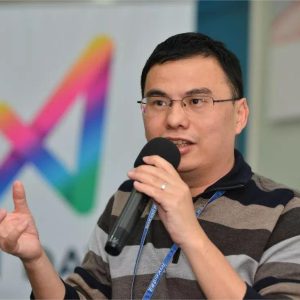
从 1998 年到 2017 年,腾讯是怎么成长为一家大公司的?以下为腾讯前CTO张志东的一个相关分享。
将近 20 年的时间里,这家以「网络寻呼」业务起家的公司,误打误撞地遇上了 PC 上网红利时代;成功迈进移动互联网时代后,成为了拥有十几亿用户量的互联网巨头。在一家大公司的发展过程中,总是纠缠着无数的「可能性」瞬间,腾讯也不例外。它经历过转型,几次组织构架调整,也在不断分泌和消化着成长过程中带来的种种阵痛,最终形成了独特的文化现状。
时至今日,腾讯最为外人称道的是它浓厚的「产品基因」,以及开放的企业生态。这种独特的 DNA 是如何生长,并且植入一家公司体内的?
一、腾讯的「第一次创业」:一是能活,二是少挨骂
我们刚创立腾讯的时候,其实我们都不懂什么是 VC、风险投资,当时几个创始人只是打工烦了,想出来自己做个做互联网产品的小公司,能够养活自己,就在这样的误打误撞之下,闯入了中国互联网业。
腾讯比较幸运,遇到了很好天时和地利。1998 年腾讯成立的时候,我们本来想做给一个网络寻呼的系统,卖给寻呼台。做 OICQ并不能赚钱,是一个基于兴趣的副产品,可以给寻呼台增加一些呼量。但企业发展一年后,寻呼业就开始走下坡路,寻呼台不断的关闭或合并,手机替代寻呼机的大趋势已凸显。而我们的副业 OICQ 却疯狂增长。那时候带宽很窄,大家上网也没有娱乐项目,即时通讯成为了刚需。再加上中国电信每年在上网线路扩容、骨干网络建设方面大力投资,而广东电信是网络基础建设最快的省份,深圳这个城市是年轻人创业热土。我们误打误撞踏进了这个时代的河流。
一开始我们只是几个人的小公司。我们期望一是希望公司不要倒闭,能活下去;二是不让用户掉线,少挨点骂。公司没有任何成文的制度,连上下班的规范时间也没有,几位成员都是喜欢互联网产品的网虫,大家起床后就会跑回公司,趴在 pc 上看用户对我们的意见。我们有一个很简单的统计图沿用了好几年,每分钟统计一下在线用户有多少人,在图上画一个点。如果这条曲线突然掉下来,就说明有故障了。我连同事的电话都不用打,叫个的士回公司,回到公司时,大家已经在定位修补方案了。我们对自己的产品本身就是重度用户,大家对用户掉线的不爽感受是感同身受的。
这里面有很多误打误撞的因素。如果我们不是生活在中国,对中国网民和中国的网络设施状况的痛点感受就不会深刻,就不会有这样一个机会;如果我们毕业再早几年,在原来行业有若干成绩和衔头,或许也不会那么容易离开原有的行当,毅然拥抱互联网这个新生事物。
二、如何做内部道路的选择?
遇到业务风口,有的企业可以很快速的发展起来,但对于一个企业内部的传承力量来说,团队培养是个慢工出细活的过程。更何况,这个世界是不断变化的,企业也必须跟着不断变化才能适应。在这个过程中,企业能不能变革的决心是非常重要的。
在腾讯后来的发展里,我们几次面临过这样的挑战。
1998年到 2004 年,这就是腾讯的第一次创业。从一个几个人的小作坊,发展成为一家接近一千人的中型公司,公司 2004 年在香港主板上市。到 2004 年、2005 年的时候,公司发展有两条路选。一种选择是我们只做沟通和娱乐,这是腾讯原来的 DNA,也是原来的团队最擅长的,也比较赚钱;第二种选择,跨度比较大,当时 Pony(马化腾)是用了类似于「在线生活」的词概括这个方向。团队争论了很久,最后选择了第二条道路。这是一条比较难走的道路,同时,也很快对公司原有的组织结构产生了比较大的冲击。
之前公司比较单一的业务线,几个创始人可以垂直处理自己分管的业务,大家沟通频率和效率均很高,很多事情就靠着我们的人品和勤奋,就可以维持公司的运作。但是开展多元业务以后,我们意识到,创始人的能力有比较大的瓶颈,产品线之间资源分配、组织各种各样的问题都会冒出来。这是个很大的挑战。
当时腾讯的解决方法是组织变革为事业部(BU)驱动,把一个方向的产品的研发、市场合并到一个 BU 里,让一个领军人统一负责。这件事的挑战在于对 BU 的第一负责人要求很高,他必须要有综合的能力,同时要有内部文化的认同度。腾讯后来的几位重要的管理团队成员时那个时候上任的。创始人变成横向支持,大家都会觉得,只要公司好就可以。
到 2008 年、2009 年,公司成立十周年的时候,我们的感觉是公司成长良好,业务有稳定的增速,团队也有比较好培养人的能力。但事情的发展通常没有那么理想,每当你感觉良好的时候,其实危机已经在潜伏了。这个改变是来自移动互联网的浪潮,到 2010 年,突然间我们感觉不对了,腾讯的组织结构突然间又变得适应不了这个时代,移动时代的到来,让腾讯面临着革命还是被革命的关口。
到 2011 年,我们把当时的移动 BU 拆了,与原来各个产品的 PC 团队合在一起,做自我闭环,做 PC 主力的同事转型学习移动的研发,全面转移到移动时代。这过程中也有挑战,原有部门的利益、惯性和感情都会受到冲击。但这个时代,你不改变,世界也会改变。如果那时不做变革,后面几年腾讯就不会跟上移动互联网的大潮。
当年跟 360 的一次争端,给了腾讯很多外界刺激。当时腾讯被人批评,为什么事情都要自己做,缺乏生态思维。而微信在 2011 年的爆发,给了企业变革很大的信心。
微信刚刚发布的时候,头三个月波澜不惊,但是在 2011 年 5 月份突然就爆发了,原因就是加入了语音功能。接下来三个月微信的用户增长,是我从业以来见过最陡峭的速度。那三个月是什么概念?每天微信的用户增长 10%,活跃用户量一周增长 70%。
也就是这三个月,我个人感觉微信抢占了一个历史的重要时间窗口,这种增长速度也坚定了腾讯组织变革,全面转型移动互联网的决心。
后来腾讯的组织变革重组,拆掉了无线 BU,再后来腾讯投资了搜狗、点评、京东,把搜索并给了搜狗,把电商并给了京东,这是腾讯历史上第二次大的组织变革。那时也有不少同事不理解,这个并给了搜狗、那个并给了京东,我们自己做什么?我认为,腾讯的未来是基于连接的公司、基于大数据服务的公司。如果腾讯把人、企业、服务的的基础连接设施做好,就能有机会促进很多行业的改变和提升。
移动互联网浪潮的来临、外部的刺激、微信的崛起,都促成了公司在 2011 年做组织变革。
三、惊险的变革,还是「温水煮青蛙」?
回顾这个过程,我个人感觉那个时间的变革是非常惊险的。这个时间如果再晚一年,也许就会错过移动互联网的大潮。我在 2014 年离任管理团队的时候,思考过为什么,为何一个有十多年经营的企业,在遇到变革期还是那么的猝不及防。我想这可能跟移动时代是有比较大的关系。在 PC 时代的时候,也许我们的产品只有 70 分,放在几个大的流量门户上面,它都还是能够生存并且获得不少的收入。
但是在移动年代就不一样了,移动年代用户自主选择的能力大大提高了,你的产品和服务如果做不到 90 分的话,很快就会被淘汰。在这些转变的过程里,历史成绩很容易成为一个企业转型的负担。管理者会对成绩有留恋,觉得我还有很多收入,市场份额也有「江湖地位」。但是一定时间窗口之内,如果不能自我革命,你可能就已经老化了,不再能适应新的时代。
企业很容易犯一些错误,在 PC 时代,产品初步成功、有了商业模式之后,团队不停地去追求把它做的规模更大,收入更多,不知不觉把产品越做越重,做很多生硬捆绑,在这个过程中,组织也会变大,大公司的各种屁股决定脑袋的干扰也会变大,大家经常要考虑的是,老板分下来的 KPI 能不能超额完成,但对用户的理解却会变得迟钝。
能不能抓住这个变革的时间窗,核心是管理团队有没有危机感。当你自己觉得自己很安全,你的反应会变得迟钝。如果没有领军人物对危机感的认知,蜻蜓点水的「转型」,这件事是做不到的。Pony 的管理风格是比较开放的,只要时间允许,他是愿意大家跟他有不一致的意见,可以花时间讨论,一次吵架吵不完,还可以吵第二次、第三次。腾讯创始人团队的结构,也使得大家能有很高的相互信任度。
而转型这件事,事后看都是理所当然,大势所趋。但是当时没有那么容易,管理层的决心和时机都很重要,如果没有足够的外部刺激和内部决心,事情就会像温水煮青蛙,就那么过去了。企业转型肯定会带来阵痛,一个大型企业会有很多 bug,我们不能期望每一步都走的很准确,因为各种各样的原因,转型的时机晚了会很痛,但是如果大家能够一起 Debug,一起渡过,那也算是蛮好的事情。
四、如何定义一个好产品
那么,我们到底该如何定义一个好的产品?
有时候会看到一些业界现象,比如,有的团队很爱给自己打鸡血,年会的时候用夸张的方式庆祝产品收入创新高。有的管理者用很强硬的 996,推动团队各种管理压强。但在我看来,这不能算是一个真正的好产品。
真正的好产品团队是不需要打鸡血的,不需要 CEO 告诉团队说我们很牛、很棒。而是每一个参与其中的用户和成员都能感受到,自己正在做的事情,很大的提升了原有的体验。这么说可能拗口,但是我觉得这是妨碍很多企业发展的障碍。我们经常看到一个东西的收入在增长,就很难舍弃。但我们有时候会忽略一个问题:它是不是世界的下一步?
其实随着时间的变化,会使得产品对那个年代的重要性改变。如果一个产品能产生可观的收入,但是让用户感觉别扭和不爽, 从产品的角度来讲,这个模式其实不算理想。这样的收入,如果你是企业的负责人,你怎么看待这样的情况?如果你能够更早一点地把它看淡,也许你的团队就在别的更优美的地方创造出新的东西来,如果你一直留恋这份收入,团队就很容易陷入各种屁股决定脑袋的自我证明题,对世界的改变的感知就会迟钝,创造乏力。
在移动时代,我相信好的产品,营收模式也一定会是很优雅的。举个例子,Netflix 是一个很优雅的产品。Netflix 并不会迫切的用独播剧和广告塞满你的屏幕,Netflix 的界面清清爽爽,但是很多细节做得很体贴和很优美。事实上,用户在 Netflix 上的停留的时间一点儿都不短,用户付费给 Netflix,会付得很开心。像这种让用户付钱都付得很开心,是好产品应有的追求。
五、品的社会责任
当一个好产品的发展到很大的规模,占据用户甚多的时间时,产品就开始有了它的社会责任的问题。比如鹅厂近年发展速度最快的微信和王者荣耀。
比如,微信在用户过了 8 亿之后,会出现很多重度用户的人际过载、信息过载、时间过载的问题。在社会高度数字化之后,估计未来还会不断有新的更复杂的社会化的问题接连浮现。能否用产品和技术来缓解这些问题,会是微信团队的未来的课题。
比如,《王者荣耀》面对的又是另外一个问题,这个游戏的产品和技术很优秀,但当产品普及度很高之后,这个团队使命不应该仅仅是把这个游戏做得更好玩、更多人玩,这是不足够的,还需要照顾到家庭和谐。现在这个游戏已加入了家长对未成年人的子女的游戏时间和消费的监管工具,但如何促进家庭成员相互的亲情融洽,产品还有大量可以进化的空间。
当产品影响力和占用用户的时间,到了一定的程度,它的社会责任属性就上升了。一个团队做一些这样的事情,表面上看跟他的营收、业务量没有帮助,但是长远看,我觉得这些是好产品应该致力的事情。
对抗老化,我们需要发光的产品人和鼓励说真话的文化
一个多产品线的 大型的企业,时会有很多的 Bug 的。多条产品线之间,多个部门和团队之间,也会有很多的屁股决定脑袋产生的各种想法,容易让「存在感」和「短视「 影响了团队,看不清楚世界变化和自己的老化,容易温水煮青蛙。
从人和文化两个角度上看,一方面,企业里面要有「发光的产品人」。这种人总是稀缺的,他们对产品理念的追求胜于取悦上司。他们对产品和未来有很强的信念和洞见,同时其经验和能力能被同事们信任,他们可以团队迷茫时,带领团队找到曙光。年轻的同事们,其实并不介意工作辛苦,他们介意的是做无意义的辛苦,如果做的事情能对社会产生大的正面影响,团队成员自己就会感受到,不用给他们打鸡血,团队都会自然兴奋。「发光」的产品人,可以给团队传承这样的产品信念。
另一方面,公司内部需要有比较开放的鼓励说真话的机制。一个团队里,能否讲「真话「,比较大程度上取决于团队的第一负责人。这个人如果很爱好面子,自己一言九鼎,这个部门就很难有人去批评他。公司小的时候还好办,CEO、管理团队成员经常跟大家吃饭,大家可以有足够的沟通频率,企业大了之后,见面沟通的机会大幅减少,也许就要创造低成本的内部吐槽的机制。
腾讯内部有一个叫乐问的平台,大家提问题可以匿名,但是回答要实名。在腾讯内部,如果你某件事做的让用户反感,别的部门的同事对你批判起来也不会客气。如果你脸皮够厚不想改,那是你的自由。但绝大部分的同事,都是想做好产品的。好多事情你与其当作看不见,还不如更主动地去面对。乐问的匿名问、实名答,是鹅厂的内部的一种的沟通撮合的试验。
有人担心,会不会每个员工早上一打开这个乐问,感觉到满满的负能量?乐问几年的试验下来,并不会出出现这样的状况,如果你的企业具有足够的开放性,即使有人对一些问题比较偏激,也必然会有思想成熟理性的同事能参与思辨,这对个人、团队、企业来说,是一种比较高效的多角度的思想碰撞和有效沟通。
一个企业能不能说真话,是帮助企业对抗老化的重要土壤。
六、腾讯的未来的两大挑战
面对未来的数字化社会,感觉腾讯会面对两个大的挑战。
一个是社会化的挑战。新科技在推动社会快速的数字化,极大提升社会效率,同时也会带来许多衍生的社会问题。腾讯作为一家连接器定位的互联网企业,能否通过技术和产品,去有力的帮助社会缓解这些问题,也许是腾讯下一个阶段需要面对的大挑战。
另一个是企业内部的组织演进。新技术的大潮,大数据、AI、云的快速发展会催生了社会各行各业的升级,对腾讯来说,应该特别大的创新机遇,而腾讯的内部组织结构,尚没有做好这样的时代适配,原来完全 BG 化的组织结构面对这样新时代,会有不少的组织墙和不少坑。
这两者既是鹅厂很大的挑战,也许也是很大的机遇,祝愿鹅厂人能坚持初心,能出更多发光的产品人,帮助团队跨越这些挑战。
翻译:
How did Tencent grow into such a big company from 1998 to 2017?
In nearly 20 years, the company started from “network paging” business, accidentally encountered the PC Internet dividend era; After successfully stepping into the era of mobile Internet, it has become an Internet giant with more than one billion users. In the development of a big company, there are always countless moments of “possibility”, and Tencent is no exception. It has undergone transformation, several times of organizational structure adjustment, but also constantly secreting and digesting various pains brought by the growth process, and finally formed a unique cultural status quo.
To this day, Tencent is most praised for its strong “product gene” and open enterprise ecosystem. How does this unique DNA grow and get inserted into a company? In November, Zhang Zhidong, one of the founders of Tencent and former CTO, discussed with 16 entrepreneurs including Wang Xiaochuan, CEO of Sogou, the concept of creating good products, as well as the establishment and inheritance of team management and corporate culture in the “near field Research” of Geek Park Frontier.
The following is Zhang Zhidong dictating, Geek Park slightly arranged.
Tencent’s “first venture” : one is to live, two is less scolded
When we first founded Tencent, in fact, we did not understand what VC, venture capital, a few founders just tired of working, want to do their own Internet products to do a small company, can support themselves, in such a mistake, into the Chinese Internet industry.
Tencent was lucky. It was in the right place at the right time. When Tencent was founded in 1998, we originally wanted to build a paging system and sell it to paging stations. There’s no money to be made from doing OICQ. It’s an interest-based spin-off that adds some call volume to the pager.
But after a year of business development, the industry began to decline, pagers continue to close or merge, the mobile phone instead of the general trend of pagers has become prominent. Our side business, OICQ, is growing like crazy. Bandwidth was tight, there was no entertainment, and instant messaging was a necessity. In addition, China Telecom invests heavily in the expansion of Internet lines and backbone network construction every year, and Guangdong Telecom is the province with the fastest network infrastructure construction. Shenzhen is a city hot for young entrepreneurs. We stumble into the river of this age.
We started out as a small company of a few people.
We started out as a small company of a few people. One of our hopes is that the company will survive without going out of business; Second, do not let the user drop the line, get less scold. The company does not have any written system, not even the standard time to go to work. Several members are Internet addicts who like Internet products.
After getting up, they would run back to the company and read users’ opinions on our pc. We have a very simple graph that we’ve been using for years, which is to count how many people are online per minute, and put a dot on it. If the curve suddenly drops, there’s a problem. I didn’t even need to call my colleagues, so I called a taxi back to work. When I got back to work, everyone was already working on a fix. We are heavy users of our product itself, and we can all relate to the frustration of people dropping the line.
There’s a lot of miscues involved. If we were not living in China, we would not feel the pain points of Chinese netizens and Chinese network facilities, and we would not have such an opportunity. If we had graduated a few years earlier and had some achievements and armature in the original industry, perhaps it would not have been so easy to leave the original industry and resolutely embrace the Internet as a new thing.
How to choose the internal road?
When encountering the business tuyere, some enterprises can develop very quickly, but for the inheritance force within an enterprise, team training is a process of slow work and fine work. What’s more, the world is constantly changing, and enterprises must keep changing to adapt. In this process, the enterprise’s determination to change is very important.
In Tencent’s later development, we faced this challenge several times.
From 1998 to 2004, this was Tencent’s first venture. From a small workshop of a few people, it has developed into a medium-sized company of nearly one thousand people. The company was listed on the main board of Hong Kong in 2004. By 2004, 2005, the company had two options for growth. One option is that we only do communication and entertainment, which is the original DNA of Tencent and what the original team is good at, which is also relatively profitable. The second choice, the span is relatively large, at that time Pony (Ma Huateng) is similar to the “online life” to summarize this direction. The team debated for a long time and finally chose the second path. This is a difficult road to take, and at the same time, it also has a relatively big impact on the original organizational structure of the company.
In the past, the company had a single business line, and several founders could deal with their own business vertically. We had high communication frequency and efficiency, and many things depended on our character and diligence to maintain the operation of the company. But after diversifying our business, we realized that there was a big bottleneck in the ability of founders, and all kinds of problems would arise in resource allocation between product lines and organization. It’s a big challenge.
Tencent’s solution was to transform the organization into a BU drive,
At that time, Tencent’s solution was to transform the organization into a BU drive, to combine the R&D and marketing of products in one direction into a BU, and to make a leader in charge. The challenge of this matter lies in the high requirement for the first person in charge of BU, who must have comprehensive ability and recognition of internal culture. Several key members of Tencent’s later management team arrived around that time. The founder becomes a lateral supporter, and everyone thinks, as long as the company is good, it’s OK.
By 2008 and 2009, the 10th anniversary of the company, we felt that the company was growing well, the business was growing steadily, and the team had a relatively good ability to cultivate people. But things often don’t work out so well, and every time you feel good, a crisis is already lurking. This change came from the wave of mobile Internet. In 2010, we suddenly felt wrong, and Tencent’s organizational structure suddenly became unable to adapt to this era. The arrival of the mobile era made Tencent face the threshold of revolution or revolution.
In 2011, we dismantled the mobile BU and combined it with the original PC teams of various products to do a self-closed loop, to be the main PC colleagues to transform and learn mobile research and development, and to fully transfer to the mobile era. There are challenges along the way, and the interests, inertia and feelings of the existing departments will be affected. But in this era, if you don’t change, the world will change. If it hadn’t changed then, Tencent wouldn’t have caught up with the mobile Internet in the years to come.
Tencent was criticized for its lack of ecological thinking and why it had to do everything by itself.
A dispute with 360 that year gave Tencent a lot of external irritations. At the time, Tencent was criticized for its lack of ecological thinking and why it had to do everything by itself. The outbreak of wechat in 2011 gave enterprises great confidence to change.
Wechat was quiet for the first three months when it was launched, but suddenly exploded in May 2011 when it added voice functions. Wechat’s user growth over the next three months was the steepest I’ve seen in my career. What is the concept of three months? Wechat’s users are growing by 10% a day and its active users by 70% a week.
In these three months, I personally feel that wechat has seized an important time window in history, and this growth rate has also strengthened Tencent’s determination to reform its organization and comprehensively transform the mobile Internet.
Later, Tencent’s organizational reform and reorganization included the dismantling of wireless BU. Later, Tencent invested in Sogou, Dianping and Jingdong, and transferred search to Sogou and e-commerce to Jingdong. This was the second major organizational reform in Tencent’s history. At that time, many colleagues did not understand, this and gave to Sogou, that and gave to Jingdong, we do what? I think the future of Tencent is a connection-based company, based on big data services. If Tencent does a good job in connecting the infrastructure of people, enterprises and services, it will have the opportunity to promote the change and improvement of many industries.
The advent of the wave of mobile Internet, external stimulation, the rise of wechat, all contributed to the company’s organizational reform in 2011.
Thrilling change, or “boiling the frog”?
Looking back on this process, I personally feel that the time of change was very thrilling. If it had been a year later, it might have missed the mobile Internet boom. When I left the management team in 2014, I thought about why an enterprise with more than 10 years of operation was still so caught off guard in the period of change. I think this may have more to do with the mobile age. In the PC era, maybe our product is only 70 points, put on a few big traffic portals, it can still survive and get a lot of revenue.
However, in the mobile age, it is different. The ability of users to choose independently has been greatly improved in the mobile age. If your products and services are less than 90 points, they will soon be eliminated. In the process of these changes, historical achievements can easily become the burden of an enterprise’s transformation. Managers will be attached to the achievement, think I still have a lot of income, market share also have “lake’s lake status.” But within a certain window of time, if you don’t revolutionize yourself, you may be too old to adapt to the new era.
Enterprises are easy to make some mistakes
Enterprises are easy to make some mistakes. In the PC era, after the initial success of the product and the business model, the team keeps pursuing to make it bigger and more income. Unconsciously, the product becomes heavier and heavier, and a lot of rigid binding is done. People often have to consider whether the KPI assigned by the boss can be exceeded, but the understanding of users will become sluggish.
Whether the management team can seize the time window of change is the core of whether there is a sense of crisis. When you think you’re safe, your reflexes become sluggish. This cannot be done without the leaders’ recognition of the sense of crisis and their “transformation”. Pony’s management style is relatively open. As long as time permits, he is willing to spend time discussing with people who have different opinions with him. One quarrel can not be finished, but also can quarrel for the second and third time. The structure of Tencent’s founding team also allows for a high degree of mutual trust.
And the transformation of this matter, hindsight is taken for granted, the trend. But it wasn’t that easy. Management’s determination and timing were important. Without enough external stimulus and internal determination, things would have boiled over like a frog. Enterprise transformation will certainly bring pain, a large enterprise will have a lot of bugs, we can’t expect every step to be accurate, because of a variety of reasons, the transition time will be very painful, but if everyone can Debug together, through together, it is quite a good thing.
What defines a good product
So how do we define a good product?
Sometimes you will see some industry phenomena, for example, some teams love to give themselves a pat on the back and celebrate the new high of product revenue in an exaggerated way during the annual meeting. Some managers use very tough 996 to push the team to various management pressures. But in my opinion, this is not a really good product.
A really good product team doesn’t need to have a CEO telling the team that we’re awesome and great. It’s that every user and every member who participates in it feels like they’re doing something that really enhances the experience. It’s a mouthful to say, but I think it’s a hindrance to a lot of businesses. We often see an item growing in revenue and it’s hard to part with it. But we sometimes miss the question: Is it the next step for the world?
The importance of a product to that era will change.
In fact, over time, the importance of a product to that era will change. If you have a product that generates a lot of revenue but makes users feel awkward and uncomfortable, from a product point of view, the model is not ideal. That kind of income, if you were in charge of a business, how would you feel about that? If you let it go earlier, maybe your team will create something new somewhere more beautiful. If you cling to the income, the team will easily get caught up in all kinds of butt decision-making self-justifies and become insensitive to the changes in the world.
In the mobile era, I believe that good products, revenue models will be very elegant. Netflix, for example, is an elegant product. Netflix isn’t eager to fill your screen with exclusive shows and ads. The Netflix interface is clean and refreshing, but many of the details are thoughtful and beautiful. In fact, the amount of time you spend on Netflix isn’t short at all, and you’re happy when you pay for Netflix. Like this let the user pay happily, is a good product should pursue.
Social responsibility of products
When a good product grows to a large scale and takes up a lot of users’ time, the product begins to have its social responsibility problem. For example, the goose factory in recent years the fastest development of wechat and King of Glory.
For example, after wechat has more than 800 million users, many heavy users will suffer from interpersonal overload, information overload and time overload. As society becomes highly digital, it is expected that new and more complex social problems will continue to emerge in the future. Whether products and technologies can be used to alleviate these problems will be the future topic of wechat team.
For example, Honor of Kings faces another problem. The product and technology of the game are excellent, but after the popularity of the product is high, the mission of the team should not only be to make the game more fun and more people to play, which is not enough, but also need to take care of family harmony. At present, this game has been added to the supervision tool of parents on the playing time and consumption of minor children, but how to promote the harmony of family members, the product still has a lot of room for evolution.
When a product has influence and occupies users’ time, to a certain extent, its social responsibility attribute rises. If a team does some of these things, on the surface, it doesn’t help its revenue and business volume, but in the long run, I think these are the things that a good product should focus on.
To combat aging, we need products that shine and a culture that encourages truth-telling
There will be a lot of bugs
A large multi-product line enterprise, there will be a lot of bugs. Between multiple product lines, multiple departments and teams, there will also be a lot of ass decision head generated a variety of ideas, easy to let the “sense of existence” and “myopia” affect the team, can not see clearly the world changes and their own aging, easy to boil the frog in warm water.
From the perspective of human and culture, on the one hand, enterprises should have “luminous product people”. Such people are always in short supply, more interested in product ideas than pleasing their bosses. They have strong beliefs and insights about the product and the future, and their experience and ability can be trusted by their colleagues. They can lead the team to find the light when the team is confused. Young colleagues actually don’t mind hard work, they mind meaningless hard work. If what they do can have a big positive impact on the society, the team members themselves will feel it, and the team will be naturally excited without giving them a pat on the back. The “luminous” product person can pass on such product belief to the team.
The ability to “tell the truth” depends largely on the first person in charge of the team.
On the other hand, there needs to be more open mechanisms within companies that encourage truth-telling. In a team, the ability to “tell the truth” depends largely on the first person in charge of the team. If this person loves face and his word carries weight, it is hard for others in the department to criticize him. When the company was small, it was easy to manage. The CEO and members of the management team often had dinner with the company, so that everyone could have enough communication frequency. After the company grew, the opportunity to meet and communicate with each other would be greatly reduced, so we may have to create a low-cost internal teasing mechanism.
If you do something that makes users hate, colleagues in other departments will not be polite to criticize you.
Tencent has an internal platform called Lewen, where you can ask questions anonymously, but you have to answer with your real name. Within Tencent, if you do something that makes users hate, colleagues in other departments will not be polite to criticize you. If you’re thick-skinned enough not to change it, that’s your choice. But the vast majority of colleagues, all want to do a good job of products. A lot of things you rather than as invisible, as well as more active to face. Le asked the anonymous question, real name answer, is a kind of internal communication matching experiment of the goose factory.
Some worry that every employee will feel negative when they turn on the app in the morning. After several years of experiments, such a situation will not occur. If your company is open enough, even if some people are extreme about some problems, there will certainly be mature and rational colleagues to participate in the speculation, which is a more efficient multi-angle thought collision and effective communication for individuals, teams and enterprises.
Whether an enterprise can tell the truth is an important soil to help enterprises fight against aging.
Tencent’s future faces two major challenges
In the future of digital society, it feels like Tencent will face two big challenges.
One is the challenge of socialization. New technology is promoting the rapid digitization of society, greatly improving social efficiency, but also bringing many derivative social problems. As an Internet company with connector positioning, whether Tencent can effectively help society alleviate these problems through technology and products may be the big challenge Tencent needs to face in the next stage.
The other is organizational evolution within the enterprise. The tide of new technology and the rapid development of big data, AI and cloud will lead to the upgrading of all walks of life in the society, which should be a great opportunity for Tencent to innovate. However, Tencent’s internal organizational structure has not yet been adapted to The Times. Faced with such a new era, there will be a lot of organizational walls and pits in the original completely BG organizational structure.
These two are not only a great challenge for the goose factory, but also a great opportunity. I wish the people in the goose factory can stick to their original intention and produce more luminous products to help the team overcome these challenges.
本文由CXO UNION-CXO联盟(cxounion.cn)转载而成,来源于网络;编辑/翻译:CXO UNIONCXO联盟小C。
如需加入CXO UNION(CXO联盟)高管社群,请联系社群小伙伴哦~
免责声明: 本网站(http://www.cxounion.cn/)内容主要来自原创、合作媒体供稿和第三方投稿,凡在本网站出现的信息,均仅供参考。本网站将尽力确保所提供信息的准确性及可靠性,但不保证有关资料的准确性及可靠性,读者在使用前请进一步核实,并对任何自主决定的行为负责。本网站对有关资料所引致的错误、不确或遗漏,概不负任何法律责任。
本网站刊载的所有内容(包括但不仅限文字、图片、LOGO、音频、视频、软件、程序等) 版权归原作者所有。任何单位或个人认为本网站中的内容可
如需加入CXO UNION(CXO联盟)高管社群,请联系社群小伙伴哦~

免责声明: 本网站(http://www.cxounion.cn/)内容主要来自原创、合作媒体供稿和第三方投稿,凡在本网站出现的信息,均仅供参考。本网站将尽力确保所提供信息的准确性及可靠性,但不保证有关资料的准确性及可靠性,读者在使用前请进一步核实,并对任何自主决定的行为负责。本网站对有关资料所引致的错误、不确或遗漏,概不负任何法律责任。
本网站刊载的所有内容(包括但不仅限文字、图片、LOGO、音频、视频、软件、程序等) 版权归原作者所有。任何单位或个人认为本网站中的内容可能涉嫌侵犯其知识产权或存在不实内容时,请及时通知本站,予以删除。
Search
Popular Posts
-

2024数字化灯塔案例评选申报开启!
“2024数字化灯塔案例评选”于3月正式启动,诚挚欢迎业界同仁自荐和推荐,一起推动产业数字化进程,助力赋能企业…
-

2024 X-Award星盘奖申报通道已开启!
X-Award星盘奖是数字化转型服务、IT服务行业重要的商业奖项,旨在表彰行业里提供杰出数字化转型服务与IT服…
-

2024 N-Award星云奖申报通道已开启!
N-Award是数字化转型领域重要的商业奖项,旨在表彰那些以非凡的远见、超群的领导才能和卓越的成就来激励他人的…