
当下的消费者、企业、竞争环境发生了怎样的变革,新现实赋予了它们哪些全新的能力?应对剧变,在未来5年,一个优秀的CEO、CMO,应该具备怎样的素质?
现代营销学之父菲利普·科特勒在《营销管理》(第16版)中都给出了自己的洞见与想法。
——科特勒增长实验室
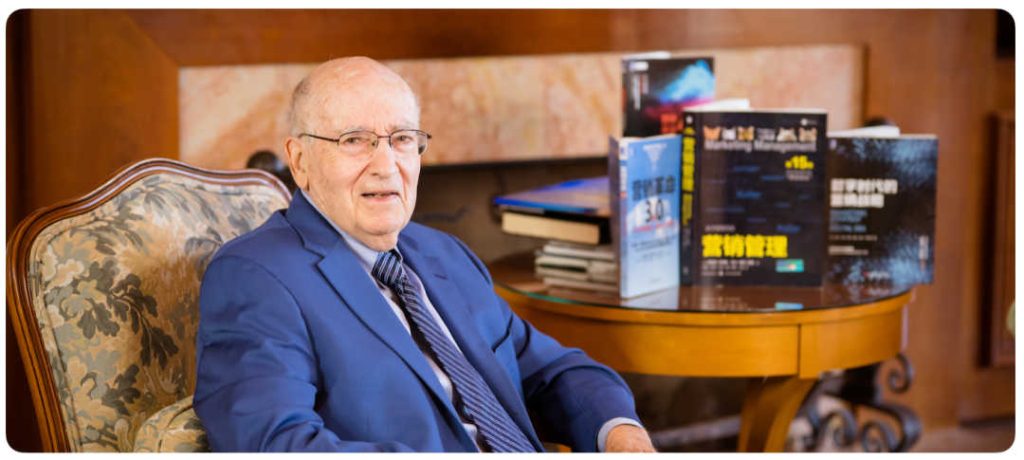
数字时代,全新的商业和营销模式在中国与全球,正如雨后春笋般涌现。为应对急速剧变,“现代营销学之父”菲利普·科特勒阐释了构成21世纪现代营销管理的7种职能:
- 制订战略营销计划;
- 理解市场并捕捉市场洞见;
- 制定成功的营销战略;
- 设计市场价值;
- 沟通市场价值;
- 传递市场价值;
- 以对社会负责的方式管理增长
基于此,科特勒对2023年全新市场环境做出了三大预测:
消费者的新能力
随着信息技术、通信技术和移动技术的发展,今天的消费者能够做出更好的选择,并与世界各地的人们分享喜好和意见。
公司的新能力
公司可以利用互联网作为一个强大的信息和销售渠道,包括个性化定制商品;可以收集更全面、更丰富的市场、消费者、潜在消费者和竞争对手的信息;可以改善采购、招聘、培训以及内外部的沟通;可以提高成本效率。
新的竞争环境
以客户为中心的公司,正在营销“体验”,而不是营销产品种类;传统公司开展中间商重构,通过增加在线服务的方式转型成为实体店与电子商务相结合的零售商;品牌制造商受到来自拥有强大销售能力、自有商店品牌的零售商的冲击;许多强大的品牌已经成为超级品牌,并延伸到相关的产品品类,它们在两个或更多行业的交叉领域出现的新品类。
一、打造营销卓越型公司,CEO们该如何做?
由此可见,未来几年,营销几乎能决定公司的生死。君子不立危墙之下,作为管理者,该如何应对?
惠普公司创始人之一戴维·帕卡德曾说:“营销太重要了,不能只交给市场营销部门……在一个真正伟大的营销组织中,你无法分辨谁属于市场营销部门。组织中的每个人都必须根据对客户的影响做出决策。”
虽然营销活动不应该被归为一个部门,但拥有一个负责全公司营销活动并管理日常运营的组织单元对于很多企业而言还是有益的。
CEO认识到,营销可以建立强大的品牌和忠诚的客户群,这些无形资产对于公司价值有很大贡献。许多公司,包括服务型和非营利性公司,现在都设有 CMO,以使得营销职能被放在与CFO(首席财务官)和CIO(首席信息官)等其他C级高层管理人员更加平等的地位。
创建以市场和客户为中心的公司有哪些步骤
第一步,要创建一个真正的营销组织,CEO必须让高级管理层相信以客户为中心的重要性。
第二步,聘请强大的营销人才也至关重要。大多数公司都需要一位技术娴熟的CMO,他不仅要管理市场营销部门,还要尊重并能够影响最高管理层的其他成员。
第三步,鉴于当今市场形势瞬息万变,CEO必须推动建立强大的内部营销培训项目,以提高公司的营销技能。许多公司,如麦当劳、联合利华(Unilever)和埃森哲,都集中设置了这样的培训项目。
第四步,CEO还应确保公司的奖励制度与其通过建立满意、忠诚的客户群来创造市场价值的战略目标保持一致。CEO 应亲自示范强有力的客户承诺,并奖励组织中同样这样做的人。
第五步,CEO 的主要职责是任命一名 CMO,总负责组织中的营销活动。
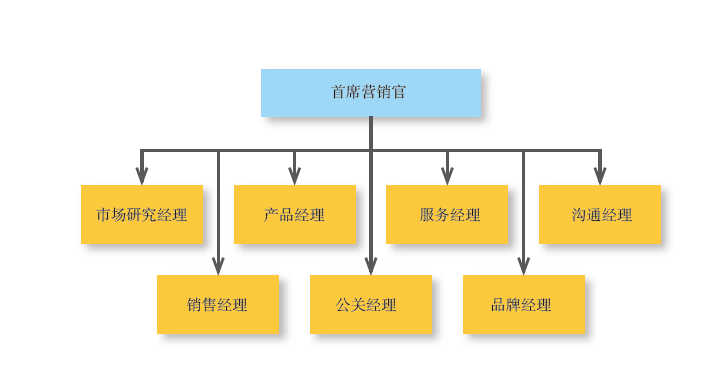
CMO是最高管理层的成员,通常向 CEO 汇报工作。负责营销策略各个部分的高级营销经理通常向CMO报告。CMO统领组织中的所有营销职能,包括产品开发、品牌管理、沟通、市场研究和数据分析、销售、促销、分销管理、定价和客户服务。
二、未来五年,顶级CMO应具备的五大先决条件
在当下复杂多变且严酷的商业环境下,CMO除须具备良好的数字技术素养之外,他们面临的挑战是:成功因素多种多样。
CMO必须具备强大的定量和定性技能;必须具有独立的企业家态度,但又与其他部门密切合作;必须捕捉消费者的“声音”,同时对营销如何创造价值有敏锐的基本认知。
三分之二的顶级CMO认为,在未来十年,营销投资回报率将是衡量其工作成效的主要指标。
未来几年,三个驱动因素将改变CMO的角色:
(1)可预测的市场趋势;
(2)最高管理层角色的变化;
(3)经济和组织设计的不确定性。
而成功CMO需要具备的五个优先条件:成为公司未来的远见者,具备适应性的营销能力,赢得营销人才之战,加强与销售部门的协调,以及对营销支出的回报负责。
对任何CMO而言,最重要的职责可能是——将客户视角融入影响任何客户接触点(客户直接或间接与公司互动)的业务决策。这些客户洞察力必须越来越具有全球视野。
三、新营销核心关键词,客户导向、创造力、善用趋势
由此可见,客户需求是未来市场最核心的竞争资产。那么,究竟该如何打造一家“以客户为中心的”公司?
科特勒也对此进行了全新的论述:
目前,创造卓越的客户体验几乎成为各行各业公司的首要任务。产品、服务和品牌的激增,消费者对市场可选产品的知识的增加,以及消费者有能力影响公众对公司及其产品的看法,所有这些都在强调建立以客户为导向的组织的重要性。
大多数公司现在意识到,创造利益相关者价值的路径,始于重构一个专注于创造长期客户价值的组织。那些认为客户是公司唯一真正的“利润中心”的经理所认同的传统组织结构已经过时了;而营销卓越的公司,正在转变为以客户为中心的现代组织架构。
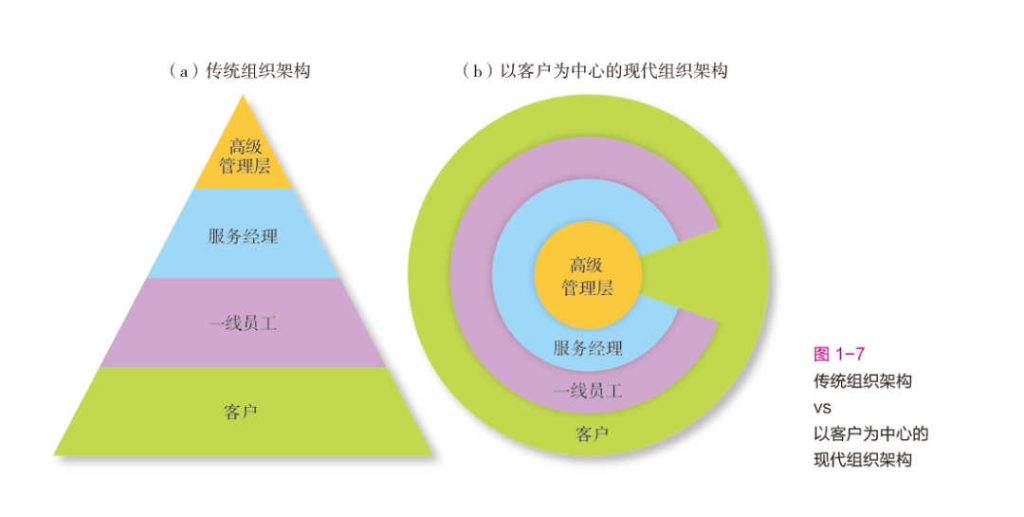
公司的首要任务是客户;其次是遇见、服务和满足这些客户的一线员工;然后是服务经理,他们的工作是支持一线员工,以便他们能够很好地为客户服务;最后是高级管理层,他们的工作是雇用和支持优秀的服务经理。
发展以客户为导向的公司的关键是各级管理者必须亲自参与了解、接触和服务客户。
数字技术落地应用的今天,知情能力越来越高的消费者们,期望公司做的不仅仅是与他们联系,满足甚至取悦他们,他们更希望公司倾听并回应他们。
如今,企业的每个职能部门都可以直接与客户互动。营销部门现在必须整合所有涉及客户的流程,以便客户在与公司互动时只看到一张脸,只听到一个声音。
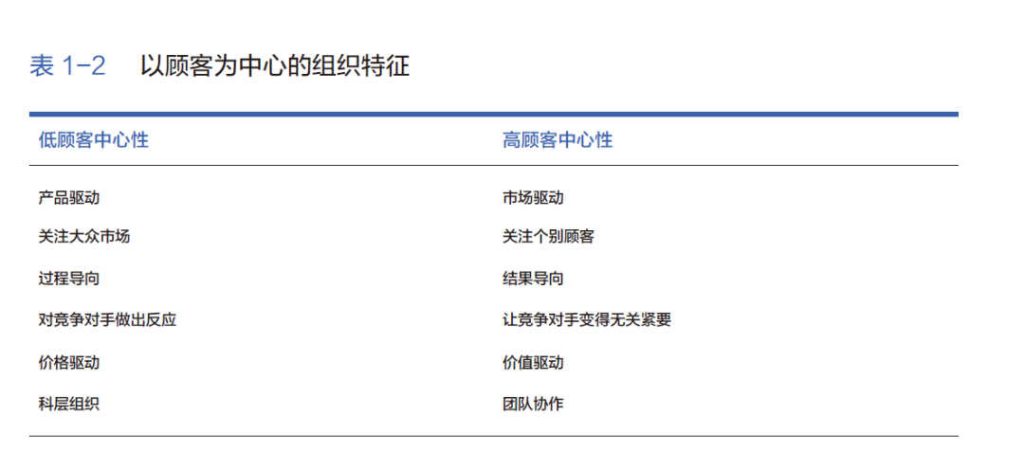
当下,其实许多公司还没有真正做到以市场和客户为导向。相反,它们是以产品和销售为驱动的。
想成为真正的市场驱动型公司,需要培养全公司对客户的热情,围绕客户细分市场而不是产品进行组织,并通过定性和定量研究了解客户。
并且,除去以客户为导向,组织还必须具有创造性。
当下的公司,能够以越来越快的速度,去复制彼此的优势和战略,这就使得差异化越来越难以实现。
公司们变得越来越相似,利润率也随之降低。解决这一困境的最佳方法是培养战略创新能力和想象力。这种能力需要采用各种工具、流程、技能和方法,以让公司比竞争对手产生更多更好的新想法。
为培养这种能力,公司应该努力打造鼓舞人心的工作空间,帮助激发新想法和培养想象力。
最后,公司必须对趋势保持警觉,并随时准备好利用它们。
当市场领导者们厌恶风险,执着于保护现有的市场和物质资源,并且对效率和利润比对创新更感兴趣时,它们就会错过大势所趋的机会。
翻译:
What changes have taken place in the current consumer, enterprise and competitive environment, and what new capabilities have been endowed by the new reality? What qualities should a good CEO and CMO possess to cope with the upheaval in the next five years?
Philip Kotler, the father of modern marketing, gave his insights and ideas in Marketing Management (16th edition).
— Kotler Growth Lab
This post was put together by CXO Park
Professor Philip Kotler, the father of modern marketing
In the digital age, new business and marketing models are springing up in China and around the world. In response to the rapid change, Philip Kotler, the father of modern marketing, explained the seven functions that make up modern marketing management in the 21st century:
Develop strategic marketing plan;
Understand the market and capture market insights;
Develop successful marketing strategies;
Design market value;
Communicate market value;
Transfer market value;
To manage growth in a socially responsible manner
Based on this, Kotler makes three predictions for the new market environment in 2023:
New power for consumers
With the development of information technology, communication technology and mobile technology, consumers today are able to make better choices and share preferences and opinions with people around the world.
The company’s new capabilities
Companies can use the Internet as a powerful information and sales channel, including personalized customized goods; It can collect more comprehensive and rich information about the market, consumers, potential consumers and competitors; Can improve procurement, recruitment, training and internal and external communication; It can increase cost efficiency.
New competitive environment
Customer-centric companies are marketing “experiences” rather than product categories; The traditional company restructures middlemen and transforms into a retailer combining physical stores and e-commerce by increasing online services. Branded manufacturers are under attack from retailers with strong sales power and own-store brands; Many strong brands have become super brands and extend into related product categories, they emerge in the intersection of two or more industries in new categories.
What should ceos do to build marketing excellence companies?
So, in the next few years, marketing can almost decide whether a company lives or dies. A gentleman does not stand under a dangerous wall, as a manager, how to deal with it?
David Packard, co-founder of Hewlett-Packard, once said, “Marketing is too important to be left to the Marketing Department… In a truly great marketing organization, you can’t tell who belongs to the Marketing Department. Everyone in the organization has to make decisions based on the impact on customers.”
While marketing activities should not be grouped into one department, it is beneficial for many businesses to have an organizational unit that is responsible for company-wide marketing activities and manages day-to-day operations.
The CEO recognizes that marketing builds a strong brand and loyal customer base, and that these intangibles contribute greatly to the value of the company. Many companies, both service and non-profit, now have cmos to put the marketing function on a more equal footing with other C-level executives, such as the CFO and CIO.
What are the steps to creating a market – and customer-centric company
First, to create a true marketing organization, the CEO must convince senior management of the importance of customer focus.
Second, hiring strong marketing talent is also critical. Most companies need a skilled CMO who not only runs the Marketing Department, but also respects and can influence the rest of top management.
Third, given today’s rapidly changing marketplace, the CEO must promote a strong internal marketing training program to improve the company’s marketing skills. Many companies, such as McDonald’s, Unilever and Accenture, have centralized training programs.
Fourth, the CEO should also ensure that the company’s reward system is aligned with its strategic goal of creating market value by building a satisfied, loyal customer base. The CEO should personally demonstrate strong customer commitment and reward those in the organization who do the same.
Step 5: The CEO’s primary responsibility is to appoint a CMO who is responsible for marketing activities in the organization.
Cmos are members of top management and usually report to the CEO. Senior marketing managers who are responsible for the various parts of the marketing strategy typically report to the CMO. Cmos lead all marketing functions in an organization, including product development, brand management, communications, market research and data analysis, sales, promotion, distribution management, pricing, and customer service.
Five prerequisites for top cmos in the next five years
Besides being digitally literate, the challenge for cmos in today’s complex and challenging business environment is that there are many factors that make them successful.
Cmos must have strong quantitative and qualitative skills; Must have an independent entrepreneurial attitude but work closely with other sectors; The “voice” of the consumer must be captured, along with a keen basic understanding of how marketing creates value.
Two-thirds of the top cmos believe that marketing ROI will be the primary measure of their effectiveness over the next decade.
Three drivers will change the role of cmos in the coming years:
(1) Predictable market trends;
(2) Changes in the role of top management;
(3) Uncertainty of economic and organizational design.
There are five priorities for a successful CMO: being the company’s future visionary, having adaptive marketing capabilities, winning the war for marketing talent, strengthening coordination with the sales department, and being accountable for the return on marketing spending.
Perhaps the most important responsibility for any CMO is to integrate the customer perspective into the business decisions that affect any customer touch point (where the customer interacts directly or indirectly with the company). These customer insights must be increasingly global.
The new marketing core keywords, customer orientation, creativity, use the trend
Thus, customer demand is the most core competitive asset in the future market. So how do you build a “customer-centric” company?
Kotler also puts it in a new light:
Creating an exceptional customer experience is now a top priority for companies in almost every industry. The proliferation of products, services, and brands, the increase in consumer knowledge of the options available in the market, and the ability of consumers to influence the public perception of companies and their products all underscore the importance of building customer-oriented organizations.
Most companies now realize that the path to creating stakeholder value begins with restructuring an organization focused on creating long-term customer value. The traditional organizational structure embraced by managers who believe that the customer is the only true “profit center” of the company is outdated; Companies that excel in marketing are moving to modern, customer-centric organizations.
The company’s first priority is the customer; Then there are the front-line employees who meet, serve and satisfy those customers; Then there are the service managers, whose job is to support front-line employees so they can serve customers well; Finally, there is senior management, whose job is to hire and support good service managers.
The key to developing a customer-oriented company is that managers at all levels must be personally involved in understanding, reaching out to, and serving customers.
With the advent of digital technology, increasingly well-informed consumers expect companies to do more than connect with them, satisfy them and even please them. They expect companies to listen and respond to them.
Today, every function of a business can interact directly with customers. Marketing departments must now integrate all processes involving customers so that customers see only one face and hear only one voice when they interact with the company.
Right now, many companies are not really market – and customer-oriented. Instead, they are product – and sales-driven.
To be truly market-driven, you need to cultivate a company-wide passion for your customers, organize around customer segments rather than products, and understand your customers through qualitative and quantitative research.
And, in addition to being customer-oriented, organizations must also be creative.
Today’s companies are able to copy each other’s strengths and strategies at an increasing rate, which makes differentiation harder and harder to achieve.
Companies are becoming more similar, and profit margins are shrinking. The best way to solve this dilemma is to cultivate the ability of strategic innovation and imagination. This ability requires the adoption of tools, processes, skills and methods that allow the company to generate more and better new ideas than its competitors.
To foster this ability, companies should strive to create inspiring workspaces that help spark new ideas and foster imagination.
Finally, companies must be alert to trends and ready to take advantage of them.
When market leaders are risk-averse, obsessed with protecting existing markets and physical resources, and more interested in efficiency and profit than innovation, they miss the trend.
如需加入CXO UNION(CXO联盟)高管社群,请联系社群小伙伴哦~
本文由CXO UNION-CXO联盟(cxounion.cn)转载而成,来源于科特勒营销战略;编辑/翻译:CXO UNIONCXO联盟小宁檬。
免责声明: 本网站(http://www.cxounion.cn/)内容主要来自原创、合作媒体供稿和第三方投稿,凡在本网站出现的信息,均仅供参考。本网站将尽力确保所提供信息的准确性及可靠性,但不保证有关资料的准确性及可靠性,读者在使用前请进一步核实,并对任何自主决定的行为负责。本网站对有关资料所引致的错误、不确或遗漏,概不负任何法律责任。
本网站刊载的所有内容(包括但不仅限文字、图片、LOGO、音频、视频、软件、程序等) 版权归原作者所有。任何单位或个人认为本网站中的内容可能涉嫌侵犯其知识产权或存在不实内容时,请及时通知本站,予以删除。
如需加入CXO UNION(CXO联盟)高管社群,请联系社群小伙伴哦~

免责声明: 本网站(http://www.cxounion.cn/)内容主要来自原创、合作媒体供稿和第三方投稿,凡在本网站出现的信息,均仅供参考。本网站将尽力确保所提供信息的准确性及可靠性,但不保证有关资料的准确性及可靠性,读者在使用前请进一步核实,并对任何自主决定的行为负责。本网站对有关资料所引致的错误、不确或遗漏,概不负任何法律责任。
本网站刊载的所有内容(包括但不仅限文字、图片、LOGO、音频、视频、软件、程序等) 版权归原作者所有。任何单位或个人认为本网站中的内容可能涉嫌侵犯其知识产权或存在不实内容时,请及时通知本站,予以删除。
Search
Popular Posts
-

2024数字化灯塔案例评选申报开启!
“2024数字化灯塔案例评选”于3月正式启动,诚挚欢迎业界同仁自荐和推荐,一起推动产业数字化进程,助力赋能企业…
-

2024 X-Award星盘奖申报通道已开启!
X-Award星盘奖是数字化转型服务、IT服务行业重要的商业奖项,旨在表彰行业里提供杰出数字化转型服务与IT服…
-

2024 N-Award星云奖申报通道已开启!
N-Award是数字化转型领域重要的商业奖项,旨在表彰那些以非凡的远见、超群的领导才能和卓越的成就来激励他人的…