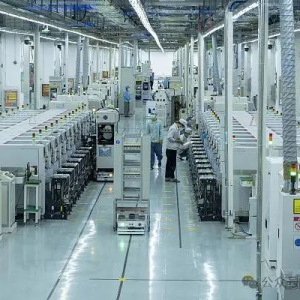
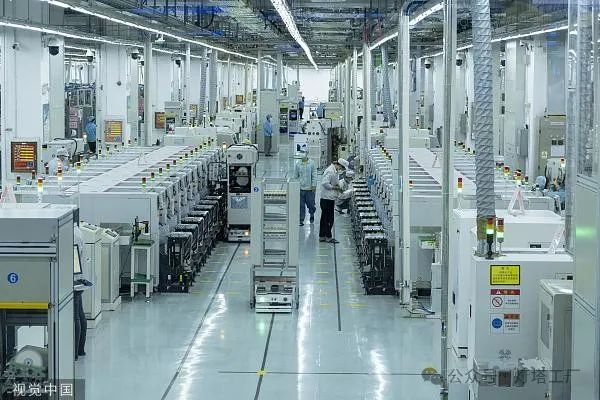
“在最新的世界经济论坛‘灯塔工厂’网络中,40%是中国工厂。”世界经济论坛先进制造业与供应链中心负责人Federico Torti在最近的专访中告诉界面智库。过去6年中,他带领一个专家评审团队遍访全球制造业工厂,并评选出采用最先进技术的代表。 CXO UNION-CXO联盟(cxounion.cn)
“过去12到15个月里,我们看到,中国工厂申请直接或间接促进可持续发展的技术应用案例在增加,这意味着中国工厂不仅投资于提升效率和生产力,还明确投资于可持续发展。”Torti指出。
“灯塔工厂”被定义为广泛应用工业4.0技术的典范工厂。2023年12月,世界经济论坛公布了最新的“灯塔工厂”名单,2023年新晋21座“灯塔工厂”,其中12座在中国,合计全球有153家“灯塔工厂”,在中国的工厂有62座。
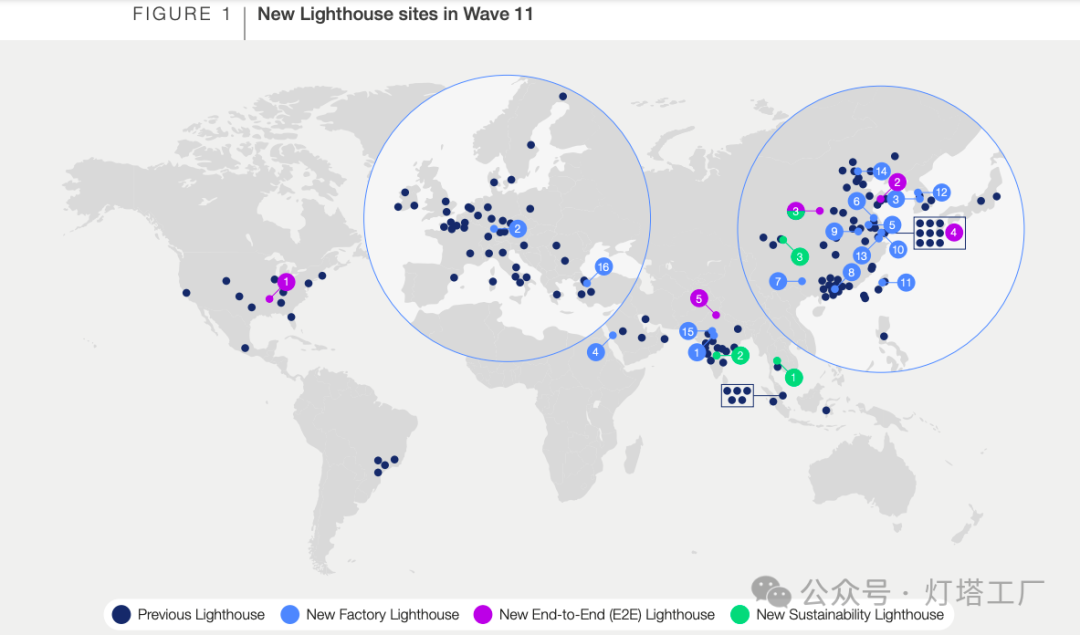
同步发布的还有《全球“灯塔工厂”网络:AI应用的速度和规模》白皮书,世界经济论坛指出,每次工业革命都有决定性的突破诞生,过去是蒸汽机、电力带动的大规模生产、计算机带来的自动化,现在则是大数据带来的机器智能定义了第四次工业革命。AI技术正在给制造业带来变革。
在过去5年中,“灯塔工厂”网络收录了700个第四次工业革命的应用案例,其中200个采用了AI技术。
白皮书指出,每一家新的“灯塔工厂”都在推动生成式人工智能的应用,因为生成式人工智能将为每年的世界经济贡献2.6-4.4万亿美元的产值,其中四分之一可以来自制造业和供应链生产的改进。
比如,仪器公司安捷伦通过分析供应商信息,预测材料可用性,把控供应链风险;鸿佰科技(Ingrasys)用订单历史数据和市场数据来预测订单量;联合利华根据前一天的销售额、库存目标、产能限制等自动补充库存;亨通广电(Hengtong Alpha,中国苏州)使用先进分析技术优化预成型和拉丝工艺参数。
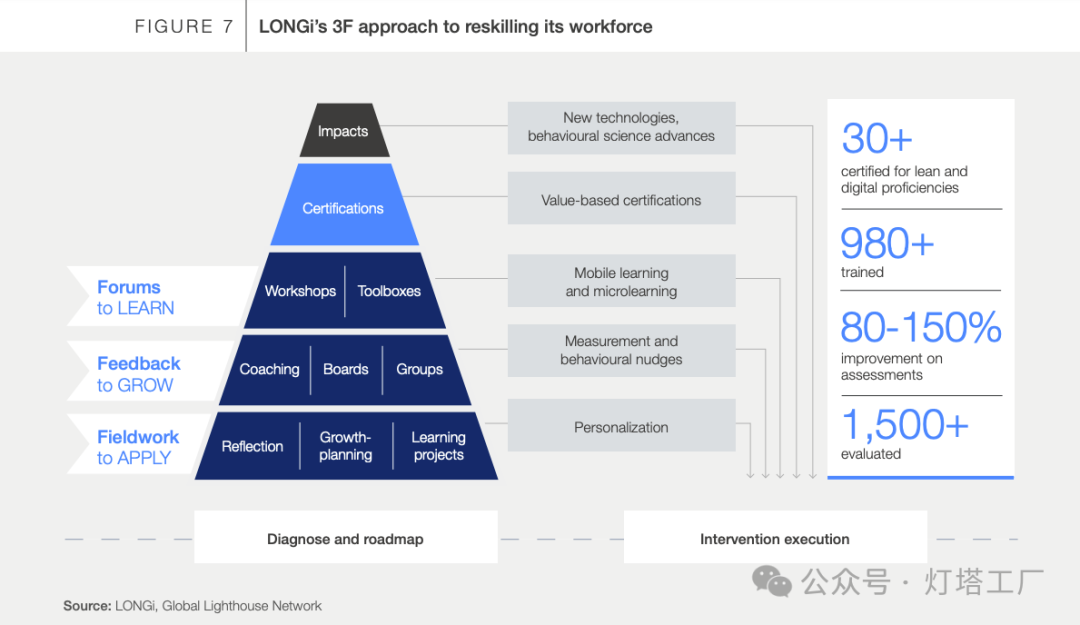
对于“灯塔工厂”来说,它同时需要重新培训工人与4.0革命下的工厂协作配合。中国太阳能企业隆基绿能评上了2023年的“灯塔工厂”,白皮书中以隆基绿能举例称,它实施了内部的评估培训认证体系,为近1000名员工定制了学习发展计划。 CXO UNION-CXO联盟(cxounion.cn)
Federico Torti在接受界面智库专访中介绍了评选“灯塔工厂”的标准、选拔流程,未来的评选扩展计划,以及工业4.0正在给全球制造业工厂带来的变革。

以下是专访实录,发布时有编辑:
一、全球灯塔工厂的地理分布与制造业贡献分布大体一致
Q:我们观察到,制造业对绿色转型越来越重视,企业也更加关注效率、自动化、脱碳以及员工福利。截至去年,全球共有153家“灯塔工厂”,其中62家在中国。您能否分享下,“灯塔工厂”项目是如何启动的?在第四次工业革命的背景下,“灯塔工厂”具有何种意义?
Federico Torti:“灯塔工厂”项目始于2018年,这是我们在世界经济论坛上进行的时间最长的项目之一。我的团队(即先进制造和供应链中心)最初是与麦肯锡公司(McKinsey & Company)合作,现在我们有8个正式支持我们的行业合作伙伴。 CXO UNION-CXO联盟(cxounion.cn)
从根本上讲,“灯塔工厂”的网络是由正在大规模部署数字技术的、成熟的先进制造商组成的社区,这些技术也代表着第四次工业革命,例如人工智能、先进机器人或区块链等技术,它们能够对工厂运营产生实质性和具体的影响。
我们会特别关注财务影响,包括应用先进技术带来的成本降低或新增收入潜力;可持续性是另一个重要的评价角度,我们也特别关注通过技术直接改善环境、可持续性指标;另外,我们在研究先进技术对工作场所的变革,以及对工人的益处。当然,还有很多运营指标与公司的工作方式有关。
工厂是价值链的节点,在这些节点,我们亲眼目睹和了解了某些技术在整个价值链中的应用,以及其产生的变革力量。此外,我们还带着我们平台上的企业管理者们,参观这些制造业工厂,实地了解这些标杆企业如何实际运作。
Q:所以每年您都会去世界各地参观这些工厂?
Federico Torti:没错,过去几年,我花了很多时间周游世界,现在我们有了一个更大的团队。有2人从世界经济论坛的角度来统领工作,还有一个8人研究小组,成员来自各行业的专家,通过实地访问,推进整个遴选过程。
8个行业合作伙伴来自麦肯锡、强生、施耐德、西门子、Koç Holdings(土耳其最大工业集团)、富士康、汉高,还有宁德时代。
Q:“灯塔工厂”在全球的地理分布情况如何?
Federico Torti:我们目前在4年半的工作中总共评出了153座灯塔。考虑到全球大约有1000万家工厂,“灯塔工厂”占比只是相当小的一部分。但总体来看,制造业对GDP的贡献大约为14万亿美元,观察这一贡献在全球的分布,会发现大约三分之一来自中国。我们可以大致说,全球灯塔项目的地理分布与制造业直接创造的GDP分布大致一致。而中国“灯塔工厂”在我们最新的网络中占比大约为40%。
在全球制造业领域,中国无疑是最大的强国之一,在先进技术和创新方面表现尤为突出。
然后,我们看到大约25%的GDP增长来自欧洲,这是另一个重要的制造业集群,尽管在制造和设施方面可能相对老化,但在某些领域仍具有创新性。 CXO UNION-CXO联盟(cxounion.cn)
亚洲其他地区的增长贡献约为20%,包括印度和东南亚。就最新的“灯塔工厂”网络而言,这些区域是世界上增长最快的地区之一,这可能表明,各大公司现在也在亚洲寻找不同的生产地点、生产设施。
Q:一个趋势是,印度的“灯塔工厂”数量似乎在增多,您对此有什么观察?
Federico Torti:确实,特别是印度和东南亚地区的一些国家,比如马来西亚和印度尼西亚。与过去几年相比,这些国家的增长速度正在加快,它们可能成为增长最快的新兴市场之一。
二、“灯塔工厂”项目的核心要素和扩展计划
Q:您能否概述一下“灯塔工厂”的选拔机制和标准?
Federico Torti:目前选择的标准非常直接。四个核心要素——影响力、解决方案、推动因素,以及作为新增要求的可持续性,共同构成了衡量框架的基础。
影响力是转型成果的直接体现,通常通过可量化的成效来展示,如成本节省、效率提升、产量增加等,例如看到某些成本降低了30%或50%。这个指标反映了技术或变革措施对业务的直接影响,是最容易被外部认可和理解的部分。但是,推动因素和解决方案,则是深入了解这些公司如何实现转型并产生影响的关键。
我们所说的解决方案特指技术用例,涉及企业采用的具体技术解决方案及其实施的复杂程度。这包括人工智能、机器学习、大数据分析等新兴技术的应用,以及这些技术如何解决业务问题或提高操作效率。例如工厂产品面临质量问题时,可能是利用人工智能的光学检测系统自动减少次品率,将顾客投诉减至最低。
而关于推动因素,对我来说可能是最关键的一环。比如一个组织需要考虑如何把人放置于数字化转型、升级或扩展计划的中心,如何寻找合适的人才和知识,如何开发合作伙伴生态系统,如何实现数据和技术的标准化及架构等等,这对于企业数字化转型能否成功至关重要。所有这些因素很少与技术直接相关,而是关注公司如何管理转型变革,如何适应未来。企业需要有远见的领导者,他们能够准确理解第四次工业革命带来的好处。
随着全球对环保和可持续发展的日益重视,可持续性已成为评估标准的重要组成部分。在2020年,我们将可持续性作为强制性要求。这不仅要求企业展示其操作和技术解决方案的环境影响,还要求企业展现其推动可持续发展的长期承诺和实际行动。对于新建立的工厂或项目,要求提供至少6到12个月的KPI数据,以确保评估结果的准确性和可靠性,排除生产初期可能的异常波动。 CXO UNION-CXO联盟(cxounion.cn)
Q:2023年有21家新工厂加入“灯塔工厂”网络,还有4家加入可持续发展工厂,这4家可持续工厂有什么特别之处?
Federico Torti:我们在“灯塔工厂”的标识之外,还设立了一个名为“可持续发展灯塔”的额外奖项计划,它聚焦于先进技术对可持续性指标的影响。在成为“灯塔工厂”后,企业有机会通过提交附加申请,未来被认定为一个致力于可持续发展的先行者。
认定可持续发展“灯塔工厂”需要我们深入了解更多信息,比如特定技术应用或方法如何直接减少排放或降低现场能耗,以及技术应用对水使用、废弃物产生及其循环利用方面的影响。
过去我们通常看到,技术应用除了带来流程效率的提升,也额外带来能源使用的减少,但我们期望的不仅仅是这种情况,而是企业能够采取行动减少排放,有明确的净零排放目标和承诺,并致力于利用技术达成这些目标。
Q:“灯塔工厂”项目未来是否有扩展计划,比如拓宽选择范围,或引入新的评估标准?
Federico Torti:答案毫无疑问是肯定的。我们正处于第四次工业革命的前沿,探索其中最具影响力和变革性的领域。
可持续发展是我们关注的核心话题之一,我们已经启动了一个专注于可持续性的项目,名为“Sustainability Deep Dive”。我们的目标是将这个项目的囊括范围扩展到技术领域之外,将其打造成真正意义上关于可持续性的标杆,这样我们便能展示更多关于可持续性的实际案例。 CXO UNION-CXO联盟(cxounion.cn)
人在技术转型中扮演着关键角色,这是我们希望进一步探索的一个领域,这个话题被讨论得还不够多。
我们最近还审视了企业如何面对速度和规模形成的新挑战。这个挑战不仅在于变化之快,还在于如何从整体上改变企业的生产网络。企业如何应对挑战,获得成功?设计和推动企业数字化变革的洞察力变得越来越重要。
自2018年以来,我们希望能为我们的合作伙伴和全球制造业的领导者提供更有针对性的见解,并更专注于特定行业,提供数据产品。我们的目标是像向班上最优秀的学生学习,以一种更加直接的方式向社区提供知识。
三、基于数据和智能的工厂自我调节系统正在兴起
Q:聚焦中国,您如何看待中国工厂在自动化和绿色转型方面的机会;以及在当前的工业格局中,哪些行业最值得关注?
Federico Torti:正如我之前提到的,中国可能是全球发展速度最快且变革最集中的地区之一。在我们的中国“灯塔工厂”中,自动化水平普遍很高。除了生产过程的自动化,我们还观察到工厂与上游供应商、下游客户之间紧密连接,以及高度集成和先进的解决方案。例如有些黑灯工厂,在几乎无需照明的情况下就能运行,这表明所有生产环节的系统都高度互联。自动化不仅限于生产处理,还包括质量检查、实时采购材料和调整生产计划等环节。这一切都依赖于算法、系统和机器人技术。值得注意的是,这些高度自动化的应用在中国较为常见,而在国外则不太常见。
特别是在过去12到15个月里,我们看到,中国工厂申请直接或间接促进可持续发展的技术应用案例在增加,这意味着中国工厂不仅投资于提升效率和生产力,还明确投资于可持续发展。
至于您提出的第二个问题,大多数中国“灯塔工厂”集中在电子、半导体、制药和汽车行业。所有这些行业都在变得越来越成熟,越来越智能化。食品饮料和消费品制造行业,也有大量人工智能技术的应用案例。
全球范围内,更多新兴产业正在加入第四次工业革命,比如韩国的水处理厂和美国孟菲斯的DHL物流配送中心,都是积极的示范。这表明,技术转型和先进技术的实施不仅仅限于传统制造业。
Q:谈到人工智能,据您观察人工智能是如何融入“灯塔工厂”的生产流程的?大数据分析又在工厂的决策支持系统中发挥了什么作用?
Federico Torti:这确实是一个很好的问题。我们最新发布的白皮书就主要探讨了人工智能的革命性影响,最新的“灯塔工厂”案例展示了各种人工智能技术的成熟度。
AI在生产过程的各个阶段都在发挥作用,它推动更好的产品设计,并整合客户反馈、洞察需求或解决投诉。AI应用已经融入了生产过程的每一步,包括与供应商的联系、生产调度、采购等。基于AI应用的影响范围,我们也把“灯塔工厂”分为将AI技术应用于工厂内部或价值链全链条的工厂。
在最新的白皮书中,有关公司实施AI速度的数据特别引人注目。关于数据和分析在转型中的作用,我们看到了有的企业从几乎没有数据到拥有高质量、可靠数据的巨大跨越,这依赖于大规模的标准化和数据架构工作。一旦实现,基于数据的决策就变得极为重要,利用整个网络中的数据池来推动智能化生产,包括预测设备维护、优化生产流程、调度调整等等。
我们正在见证,基于数据和智能的工厂自我调节系统兴起,人类正在转变角色,以更好地融入这一循环。
Q:这真的很有趣,人工智能一直在改变我们的生活,由于它们许多应用是在工厂里,我们日常看不到。您能分享一些有趣的故事吗?
Federico Torti:当然。我认为人工智能最突出的应用之一是在光学检测和质量控制方面,对于某些行业,这意味着从依赖人工转向完全自动化,这不仅减少了运营成本和劳动力成本,更革新了人力资源管理方式。
质量检测工作本身是一项压力很大的工作,既乏味又易于出错,因为它通常要求工人们动作快,且工作重复性高。因此,采用自动化不仅减少了人为失误,通过标准化视图,还能全面提升产品质量,显著减少客户投诉。自动化光学检测还能生成数据,优化上游生产流程或设备设置,进而减少产品缺陷和客户投诉。因此,机器能提供可靠数据,驱动上游的设计和生产调整。 CXO UNION-CXO联盟(cxounion.cn)
而更令人兴奋的是生产计划和供应商调度的动态优化。当物流链路中断,相关信息会被收录并共享,随后AI模型可据此调整供应商间的物料采购策略,评估其对生产计划的影响。
另一个引人注目的案例在菲律宾,有工厂借助人工智能系统上网搜集天气预报和警报信息,作出针对自然灾害的预测和响应,比如预测其对生产计划、物流运输的影响,进而采取预防措施。例如,在火山活动增强时,提前关闭空气处理设施,避免灰尘堵塞。这些系统极大地改善了公司的运作方式。
我们的白皮书中记录了许多激动人心的案例,总共超过700个,这展示了人工智能应用的广泛性和深远影响。
Q:我还想知道的是,关于供应链管理和物流优化,现代工厂面临哪些挑战?先进技术可以发挥哪些作用?
Federico Torti:目前成千上万的企业正面临着多重因素驱动的全球供应链压力,例如消费者需求不断变化,不仅要求工厂提高供应链透明度,还需要加强与供应商、合作伙伴乃至竞争对手之间的数据共享和连接。另外,法律法规和对企业可持续性要求增加,对供应链弹性的需求显著上升。
在此背景下,企业必须应对复杂的供应链问题,并增加供应链弹性。比如为特定产品、原材料或部件寻找替代供应商,或者考虑重新配置制造业基地,这也需要考虑全球不同国家的政策。然而,任何形式的复制都意味着额外的投资。
我们有案例表明,技术在帮助弥合这些差距、消除低效环节,特别是在推动供应链透明化方面。例如最近我们见证了苏伊士运河和红海的断航事件,还有2021年3月苏伊士运河因一艘运输船阻塞而完全断航,造成物流配送延迟。提高供应链数据可见性和可用性,使得即时交互和情景预测成为可能,有助于减少回购效应和上游的牛鞭效应(指供应链上的一种需求变异放大现象,信息流从终端客户向原始供应商传递时,信息的扭曲逐级放大)。
对于供应商来说,没有足够的数据可见性,面对需求和供应数据的极端波动,企业难以应对。而基于数据的人工智能和分析工具,可以减少和预防这些。
四、制造业工人的工作任务正在发生变革
Q:您刚刚提到AI应用可以使人们减少无聊的工作,您觉得“灯塔工厂”的发展会如何影响传统制造业工人?
Federico Torti:这个问题很好。我们对153个“灯塔工厂”中收录的数据进行分析发现,通过恰当且高效的技术应用,制造业工人的工作任务正在发生变革。这种变革营造了一个环境,员工能在此环境中不断学习和发展,面对的工作或任务种类也在不断进化。因此,每位工人和每项工作都展现出更高的效率和生产力。
工作环境也变得更有活力,人们对学习和参与技术变革感到兴奋。与那些未经数字化转型的公司相比,“灯塔工厂”的工作环境大大提高了员工的参与度。并且,工人的工作及其技能将根据工厂内外部需求变化而调整,这在今天快速变化的工作环境中变得尤为重要。 CXO UNION-CXO联盟(cxounion.cn)
今天,我们有了更简单的与系统交互的方式,如基于自然语言的新一代人工智能,工人与人工智能系统的互动门槛在降低。系统可能会指导工人如何调整产品设计,或以特定方式配置机器,而在过去,这需要大量的知识和对工作、对其他人的深入了解。
Q:的确,随着人工智能和自动化技术的不断发展,传统意义上对工人的技能要求正在发生变化。这不一定意味着所有工人都需接受高等教育,但确实意味着他们需要具备新的技能,这些技能集可能包括与人工智能的交互合作。
Federico Torti:我理解你说的。确实,不是所有情况下我们都需要经过传统教育体系训练的工人。由于工作环境的快速变化,企业有必要在内部、在工作场所提供持续学习的机会。因此,现代工人的学习和技能提升不仅仅来自个人的教育背景,更需要迅速适应变化的能力。工作场所需要提供必要的工具,使员工能够有效地使用系统,理解如何有效利用这些工具。依托于工作中提供的资源,持续学习变得更加动态和必要,这种教育成为职业生涯中的一部分。
另外,随着数字学习平台的普及,这些平台可以轻松地融入培训计划,为员工提供持续学习的机会。我们期待如生成式人工智能之类的工具,能简化学习过程,方便与人互动,为员工配备适当的工具。
翻译:
The head of the “Lighthouse Factory” at the Century Economic Forum: How will the Fourth Industrial Revolution reshape people and manufacturing?
“Of the latest WEF network of ‘beacon factories’, 40 per cent are Chinese.” Federico Torti, head of the World Economic Forum’s Center for Advanced Manufacturing and Supply Chain, told the Interface think tank in a recent interview. Over the past six years, he has led a team of expert judges who have visited manufacturing plants around the world and selected representatives who have adopted the most advanced technologies.
“In the last 12 to 15 months, we have seen an increase in applications from Chinese factories for technologies that directly or indirectly contribute to sustainability, which means that Chinese factories are not only investing in efficiency and productivity, but also explicitly investing in sustainability.” Torti points out. CXO UNION-CXO联盟(cxounion.cn)
“Lighthouse Factory” is defined as a model factory for the wide application of Industry 4.0 technology. In December 2023, the World Economic Forum announced the latest list of “lighthouse factories”, the new 21 “lighthouse factories” in 2023, of which 12 are in China, a total of 153 “lighthouse factories” in the world, and 62 factories in China.
As of December 2023, there are 153 “lighthouse factories” in the world. Image: White paper “Global Network of ‘Lighthouse Factories’ : Speed and Scale of AI Applications”
The World Economic Forum pointed out that every industrial revolution has a decisive breakthrough, the past is the steam engine, power-driven mass production, automation brought by computers, and now it is the machine intelligence brought by big data that defines the fourth industrial revolution. AI technology is revolutionizing manufacturing.
Over the past five years, the Lighthouse Factory network has included 700 Fourth Industrial Revolution application cases, 200 of which employ AI technology.
The white paper states that each new “beacon factory” is driving the adoption of generative AI, as generative AI will contribute $2.6-4.4 trillion to the world economy annually, of which a quarter can come from manufacturing and supply chain production improvements.
For example, Agilent, an instrument company, manages supply chain risk by analyzing supplier information to predict material availability. Ingrasys uses order history data and market data to forecast order volumes; Unilever automatically replenishes inventory based on previous day’s sales, inventory targets, capacity limits, etc. Hengtong Alpha (Suzhou, China) uses advanced analytical techniques to optimize preforming and drawing process parameters.
For the “lighthouse factory”, it also needs to retrain workers to cooperate with the 4.0 revolution of the factory. Longi Green Energy, a Chinese solar energy company, was awarded the “Lighthouse Factory” in 2023. The white paper cites Longi Green Energy as an example, saying that it has implemented an internal evaluation training certification system and customized learning and development plans for nearly 1,000 employees. CXO UNION-CXO联盟(cxounion.cn)
Longi Green Energy internal training system. Figure: White paper “Global Network of ‘Lighthouse Factories’ : Speed and Scale of AI Applications”
In an exclusive interview with Interface Think Tank, Federico Torti describes the criteria for the selection of Lighthouse Factories, the selection process, future expansion plans, and the changes that Industry 4.0 is bringing to manufacturing plants around the world.
Federico Torti is interviewed by Interface Think Tank
The following is a transcript of the interview, edited at the time of publication:
First, the geographical distribution of global lighthouse factories is broadly consistent with the distribution of manufacturing contributions
Q: We are seeing a growing focus on green transformation in manufacturing, with companies paying more attention to efficiency, automation, decarbonization and employee well-being. As of last year, there were 153 “lighthouse factories” in the world, 62 of which were in China. Can you share how the “Lighthouse Factory” project was launched? What is the significance of the Lighthouse Factory in the context of the Fourth Industrial Revolution? CXO UNION-CXO联盟(cxounion.cn)
Federico Torti: The Lighthouse Factory project started in 2018 and is one of the longest projects we have undertaken at the World Economic Forum. My team, the Center for Advanced Manufacturing and Supply Chain, started out with McKinsey & Company, and now we have eight industry partners who officially support us.
Fundamentally, the Lighthouse Factory network is a community of established advanced manufacturers who are deploying digital technologies at scale that also represent the fourth Industrial Revolution, such as artificial intelligence, advanced robotics, or blockchain, which are capable of having a substantial and concrete impact on factory operations.
We pay particular attention to the financial impact, including the potential for cost reduction or additional revenue arising from the application of advanced technologies; Sustainability is another important evaluation Angle, we also pay special attention to the direct improvement of environmental and sustainability indicators through technology; In addition, we are studying how advanced technology is transforming the workplace and the benefits to workers. Of course, there are many operational metrics that have to do with the way a company works.
The factory is the node of the value chain where we see and learn first-hand how certain technologies are applied throughout the value chain and the transformative power they have. In addition, we also take business managers on our platform to visit these manufacturing plants to see how these benchmark companies actually operate.
Q: So every year you travel around the world to visit these factories?
Federico Torti: Yes, I’ve spent a lot of time over the last few years traveling the world, and now we have a bigger team. Two people lead the work from the WEF’s perspective, and an eight-person research team of experts from various industries facilitate the selection process through field visits.
The eight industry partners are McKinsey, Johnson & Johnson, Schneider, Siemens, Koc Holdings (Turkey’s largest industrial group), Foxconn, Henkel and Catl.
Q: What is the geographical distribution of the Lighthouse Factory around the world?
Federico Torti: We have now rated 153 lighthouses in four and a half years of work. Considering that there are about 10 million factories around the world, “lighthouse factories” represent a fairly small percentage. But overall, manufacturing contributes about $14 trillion to GDP, and if you look at the global distribution of that contribution, about a third comes from China. We can roughly say that the geographic distribution of lighthouse projects around the world is roughly in line with the distribution of GDP directly generated by manufacturing. Chinese “lighthouse factories” account for about 40% of our latest network. CXO UNION-CXO联盟(cxounion.cn)
In the global manufacturing sector, China is undoubtedly one of the biggest powers, particularly in advanced technology and innovation.
Then we see about 25% of GDP growth coming from Europe, another important manufacturing cluster that, while perhaps relatively old in terms of manufacturing and facilities, is still innovative in some areas.
The rest of Asia contributed about 20 percent to growth, including India and Southeast Asia. These regions are among the fastest growing in the world in terms of the latest network of “lighthouse factories”, which may indicate that companies are now also looking for different production locations, production facilities in Asia.
Q: One trend is that the number of “lighthouse factories” in India seems to be increasing. What is your observation about this?
Federico Torti: Yes, especially India and some countries in Southeast Asia, such as Malaysia and Indonesia. Compared to the past few years, these countries are growing faster and they could be among the fastest growing emerging markets.
Second, core elements and expansion plan of the “Lighthouse Factory” project
Q: Can you outline the selection mechanism and criteria for the Lighthouse Factory?
Federico Torti: The criteria for selection at the moment are very straightforward. Four core elements – impact, solutions, enablers, and sustainability as a new requirement – together form the basis of the measurement framework.
Impact is a direct manifestation of the results of the transformation, often demonstrated through quantifiable results such as cost savings, efficiency gains, increased production, etc., such as seeing some costs reduced by 30% or 50%. This indicator reflects the direct impact of technology or change measures on the business and is the part that is most easily recognized and understood externally. But enablers and solutions are key to understanding how these companies are transforming and making an impact. CXO UNION-CXO联盟(cxounion.cn)
When we talk about solutions, we refer specifically to technology use cases, which relate to the specific technology solutions adopted by the enterprise and the complexity of their implementation. This includes the application of emerging technologies such as artificial intelligence, machine learning, big data analytics, and how these technologies can solve business problems or improve operational efficiency. For example, when factory products face quality problems, artificial intelligence optical inspection systems may be used to automatically reduce the rate of defective products and minimize customer complaints.
And the enablers, for me, are probably the most critical. For example, an organization needs to consider how to place people at the center of digital transformation, upgrade or expansion plans, how to find the right talent and knowledge, how to develop a partner ecosystem, how to achieve data and technology standardization and architecture, which is crucial to the success of the enterprise digital transformation. All of these factors are rarely directly related to technology, but instead focus on how companies manage transformational change and adapt to the future. Businesses need visionary leaders who accurately understand the benefits of the fourth Industrial Revolution.
With the increasing global emphasis on environmental protection and sustainable development, sustainability has become an important part of the assessment criteria. In 2020, we make sustainability a mandatory requirement. This requires companies to demonstrate not only the environmental impact of their operations and technology solutions, but also their long-term commitment and practical actions to promote sustainable development. For newly established plants or projects, it is required to provide at least 6 to 12 months of KPI data to ensure the accuracy and reliability of the evaluation results, and to exclude possible abnormal fluctuations in the early stage of production.
Q: In 2023, 21 new plants will join the Lighthouse Factory network and four more will join the sustainable Factory network. What is special about these four sustainable factories?
Federico Torti: In addition to the “Lighthouse Factory” logo, we have created an additional award program called “Lighthouse for Sustainability,” which focuses on the impact of advanced technologies on sustainability indicators. After becoming a “Lighthouse factory”, the company has the opportunity to be recognized as a pioneer committed to sustainable development in the future by submitting additional applications. CXO UNION-CXO联盟(cxounion.cn)
Identifying a sustainable “beacon factory” requires a deeper understanding of how a particular technology application or approach directly reduces emissions or on-site energy consumption, as well as its impact on water use, waste generation and recycling.
In the past, we have often seen technology adoption lead to increased process efficiency and additional reduction in energy use, but we expect more than this, but that companies can take action to reduce emissions, have clear net zero emission targets and commitments, and are committed to using technology to achieve these goals.
Q: Is there any plan to expand the Lighthouse Factory project in the future, such as broadening the selection range or introducing new evaluation criteria?
Federico Torti: The answer is unequivocally yes. We are at the forefront of the Fourth Industrial Revolution, exploring its most impactful and transformative areas.
Sustainability is one of our core topics of concern and we have launched a project focused on sustainability called Sustainability Deep Dive. Our goal is to expand the scope of this project beyond the technical field, to make it a true benchmark of sustainability, so that we can show more practical examples of sustainability. CXO UNION-CXO联盟(cxounion.cn)
People play a key role in technological transformation, and this is an area we want to explore further, a topic that is not discussed enough.
We also recently looked at how businesses are facing new challenges of speed and scale. The challenge lies not only in the speed of change, but also in how to change the production network of the enterprise as a whole. How do companies respond to challenges and succeed? The insights needed to design and drive digital change in businesses are becoming increasingly important.
Since 2018, we want to be able to provide our partners and leaders in the global manufacturing industry with more targeted insights and more industry-specific, data-focused offerings. Our goal is to provide knowledge to the community in a more direct way, like learning from the best students in the class.
Third, data – and intelligence-based factory self-regulation systems are on the rise
Q: With a focus on China, how do you see opportunities for Chinese factories in terms of automation and green transition? And which industries deserve the most attention in the current industrial landscape?
Federico Torti: As I mentioned earlier, China is probably one of the fastest growing and most transformative regions in the world. In our Chinese “lighthouse factories”, the level of automation is generally high. In addition to the automation of the production process, we also observe close connections between the factory and upstream suppliers, downstream customers, and highly integrated and advanced solutions. Some black light factories, for example, operate almost without lighting, indicating that systems are highly interconnected at all stages of production. Automation is not limited to production processing, but also includes quality inspection, real-time procurement of materials and adjustment of production plans. It all relies on algorithms, systems and robotics. It is worth noting that these highly automated applications are more common in China and less common abroad.
In particular, over the past 12 to 15 months, we have seen an increase in applications from Chinese factories for technologies that directly or indirectly contribute to sustainability, which means that Chinese factories are not only investing in efficiency and productivity, but also explicitly investing in sustainability. CXO UNION-CXO联盟(cxounion.cn)
As for your second question, most Chinese “beacon factories” are concentrated in the electronics, semiconductor, pharmaceutical and automotive industries. All of these industries are becoming more sophisticated and smarter. The food and beverage and consumer goods manufacturing industries also have a large number of application cases of AI technology.
Globally, more emerging industries are joining the Fourth Industrial Revolution, such as the water treatment plant in South Korea and the DHL logistics distribution center in Memphis, USA, are positive examples. This shows that technological transformation and the implementation of advanced technologies are not limited to traditional manufacturing.
Q: Speaking of artificial intelligence, how have you seen AI integrated into the production process at the Lighthouse Factory? What role does big data analytics play in the factory’s decision support system?
Federico Torti: That’s a really good question. Our latest white paper focuses on the revolutionary impact of AI, and the latest “Lighthouse Factory” case shows the maturity of various AI technologies.
AI plays a role at all stages of the production process, driving better product design and integrating customer feedback, insight into needs or resolving complaints. AI applications are already integrated into every step of the production process, including contact with suppliers, production scheduling, procurement, and more. Based on the reach of AI applications, we also classify “lighthouse factories” as those that apply AI technology within the factory or along the entire value chain.
In the latest white paper, data on the speed at which companies are implementing AI stands out in particular. With regard to the role of data and analytics in the transformation, we have seen some organizations make the leap from having little data to having high-quality, reliable data, which relies on large-scale standardization and data architecture efforts. Once implemented, data-based decision-making becomes extremely important, leveraging pools of data across the network to drive intelligent production, including predicting equipment maintenance, optimizing production processes, scheduling adjustments, and more.
We are witnessing the rise of data – and intelligence-based factory self-regulation systems, and humans are shifting roles to better fit into this cycle.
Q: It’s really interesting that AI is changing our lives all the time, and since many of their applications are in factories, we don’t see them on a daily basis. Can you share some interesting stories?
Federico Torti: Of course. I think one of the most prominent applications of AI is in optical inspection and quality control, which for some industries means moving from reliance on human labor to full automation, which not only reduces operational and labor costs, but also revolutionizes the way human resources are managed. CXO UNION-CXO联盟(cxounion.cn)
Quality inspection is a stressful job, tedious and error-prone, because it often requires workers to move quickly and perform repetitive tasks. As a result, the adoption of automation not only reduces human error, but also improves overall product quality and significantly reduces customer complaints through a standardized view. Automated optical inspection can also generate data to optimize upstream production processes or equipment Settings, thereby reducing product defects and customer complaints. As a result, machines provide reliable data to drive upstream design and production adjustments.
Even more exciting is the dynamic optimization of production planning and supplier scheduling. When the logistics link is disrupted, the information is captured and shared, and the AI model can then adjust the material purchase strategy among suppliers to assess its impact on production plans.
Another notable case is in the Philippines, where a factory uses artificial intelligence systems to collect weather forecasts and warnings online, make predictions and responses to natural disasters, such as predicting their impact on production planning, logistics and transportation, and then take preventive measures. For example, in case of increased volcanic activity, shut down air treatment facilities in advance to avoid dust clogging. These systems have dramatically improved the way companies operate.
There are many exciting cases documented in our white paper, more than 700 in total, which demonstrate the breadth and far-reaching impact of AI applications.
Q: I would also like to know what challenges do modern factories face in terms of supply chain management and logistics optimization? What role can advanced technology play?
Federico Torti: Thousands of businesses are facing global supply chain pressures driven by multiple factors, such as changing consumer demands, which require factories to not only increase supply chain transparency, but also increase data sharing and connectivity with suppliers, partners and even competitors. In addition, laws and regulations and requirements for corporate sustainability have increased, and the demand for supply chain resilience has increased significantly.
In this context, enterprises must deal with complex supply chain issues and increase supply chain resilience. Such as finding alternative suppliers for specific products, raw materials or components, or considering the reconfiguration of the manufacturing base, this also needs to consider the policies of different countries around the world. However, any form of replication means additional investment.
We have examples of how technology can help bridge these gaps and eliminate inefficiencies, particularly in promoting transparency in supply chains. For example, we have recently witnessed the closure of the Suez Canal and the Red Sea, and in March 2021, the Suez Canal was completely closed due to a blockage of a transport ship, causing delays in logistics distribution. Improving the visibility and availability of supply chain data, enabling instant interaction and scenario forecasting, helps reduce the buyback effect and upstream bullwhip effect (a phenomenon in the supply chain where demand variation amplifies the distortion of information flow from the end customer to the original supplier).
There is not enough data visibility for suppliers, making it difficult for businesses to cope with extreme fluctuations in demand and supply data. Data-based AI and analytics tools can reduce and prevent these. CXO UNION-CXO联盟(cxounion.cn)
Fourth, the tasks of manufacturing workers are changing
Q: You just mentioned that AI applications can reduce people’s boring jobs. How do you think the development of “lighthouse factories” will affect traditional manufacturing workers?
Federico Torti: That’s a good question. Our analysis of data collected from 153 “lighthouse factories” reveals that the tasks of manufacturing workers are being transformed through the right and efficient application of technology. This change creates an environment in which employees can continue to learn and develop, and the types of work or tasks they face are constantly evolving. As a result, each worker and each job exhibits greater efficiency and productivity.
The work environment has also become more dynamic and people are excited to learn and participate in technological change. The “Lighthouse Factory” work environment significantly increases employee engagement compared to companies that have not been digitally transformed. Moreover, the jobs of workers and their skills will be adapted to the changing needs of both inside and outside the factory, which is especially important in today’s rapidly changing work environment.
Today, we have easier ways to interact with systems, such as a new generation of artificial intelligence based on natural language, and the barriers to interaction between workers and AI systems are being lowered. Systems may instruct workers on how to adjust product designs or configure machines in a particular way, which in the past required a great deal of knowledge and a deep understanding of the job and other people. CXO UNION-CXO联盟(cxounion.cn)
Q: Indeed, as AI and automation technologies continue to evolve, the skills traditionally required of workers are changing. This does not necessarily mean that all workers will need higher education, but it does mean that they will need to have new skill sets, and these skill sets may include interaction and collaboration with AI. CXO UNION-CXO联盟(cxounion.cn)
Federico Torti: I understand what you’re saying. It is true that we do not need workers trained in the traditional education system in all cases. Due to the rapid changes in the working environment, it is necessary for companies to provide continuous learning opportunities both internally and in the workplace. Therefore, the learning and skill upgrading of modern workers not only comes from personal educational background, but also requires the ability to adapt to changes quickly. The workplace needs to provide the necessary tools to enable employees to use the system effectively and understand how to use these tools effectively. Relying on the resources available at work, continuous learning becomes more dynamic and necessary, and this education becomes part of a career.
In addition, with the popularity of digital learning platforms, these platforms can be easily integrated into training programs, providing employees with continuous learning opportunities. We expect tools like generative AI to simplify learning, facilitate human interaction, and equip employees with the right tools. CXO UNION-CXO联盟(cxounion.cn)
由CXO UNION-CXO联盟(cxounion.cn)转载而成,来源于界面新闻;编辑/翻译:CXO UNIONCXO联盟小U。
如需加入CXO UNION(CXO联盟)高管社群,请联系社群小伙伴哦~

免责声明: 本网站(http://www.cxounion.cn/)内容主要来自原创、合作媒体供稿和第三方投稿,凡在本网站出现的信息,均仅供参考。本网站将尽力确保所提供信息的准确性及可靠性,但不保证有关资料的准确性及可靠性,读者在使用前请进一步核实,并对任何自主决定的行为负责。本网站对有关资料所引致的错误、不确或遗漏,概不负任何法律责任。
本网站刊载的所有内容(包括但不仅限文字、图片、LOGO、音频、视频、软件、程序等) 版权归原作者所有。任何单位或个人认为本网站中的内容可能涉嫌侵犯其知识产权或存在不实内容时,请及时通知本站,予以删除。
如需加入CXO UNION(CXO联盟)高管社群,请联系社群小伙伴哦~

免责声明: 本网站(http://www.cxounion.cn/)内容主要来自原创、合作媒体供稿和第三方投稿,凡在本网站出现的信息,均仅供参考。本网站将尽力确保所提供信息的准确性及可靠性,但不保证有关资料的准确性及可靠性,读者在使用前请进一步核实,并对任何自主决定的行为负责。本网站对有关资料所引致的错误、不确或遗漏,概不负任何法律责任。
本网站刊载的所有内容(包括但不仅限文字、图片、LOGO、音频、视频、软件、程序等) 版权归原作者所有。任何单位或个人认为本网站中的内容可能涉嫌侵犯其知识产权或存在不实内容时,请及时通知本站,予以删除。
Search
Popular Posts
-

2024数字化灯塔案例评选申报开启!
“2024数字化灯塔案例评选”于3月正式启动,诚挚欢迎业界同仁自荐和推荐,一起推动产业数字化进程,助力赋能企业…
-

2024 X-Award星盘奖申报通道已开启!
X-Award星盘奖是数字化转型服务、IT服务行业重要的商业奖项,旨在表彰行业里提供杰出数字化转型服务与IT服…
-

2024 N-Award星云奖申报通道已开启!
N-Award是数字化转型领域重要的商业奖项,旨在表彰那些以非凡的远见、超群的领导才能和卓越的成就来激励他人的…