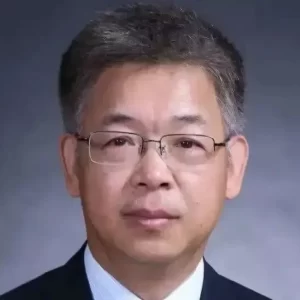
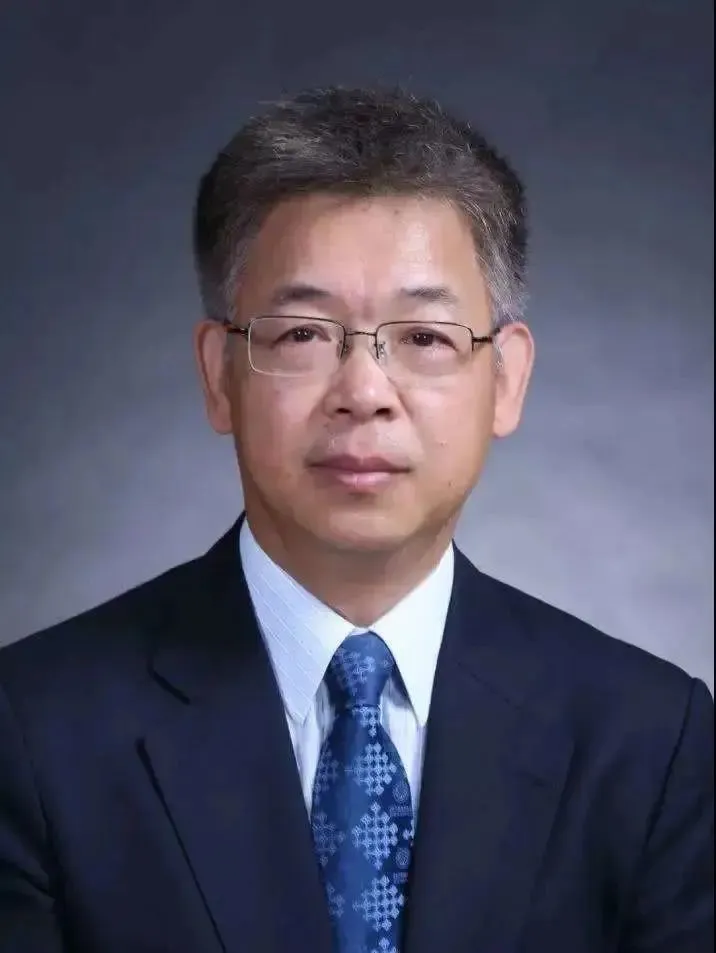
近日,央行货币政策委员会委员、北京大学国家发展研究院院长黄益平在CMF宏观经济热点问题研讨会上对如何发展新质生产力发表观点。
黄益平指出,对外开放是推动新质生产力发展的重要条件。同时,应当正视我国产能过剩的问题。产业政策着力点要注重创新链前端,做到以下三点:第一,主动积极地利用多边框架如WTO和RCEP,维护开放、公平、透明的国际贸易体系。第二,逐步克服宏观失衡问题,包括投资过度、消费不足的问题。第三,支持创新和新质生产力发展。
一、对外开放是推动新质生产力发展的重要条件
发展新质生产力就是要提高总要素生产力,背后的关键是创新,包括科技创新、经济创新、企业创新、行业创新、业务模式创新等各个层面的创新。决定创新发展的的因素很多。以哈佛大学迈克尔·波特(Michael E.Porter)教授对国家创新能力的权威研究,大概有两类因素决定一个国家的创新能力,一是对创新的投入,包括科研人员、研发基金等,这方面我们发展得较好。另一个重要的因素是创新投入转化,这个转化效果受到一系列因素影响,比如对知识产权的保护力度、民营企业的活跃程度等。 CXO UNION-CXO联盟(cxounion.cn)
国家的开放度是另一个影响转化效果的重要因素。当今世界很少有一个国家可以关起门来把自己所有的技术都自主研发出来,我们利用的知识、技术、能力可能需要在世界范围内搜寻、组合,即便我们自主开发,也需要借鉴世界各国的经验。所以,在推动国家创新能力提升、推动新质生产力发展的过程中,保持一定高水平的开放是非常重要的。这一点在今天的国际大背景下尤其重要,因为地缘政治冲突加大,国家安全问题变得尤其重要。维护国家安全是必要的,但如果我们要推动经济走向高质量发展,就同时需要保持开放,并且不仅是对“一带一路”国家、发展中国家的开放,对发达国家的开放也很重要甚至更重要。
二、正视产能过剩问题
近期中国的经贸关系出现了一些新情况。美国财政部副部长尚博表示担心中国的产业政策会引发大量的产能过剩,冲击世界市场。同样在2月份的时候美国贸易代表办公室发布的一份关于2023年中国履行加入世贸组织承诺的报告中,更是直截了当地指出,中国产能过剩的问题可能是国际贸易体系面临的最大挑战。欧洲方面,2月份欧盟对交通装备制造商中车青岛四方公司展开调查,借口是怀疑该公司利用国家补贴在竞标案中削弱对手竞争能力。在2023年10月欧盟已经发动对中国电动车出口所谓的调查,指出政府补贴的问题。同时,与之前不太一样的地方是企业界也变得活跃。2月份的时候,美国制造业联盟发布报告分析说中企生产的汽车或零件是否通过墨西哥进入了美国,如果进入美国对美国产生什么样的影响,同时也提出了一些贸易保护主义政策的建议。
这一系列事情的矛头指向是我们产业产能过剩的问题,以及背后的产业政策,借口往往是对国际贸易秩序的“维护”。我们应该认识到这可能是地缘政治和地缘经济矛盾发展的一个很重要的部分,所以我们要坚决的回应,捍卫我们维护自由贸易的权利,支持国际贸易体系的开放。 CXO UNION-CXO联盟(cxounion.cn)
同时,我们也要思考是否引发了新的产能过剩问题。在过去中国经济发展的几十年间确实存在产能过剩的矛盾,这种产能矛盾大概有两大原因。第一类原因是宏观失衡造成的,投资强劲而消费不足、最终需求疲软。中国经济下一步的增长动力应该由投资来驱动还是由消费驱动,在学术界有争议,在我看来更重要的是在两个驱动力之间维持一个相对的比例,有足够多的投资去形成新的产能,也有相应的消费需求来消化新的产能,经济增长才可持续。第二类原因是行业层面的问题,主要体现在全国的资源过度集中于一些比较好的产品或新兴行业,短期内可能引发这些产业的产能暴涨,带动产业发展,但如果短期内没有市场消化产能,就会引发产能过剩的问题。所以,我认为我们在过去几十年的经济发展过程当中确实存在或多或少的产能过剩问题,随着经济高速增长,之前的产能过剩后来就慢慢消化掉了。
如果说我国在改革开放的四十年间一直存在产能过剩的问题,为什么现在变成了一个国际经济矛盾的焦点?一个关键的原因是中国已经从早期的小国现在变成了一个大国,所谓的小国就是我们的供求关系变化不会对世界市场造成根本性的影响,而一个大国增加或者减少供给可能影响国际市场的均衡。老百姓通俗的说法是今天已经变成我们买什么什么贵,卖什么什么便宜,我们增加供给的时候可能世界市场的价格就压低了。从消费者的角度来说这不是一件坏事,但是从产业结构的角度来说,大国产生的供求冲击可能引发政治经济问题。所以,我们国家的产能过剩矛盾确实一直存在,目前这个矛盾除了地缘政治以外,也存在大国经济的影响,我们已经无法简单地通过大量出口消化国内的过剩产能而不引起部分国家的反弹。我们需要认真对待这种情况,如果这些所谓的“调查”、“指责”真的变成一场普遍的针对中国产品的贸易保护主义浪潮,对我们下一步的发展尤其是创新发展极为不利。
三、产业政策着力点要注重创新链前端
第一,主动积极地利用多边框架如WTO和RCEP,维护开放、公平、透明的国际贸易体系。我们要更加积极主动地推动和利用世界贸易组织和地区性的贸易协定。客观地来说,我们生产便宜的、经济实惠的电动车、锂电池和光伏板等产品,对很多发展中国家可能是有益的,我们应该团结广大发展中国家和 “一带一路”沿线国家共同推动多边框架,维持一个开放的国际贸易体系。在应对欧美指责方面主动回应,对于一些不合理的指责给予回击,从更大的框架来说我们的主张是要维持一个开放的世界贸易体系。
第二,逐步克服宏观失衡问题,包括投资过度、消费不足的问题。从根本上来说,这个问题就是国内的消费需求能否提升。因为在今天的国际经济政治环境中,中国作为一个大国仍然指望把大部分产品出口到世界市场,难度较大。如果我们国内消费需求得到较大提升,那么很多新产品和传统产品可以转为内销。所以,国内经济再平衡非常重要。提升国内的消费需要做的事情很多,但有一些举措短期可以做,有一些举措长期才能见效。结构性的举措可能有周期性的效果,通过改善收入分配、增加福利支持等方式增加居民收入也可以帮助总体提升消费,消除国内供求之间的缺口。
第三,支持创新和新质生产力发展。在新兴产业中,我们过去遇到一些卡脖子环境,因此我们需要自力更生地发展一些新兴产业。同时积极地利用产业政策实施创新。一方面是保持开放,另一方面是需要考虑在支持创新的过程中,产业政策能否变得更加高效和市场化,更加符合国际经济环境的条件。举个例子,新兴产业中,“新三样”的发展取得了巨大成绩,但像光伏行业形成了巨大的过剩产能,此类问题我们将来可能还会不断地重复。背后的原因可能是政府指向一个新兴产业,企业家全力以赴,中央政府指引一个方向,地方政府金融机构全力以赴。这样做的好处是这方面的产业全面提升,但缺点是支持创新变成一个全国性的、各个地方、各个企业、各个机构都在做的事,最后很容易造成全国范围内极大的资源集中在少数行业中。因此,我们需要的创新是全方位的,而不是在某一个领域,我们需要考虑创新发展能否更加平衡、更加高效一点。 CXO UNION-CXO联盟(cxounion.cn)
从产业政策的角度,第一,支持创新的重点应该放在前端,放在创新的部分,而不是将更多的资源放在生产端。换句话说,产业政策要支持技术的突破,而不是产能的复制。第二,产业政策不要限制竞争,让创新发展更市场化,政府应该着眼于帮助行业克服一些所谓的卡脖子领域和技术,而不是帮助一些特定企业发展。第三,产业政策要有退出机制,新兴领域的技术完成了突破,企业已经可以顺利生产后,政府不能无限制地补贴。过去发展中国家有不少存在几十年的幼稚产业,这个教训一定要很好地吸取。第四,地方政府金融机构不能盲目地跟从一个方向,大家都支持某一个行业,甚至成为变成一种政治正确时,加总起来就会变成大的宏观失衡。金融机构拿着政府的产业目录发放贷款的做法一定要避免。地方政府、金融机构或国有企业支持创新活动,一定要算经济账。

翻译:
Huang Yiping: Opening up is an important condition for promoting the development of new quality productive forces
Recently, Huang Yiping, a member of the monetary Policy Committee of the Central bank and dean of the National School of Development of Peking University, expressed his views on how to develop new quality productivity at the CMF Seminar on macroeconomic hot issues.
Huang Yiping pointed out that opening up to the outside world is an important condition for promoting the development of new quality productivity. At the same time, we should face up to the problem of overcapacity in our country. The focus of industrial policy should be on the front end of the innovation chain, and do the following three things: First, actively use multilateral frameworks such as the WTO and RCEP to maintain an open, fair and transparent international trading system. Second, we need to gradually overcome macro imbalances, including excessive investment and insufficient consumption. Third, we will support innovation and the development of new quality productivity.
First, opening up is an important condition for promoting the development of new quality productive forces
The development of new quality productivity is to improve the total factor productivity, and the key behind it is innovation, including scientific and technological innovation, economic innovation, enterprise innovation, industry innovation, business model innovation and other aspects of innovation. There are many factors that determine the development of innovation. According to Professor Michael E.Porter of Harvard University’s authoritative research on national innovation capacity, there are probably two types of factors that determine a country’s innovation capacity, one is the investment in innovation, including scientific research personnel, research and development funds, etc., and we have developed well in this area. Another important factor is the transformation of innovation input, which is influenced by a series of factors, such as the strength of intellectual property protection and the degree of activity of private enterprises. CXO UNION-CXO联盟(cxounion.cn)
The openness of a country is another important factor affecting the conversion effect. In today’s world, few countries can independently develop all their technologies behind closed doors. The knowledge, technology and capabilities we use may need to be searched and combined worldwide. Even if we independently develop, we also need to learn from the experience of other countries in the world. Therefore, in the process of promoting the improvement of national innovation capacity and promoting the development of new quality productivity, it is very important to maintain a high level of openness. This is particularly important in today’s international context, as geopolitical conflicts increase and national security issues become particularly important. Maintaining national security is necessary, but if we want to promote high-quality economic development, we need to maintain openness at the same time, and not only to the Belt and Road countries and developing countries, but also to the developed countries is very important and even more important.
Second, face up to the problem of overcapacity
There have been some new developments in China’s economic and trade relations recently. U.S. UnderSecretary of the Treasury Richard Chambeau expressed concern that China’s industrial policies could create massive overcapacity that could hit world markets. Also in February, the Office of the United States Trade Representative issued a report on China’s implementation of its WTO accession commitments in 2023, which bluntly pointed out that China’s overcapacity problem may be the biggest challenge facing the international trading system. In Europe, in February the European Union launched an investigation into transport equipment maker CRRC Qingdao Sifang on suspicion of using state subsidies to undercut rivals in bidding cases. In October 2023, the European Union launched a so-called investigation into Chinese electric vehicle exports, pointing to the issue of government subsidies. At the same time, unlike before, the corporate world has also become active. In February, the American Manufacturing Alliance released a report that analyzed whether cars or parts produced by Chinese companies entered the United States through Mexico, and what impact it would have on the United States if they entered the United States, and also proposed some protectionist policies. CXO UNION-CXO联盟(cxounion.cn)
This series of things point to the problem of overcapacity in our industry, as well as the industrial policy behind it, often under the pretext of “maintenance” of the international trade order. We should recognize that this may be a very important part of the development of geopolitical and geo-economic contradictions, so we should resolutely respond to defend our right to maintain free trade and support the opening of the international trading system.
At the same time, we must also consider whether it has triggered a new problem of overcapacity. In the past few decades of China’s economic development, there is indeed a contradiction of excess capacity, and there are probably two reasons for this contradiction. The first is caused by macro imbalances, with strong investment, insufficient consumption, and weak final demand. In my opinion, it is more important to maintain a relative ratio between the two driving forces. Only when there is enough investment to form new production capacity and corresponding consumption demand to absorb new production capacity can economic growth be sustainable. The second type of reason is the problem at the industry level, mainly reflected in the excessive concentration of resources in the country in some better products or emerging industries, which may lead to the production capacity of these industries in the short term, driving industrial development, but if there is no market to digest capacity in the short term, it will cause the problem of overcapacity. Therefore, I think we did have more or less excess capacity in the process of economic development in the past few decades, and with the rapid economic growth, the previous excess capacity was gradually digested. CXO UNION-CXO联盟(cxounion.cn)
If there has been a problem of overcapacity in China during the 40 years of reform and opening up, why has it become a focus of international economic contradictions? One of the key reasons is that China has changed from a small country in the early days to a big country. The so-called small country means that the changes in our supply and demand relationship will not have a fundamental impact on the world market, and the increase or decrease of supply by a big country may affect the balance of the international market. The popular saying of the people is that today it has become that what we buy is expensive and what we sell is cheap, and when we increase supply, the price of the world market may be lowered. From the perspective of consumers, this is not a bad thing, but from the perspective of industrial structure, supply and demand shocks in large countries can cause political and economic problems. Therefore, the contradiction of overcapacity in our country has indeed always existed, in addition to geopolitics, this contradiction also has the impact of large economies, we can no longer simply digest the domestic excess capacity through a large number of exports without causing some countries to rebound. We need to take this situation seriously, if these so-called “investigations” and “accusations” really become a general wave of trade protectionism against Chinese products, it will be extremely detrimental to our next development, especially the development of innovation.
Third, the focus of industrial policy should focus on the front end of the innovation chain
First, we should actively make use of multilateral frameworks such as the WTO and RCEP to maintain an open, fair and transparent international trading system. We need to be more proactive in promoting and using the World Trade Organization and regional trade agreements. Objectively speaking, our production of cheap and affordable electric vehicles, lithium batteries, photovoltaic panels and other products may be beneficial to many developing countries, we should unite the vast number of developing countries and countries along the Belt and Road to jointly promote the multilateral framework and maintain an open international trading system. In response to criticism from Europe and the United States, in response to some unreasonable accusations, in the larger framework of our advocacy is to maintain an open world trading system. CXO UNION-CXO联盟(cxounion.cn)
Second, we need to gradually overcome macro imbalances, including excessive investment and insufficient consumption. Basically, the question is whether domestic consumer demand can be raised. Because in today’s international economic and political environment, China, as a big country, still expects to export most of its products to the world market, which is difficult. If our domestic consumer demand is greatly increased, then many new and traditional products can be converted to domestic sales. So domestic rebalancing is very important. There are many things that need to be done to boost domestic consumption, but there are some measures that can be done in the short term and some measures that will be effective in the long term. Structural measures may have cyclical effects, and increasing household income through improved income distribution and increased welfare support can also help raise overall consumption and close the gap between domestic supply and demand.
Third, we will support innovation and the development of new quality productivity. In emerging industries, we have encountered some bottlenecks in the past, so we need to develop some emerging industries on our own. At the same time, we actively use industrial policy to implement innovation. On the one hand, it is necessary to maintain openness, and on the other hand, it is necessary to consider whether in the process of supporting innovation, industrial policies can become more efficient and market-oriented, and more in line with the conditions of the international economic environment. For example, in the emerging industry, the development of the “new three” has made great achievements, but the photovoltaic industry has formed a huge excess capacity, such problems we may continue to repeat in the future. The reason behind this may be that the government points to an emerging industry, entrepreneurs go all out, the central government points in a direction, and local government financial institutions go all out. The advantage of this approach is that the industry in this area will improve comprehensively, but the disadvantage is that supporting innovation becomes a national, local, individual enterprises, and various institutions are doing, and in the end, it is easy to cause a huge concentration of resources in a few industries across the country. Therefore, we need innovation in all aspects, not in one area, and we need to consider whether innovation development can be more balanced and more efficient.
From the perspective of industrial policy, first, the focus of supporting innovation should be placed on the front end, on the part of innovation, rather than putting more resources on the production end. In other words, industrial policy should support technological breakthroughs, not capacity replication. Second, industrial policy should not restrict competition and make innovation and development more market-oriented. The government should focus on helping the industry overcome some so-called bottleneck areas and technologies, rather than helping some specific enterprises to develop. Third, the industrial policy should have an exit mechanism, the technology in the emerging field has completed a breakthrough, the enterprise has been able to smoothly produce, the government can not be unlimited subsidies. In the past, many infant industries in developing countries have existed for decades, and this lesson must be well learned. Fourth, local government financial institutions should not blindly follow one direction, everyone supports a certain industry, or even become a kind of political correctness, which will add up to a large macro imbalance. The practice of financial institutions making loans with the government’s industrial catalogue must be avoided. When local governments, financial institutions or state-owned enterprises support innovative activities, they must calculate economic accounts.
由CXO UNION-CXO联盟(cxounion.cn)转载而成,来源于中国宏观经济论坛CMF;编辑/翻译:CXO UNIONCXO联盟小U。
如需加入CXO UNION(CXO联盟)高管社群,请联系社群小伙伴哦~
免责声明: 本网站(http://www.cxounion.cn/)内容主要来自原创、合作媒体供稿和第三方投稿,凡在本网站出现的信息,均仅供参考。本网站将尽力确保所提供信息的准确性及可靠性,但不保证有关资料的准确性及可靠性,读者在使用前请进一步核实,并对任何自主决定的行为负责。本网站对有关资料所引致的错误、不确或遗漏,概不负任何法律责任。
本网站刊载的所有内容(包括但不仅限文字、图片、LOGO、音频、视频、软件、程序等) 版权归原作者所有。任何单位或个人认为本网站中的内容可能涉嫌侵犯其知识产权或存在不实内容时,请及时通知本站,予以删除。
如需加入CXO UNION(CXO联盟)高管社群,请联系社群小伙伴哦~

免责声明: 本网站(http://www.cxounion.cn/)内容主要来自原创、合作媒体供稿和第三方投稿,凡在本网站出现的信息,均仅供参考。本网站将尽力确保所提供信息的准确性及可靠性,但不保证有关资料的准确性及可靠性,读者在使用前请进一步核实,并对任何自主决定的行为负责。本网站对有关资料所引致的错误、不确或遗漏,概不负任何法律责任。
本网站刊载的所有内容(包括但不仅限文字、图片、LOGO、音频、视频、软件、程序等) 版权归原作者所有。任何单位或个人认为本网站中的内容可能涉嫌侵犯其知识产权或存在不实内容时,请及时通知本站,予以删除。
Search
Popular Posts
-

2024数字化灯塔案例评选申报开启!
“2024数字化灯塔案例评选”于3月正式启动,诚挚欢迎业界同仁自荐和推荐,一起推动产业数字化进程,助力赋能企业…
-

2024 X-Award星盘奖申报通道已开启!
X-Award星盘奖是数字化转型服务、IT服务行业重要的商业奖项,旨在表彰行业里提供杰出数字化转型服务与IT服…
-

2024 N-Award星云奖申报通道已开启!
N-Award是数字化转型领域重要的商业奖项,旨在表彰那些以非凡的远见、超群的领导才能和卓越的成就来激励他人的…