近日,2024中国数字经济发展和治理学术年会在清华大学成功举办。本文是关于“数据要素市场与数字产业发展”的演讲汇总,为大家整理了江小涓、黄益平、刘守英、汤珂教授的发言。
西安交通大学管理学院院长冯耕中主持了大会。冯耕中教授讲到,党的十八大以来,以习近平同志为核心的党中央高度重视培育数据要素市场,对数字产业发展进行战略部署,推动数字经济与实体经济的深度融合。在数字经济时代背景下,探讨数据要素市场与数字产业发展对于构筑我国数字经济时代的国际竞争力具有重要意义。大会有幸邀请到了多位专家学者,围绕“数据要素市场与数字产业发展”发表演讲、深入探讨,带来该领域最新的研究成果和前沿思考。

年会主席团主席、国务院原副秘书长江小涓以《数字时代的创新及其对经济学研究的影响》为题进行了精彩演讲和分享。江小涓教授指出,数字时代的创新在创新源泉、创新主体和创新组织各个层面都发生显著变化。数据生成、传递与处理能力显著提升,数据成为驱动创新的重要源泉,有益于解决已知复杂问题、揭示未知复杂关系、实时校正科研方向、洞察颗粒化场景并赋能,为相关学科的研究带来全新机遇,同时也带来新挑战。科研范式历经实验观测、理论推演、计算仿真、数据驱动,同时创新范式与科研范式在趋同,最重要的原因就是二者的研究问题都可以还原成为“数据”。例如自学习机制在AlphaFold2在预测蛋白质三维结构方面体现了数据驱动下解决已知复杂问题的高效性,极大地增强了对已知科学问题的解决能力。再如高性能计算方法进行高精度分子动力学模拟方面、谷歌GNoME预测无机晶体结构、数字医疗通过对多维复杂颗粒数据分析从而提供个性化诊疗方案等实例都说明了数据驱动创新范式发生重要变化的不同方面。
与以往的创新范式相比,一是大型平台既是生成数据的源泉,更是汇聚多重能力的主体,在规模涌现规则的加持下地位显赫,在相当程度上决定着整个社会的创新进程。二是开放型创新组织有利于汇聚异质性、多样化的数据和各种资源,成为重要性日益提升的主流创新组织形态。上述特征在提升创新效率的同时生发出新的不确定性,有可能使市场结构和福利分配出现与“合理状态”不一致的改变。人文和社会科学领域的学者对此要保持持续关注和深入研究,更好确保科技进步有益于人类福祉和社会公平。 CXO UNION-CXO联盟(cxounion.cn)
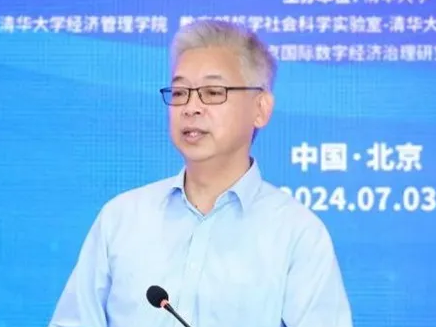
北京大学国家发展研究院院长、北京大学数字金融研究中心主任黄益平教授以《数据资产入表应循序渐进》为题进行了精彩演讲和分享。黄益平教授指出,数据与数字技术在新质生产力发展中扮演核心角色。对于新兴市场国家而言,数据要素的高效利用可开辟经济增长新路径,提供一个新的赶超途径。如何把已有的数据产出或数字足迹,变成对经济活动能产生作用的数据要素,是一个非常复杂的过程,涉及政策、市场、技术等多重因素。
当前,数据资产入表已成为经济与金融创新的热点。已经有上市公司积极响应,采用不同形式将数据资产纳入资产负债表。尽管如此,一些研究已初步发现,资本市场对数据资产入表的反应冷淡,投资者可能尚未认识到数据资产入表重要性,这可能源于数据资产价值不确定性,从而持观望态度。数据资产进入资产负债表,还有几个问题值得关注。一是数据资产的价值在市场上如何衡量;二是“三权分治”下数据资产入表需要划清楚企业和其他相关主体的相应权益占比;三是成本法、收益法、市值法等的数据估值方法需要进一步探讨,以实现数据资产的准确评价与交易。还要考虑数据入表可能带来的一定风险。此外,公共数据应服务于公共利益,而非成为城投公司融资工具,以免阻碍数据要素市场的健康发展。数据资产入表应循序渐进。数据资产的价值评估应由权威或者第三方机构执行,避免自我认定导致的市场混乱。政策框架、会计标准、市场规则的完善是数据资产化的保障。数据要素的利用和数据资产化相当于开拓一种新的要素资产,同时是开辟一种新的市场,有利于经济增长的。需平衡创新与风险,确保数据资产的合理评估与利用,避免冒进带来的负面后果,防范潜在风险,推动数据要素的有效利用和数字经济的发展。 CXO UNION-CXO联盟(cxounion.cn)

全国数字经济专业学位研究生教指委秘书长、中国人民大学经济学院院长刘守英教授以《数字文明时代的政治经济学》为题进行了精彩演讲和分享。刘守英教授从政治经济学的角度指出,在数字经济成为新引擎的时代背景下,对整个社会形态变化的认识非常重要。这一轮数字技术的革命从21世纪初到现在的数字化、智能化,有望把人类带入新的数字文明形态,具有六个方面的典型特征。
第一,技术推动。数字文明时代仅仅依靠物质生产已难以满足人类日益增长的精神需求,知识创造开始成为社会进步的关键。AI颠覆传统知识生产方式,可能全面参与人类决策。虽然数字技术创新向生产力转化,但颠覆性创新与大规模应用不足,基础研究与应用研究亟待加强。第二,数据成为数字文明的核心生产要素。数据与其他要素组合创造巨大经济效益。虽然数据在经济活动中已经起到一定的作用,但其经济价值的衡量、要素地位、资源转化为资本的路径等诸多问题等待回答。第三,平台成为数字文明时代主要的组织方式。平台经济的组织模式、虚拟空间的治理能力与市场政府关系的调整成为制度层面的关键议题。第四,经济活动的空间是虚拟空间。跟工业文明形态比较,各类经济主体的各项活动都逐步转向虚拟空间,虚拟空间的实现和治理面临挑战。第五,价值判断标准与社会制度安排发生改变。市场和政府的关系在数字文明时代应该会发生根本性的变化。因此制度的建设,包括如何界定数据的产权,数据要素市场如何去实现,价值和能力是需要研究的问题。在讨论数据对增长的重要性的同时,关于伦理问题、价值问题和公平问题应该同步讨论。第六,AI参与甚至替代人的思考和决策。数字文明时代,人脑“机器化”,机器“人化”。AI决策与人类决策的关系、人类决策模式的演变以及AI决策的本质仍需深入研究。

清华大学社会科学学院经济所教授、至善书院院长汤珂教授以《数据要素的可信流通》为题进行了精彩演讲和分享。汤珂教授指出,“可信”在数据里面占了很大比重,数据往往和两个概念相连,一个是发展,一个是监管,或者是安全,其中监管和安全非常重要的一点就是可信,所以我的研究是关于从可信出发。然而,在数据流通里边有非常多的和可信相关的一些痛点。例如数据的无限复制性、非标准化特性以及信息不对称性导致了交易双方的信任缺失。这些问题不仅影响了数据市场的健康发展,还可能导致市场失灵。构建一个可信的数据流通环境,成为关键。 CXO UNION-CXO联盟(cxounion.cn)
对于数据的信任问题可以分两个层级来看待。第一个层级是“可以被信任的”,即技术层级上的信任(Trusted)。还有事实上被信任(Trustable),通过验证的方法来实施“先验证,再信任”。相关技术基于密码学、区块链等确保数据加密、防篡改,实现可验证的信任。另一种层级是Trustworthy,是值得信任的,属于研究经济学的研究范畴。通过经济合同、法律监管、机构评级等方式构建值得信任的制度环境。但我认为应该从更全面的角度来看可信这一问题,提出了数据可信流通的TIME框架,包括数据可信流通技术(Technology)、数据可信流通机构(Institution)、数据可信流通模式(Model)、可信评估与监管(Examination)。虽然后三个都是制度性,不是技术性的,但这三个反而更重要,因为大量的数据流通是无法通过技术来解决的。其中和数据相关的机构有很多种,比如数据要素型企业,数据交易所、数据经纪人、数据空间,这一系列都是数据机构,这些机构如果能够被信任的话,在交易过程中大量的信任问题可以被解决。而Model就是数据流通的模式,包括公共数据授权运营、经济合同、数据信托等。最后是数据流通领域的监管,涉及对数据的提供者、数据的使用者、数据的交易机构,以及数据交易的产品的监督,还要打击那些非法的在黑市上交易的非法活动。技术、机构、模式、监管等四个角度有利于更加全面理解数据可信这一理论问题。 CXO UNION-CXO联盟(cxounion.cn)

翻译:
Data Factor Market and Digital Industry Development — Jiang Xiaojuan, Huang Yiping, Liu Shouying, Tang Ke
Recently, the 2024 China Digital Economy Development and Governance Academic Conference was successfully held at Tsinghua University. This article is about “data factor market and the development of digital industry” speech summary, for you to sort out the speeches of professors Jiang Xiaojuan, Huang Yiping, Liu Shouying, Tang Ke.
Feng Gengzhong, Dean of the School of Management of Xi ‘an Jiaotong University, presided over the meeting. Under the background of digital economy era, it is of great significance to explore the data factor market and the development of digital industry to build the international competitiveness of China in the digital economy era. The conference was honored to invite a number of experts and scholars to deliver speeches and in-depth discussions around “data factor market and digital industry development”, bringing the latest research results and cutting-edge thinking in the field.
Jiang Xiaojuan, Chairman of the presidium of the annual meeting and former Deputy Secretary-General of The State Council, gave a wonderful speech and shared on the topic of Innovation in the Digital Age and its impact on economic research. Professor Jiang Xiaojuan pointed out that the innovation in the digital era has undergone significant changes at all levels of innovation source, innovation subject and innovation organization. The ability of data generation, transmission and processing has been significantly improved, and data has become an important source of driving innovation, which is conducive to solving known complex problems, revealing unknown complex relationships, correcting scientific research directions in real time, insight and empowerment of granulation scenarios, bringing new opportunities and challenges to the research of related disciplines. Scientific research paradigm has undergone experimental observation, theoretical deduction, computational simulation, and data-driven, while innovation paradigm and scientific research paradigm are converging, the most important reason is that the research problems of both can be reduced to “data”. For example, the self-learning mechanism in AlphaFold2 demonstrated the efficiency of data-driven solutions to known complex problems in predicting the three-dimensional structure of proteins, greatly enhancing the ability to solve known scientific problems. Examples such as high-performance computing methods for high-precision molecular dynamics simulation, Google GNoME prediction of inorganic crystal structures, and digital health through multidimensional complex particle data analysis to provide personalized treatment solutions illustrate different aspects of important changes in the data-driven innovation paradigm. CXO UNION-CXO联盟(cxounion.cn)
Compared with previous innovation paradigms, first of all, large platforms are not only the source of data generation, but also the subject of multiple capabilities. With the support of scale emergence rules, they have a prominent position and determine the innovation process of the whole society to a considerable extent. Second, open innovation organizations are conducive to the aggregation of heterogeneous and diverse data and various resources, and have become the mainstream innovation organization form with increasing importance. The above characteristics create new uncertainties while improving innovation efficiency, which may cause changes in market structure and welfare distribution that are inconsistent with the “reasonable state”. Scholars in the fields of humanities and social sciences should maintain continuous attention and in-depth research on this issue to better ensure that scientific and technological progress is beneficial to human well-being and social equity.
Professor Huang Yiping, dean of the National School of Development of Peking University and director of the Digital Finance Research Center of Peking University, gave a wonderful speech and shared on the topic of “Data Asset entry should be gradual”. Professor Huang Yiping pointed out that data and digital technologies play a central role in the development of new quality productivity. For emerging market countries, the efficient use of data elements can open up new paths of economic growth and provide a new way to catch up. How to turn the existing data output or digital footprint into data elements that can have an effect on economic activities is a very complex process, involving multiple factors such as policy, market, and technology.
At present, data asset entry has become a hot topic in economic and financial innovation. There are already listed companies actively responding, using different forms of data assets into the balance sheet. Nevertheless, some studies have preliminatively found that the capital market has a lukewarm response to data assets entering the table, and investors may not yet realize the importance of data assets entering the table, which may be due to the uncertainty of the value of data assets, so they take a wait-and-see attitude. As data assets enter the balance sheet, there are several issues of concern. One is how the value of data assets is measured in the market; Second, under the “separation of three powers”, it is necessary to clearly define the corresponding proportion of rights and interests of enterprises and other relevant entities; Third, data valuation methods such as cost method, income method and market value method need to be further discussed in order to achieve accurate evaluation and trading of data assets. Also consider the possible risks of data entry into the table. In addition, public data should serve the public interest, rather than become a financing tool for urban investment companies, so as not to hinder the healthy development of the data factor market. The entry of data assets into the table should be gradual. The value assessment of data assets should be carried out by authoritative or third-party institutions to avoid market confusion caused by self-identification. The improvement of policy framework, accounting standards and market rules is the guarantee of data assets. The utilization of data elements and data assets are equivalent to developing a new element asset, and at the same time, opening up a new market, which is conducive to economic growth. It is necessary to balance innovation and risk, ensure the reasonable evaluation and utilization of data assets, avoid the negative consequences brought by rash, prevent potential risks, and promote the effective use of data elements and the development of the digital economy. CXO UNION-CXO联盟(cxounion.cn)
Professor Liu Shouying, Secretary-General of the National Digital Economy Professional Degree Graduate Education Committee and Dean of the School of Economics of Renmin University of China, gave a wonderful speech and shared on the topic of “Political Economy in the Era of Digital Civilization”. From the perspective of political economy, Professor Liu Shouying pointed out that in the context of the era when the digital economy has become a new engine, it is very important to understand the change of the entire social formation. This round of digital technology revolution from the beginning of the 21st century to the present digitalization and intelligence, is expected to bring human beings into a new form of digital civilization, with six typical characteristics. CXO UNION-CXO联盟(cxounion.cn)
First, technology drives. In the era of digital civilization, it is difficult to meet the growing spiritual needs of human beings only by relying on material production, and knowledge creation has become the key to social progress. AI upends traditional methods of knowledge production and may fully participate in human decision-making. Although digital technology innovation has transformed into productivity, disruptive innovation and large-scale application are insufficient, and basic research and applied research need to be strengthened. Second, data becomes the core production factor of digital civilization. The combination of data and other elements creates huge economic benefits. Although data has played a certain role in economic activities, many questions remain to be answered, such as the measurement of economic value, the status of factors, and the path of transforming resources into capital. Third, platforms have become the primary way of organizing in the digital civilization. The organizational model of platform economy, the governance ability of virtual space and the adjustment of market government relations have become the key issues at the institutional level. Fourth, the space of economic activity is virtual space. Compared with the form of industrial civilization, various activities of various economic subjects are gradually turning to virtual space, and the realization and governance of virtual space are facing challenges. Fifth, the value judgment standard and the social system arrangement have changed. The relationship between the market and the state is supposed to change fundamentally in the age of digital civilization. Therefore, the construction of the system, including how to define the property rights of data, how to realize the market of data elements, value and ability are the problems that need to be studied. While discussing the importance of data for growth, ethical issues, values and equity issues should be discussed in parallel. Sixth, AI participates in or even replaces human thinking and decision-making. In the age of digital civilization, the human brain is “robotized” and the machine is “humanized”. The relationship between AI decision-making and human decision-making, the evolution of human decision-making patterns, and the nature of AI decision-making still need to be studied in depth.
Professor Tang Ke, Professor of Economics, School of Social Sciences, Tsinghua University and Dean of Zhishun Academy, gave a wonderful speech and shared on the topic of “Trusted Circulation of Data Elements”. Professor Tang Ke pointed out that “credibility” accounts for a large proportion in data, and data is often connected with two concepts, one is development, the other is regulation, or security, among which credibility is a very important point of supervision and security, so my research is about starting from credibility. However, there are a lot of pain points related to trustworthiness in the data flow. For example, the unlimited replication of data, non-standardized characteristics and information asymmetry lead to the loss of trust between the two parties. These problems not only affect the healthy development of the data market, but also can lead to market failure. Building a trusted data circulation environment becomes the key. CXO UNION-CXO联盟(cxounion.cn)
The issue of trust in data can be viewed at two levels. The first level is “can be Trusted”, that is, trust at the technical level. There is also Trustable, which implements “verify first, then trust” by means of verification. Related technologies are based on cryptography, blockchain, etc., to ensure data encryption, tamper-proof, and verifiable trust. The other level is Trustworthy, which is the study of economics. Through economic contracts, legal supervision, institutional ratings and other ways to build a trustworthy institutional environment. But I think we should look at the issue of trust from a more comprehensive perspective, and propose a TIME framework for the trusted flow of data, It includes data trusted circulation Technology (Technology), data trusted circulation Institution (Institution), data trusted circulation Model (Model), and trusted evaluation and supervision (Examination). While the latter three are institutional, not technical, they are more important because of the massive flow of data that cannot be solved by technology. Among them, there are many kinds of institutions related to data, such as data element enterprises, data exchanges, data brokers, and data Spaces, which are all data institutions. If these institutions can be trusted, a large number of trust problems can be solved in the transaction process. Model is the mode of data circulation, including public data authorization operation, economic contract, data trust, etc. Finally, the regulation in the field of data circulation involves the supervision of data providers, data users, data trading institutions, and data trading products, as well as combating illegal activities that are traded on the black market. The four perspectives of technology, institution, model and supervision are conducive to a more comprehensive understanding of the theoretical problem of data trust.
本文由CXO UNION-CXO联盟(cxounion.cn)转载而成,来源于浦江数据交易之声综合整理自清华服务经济与数字治理研究院;编辑/翻译:CXO UNIONCXO联盟小U。
如需加入CXO UNION(CXO联盟)高管社群,请联系社群小伙伴哦~
免责声明: 本网站(http://www.cxounion.cn/)内容主要来自原创、合作媒体供稿和第三方投稿,凡在本网站出现的信息,均仅供参考。本网站将尽力确保所提供信息的准确性及可靠性,但不保证有关资料的准确性及可靠性,读者在使用前请进一步核实,并对任何自主决定的行为负责。本网站对有关资料所引致的错误、不确或遗漏,概不负任何法律责任。
本网站刊载的所有内容(包括但不仅限文字、图片、LOGO、音频、视频、软件、程序等) 版权归原作者所有。任何单位或个人认为本网站中的内容可能涉嫌侵犯其知识产权或存在不实内容时,请及时通知本站,予以删除。
如需加入CXO UNION(CXO联盟)高管社群,请联系社群小伙伴哦~

免责声明: 本网站(http://www.cxounion.cn/)内容主要来自原创、合作媒体供稿和第三方投稿,凡在本网站出现的信息,均仅供参考。本网站将尽力确保所提供信息的准确性及可靠性,但不保证有关资料的准确性及可靠性,读者在使用前请进一步核实,并对任何自主决定的行为负责。本网站对有关资料所引致的错误、不确或遗漏,概不负任何法律责任。
本网站刊载的所有内容(包括但不仅限文字、图片、LOGO、音频、视频、软件、程序等) 版权归原作者所有。任何单位或个人认为本网站中的内容可能涉嫌侵犯其知识产权或存在不实内容时,请及时通知本站,予以删除。
Search
Popular Posts
-

2024数字化灯塔案例评选申报开启!
“2024数字化灯塔案例评选”于3月正式启动,诚挚欢迎业界同仁自荐和推荐,一起推动产业数字化进程,助力赋能企业…
-

2024 X-Award星盘奖申报通道已开启!
X-Award星盘奖是数字化转型服务、IT服务行业重要的商业奖项,旨在表彰行业里提供杰出数字化转型服务与IT服…
-

2024 N-Award星云奖申报通道已开启!
N-Award是数字化转型领域重要的商业奖项,旨在表彰那些以非凡的远见、超群的领导才能和卓越的成就来激励他人的…