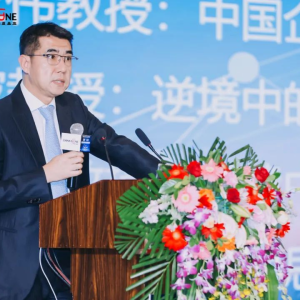
大裂变与聚合时代,一切皆需要启迪新思想。2023年10月27日,第十届华夏基石十月管理高峰论坛在北京举行,本届论坛主题《裂变与聚合:硅基文明时代的管理重构》,
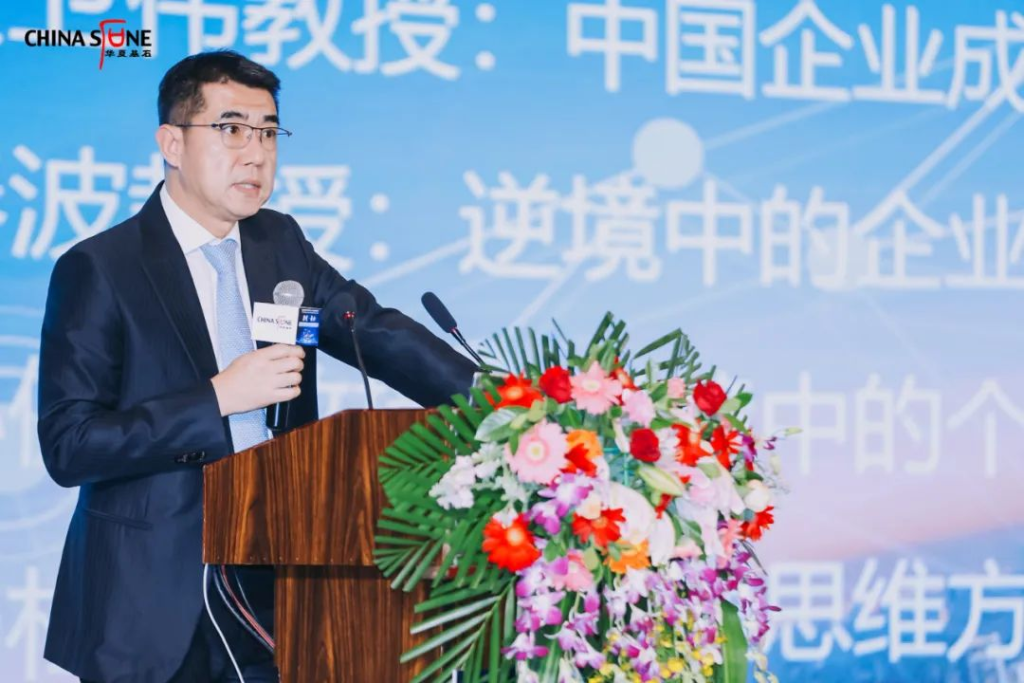
孙波:经济学博士,中国劳动关系学院人力资源管理研究所所长、副教授,华夏基石创始合伙人、执行副总裁,华夏基石首席人才官CHO导师。
以下为孙波教授的演讲实录。
我演讲的主题是“裂变与聚合:面向未来的企业与企业家”,严格意义上讲不是一个完整的演讲,因为我的任务是论坛的总结致辞。我相信各位在参加华夏基石十月管理论坛,尤其知道主题是“裂变与聚合:硅基文明时代的管理重构”之后,都会有所思考,会对找到某些问题的答案有所期待。对于我个人来说,我最大的期待是希望通过本次论坛获得一些最基本的概念:当我们面向未来的时候,我们的企业会是什么样?企业家又会是什么样?各位嘉宾在谈硅基时代的管理变革,其实也是试图在这两个问题上找到一些答案。
一、如何总结过去、审视未来
针对上述问题,不同的学者从不同的角度都进行了精彩的诠释。
比如,彭剑锋教授谈到了中国企业的数智化转型有三个特点。企业为什么要做数智化转型?因为企业是要面向未来的。也就是说,当我们准备以数智化转型的方式面向未来的时候,组织会以什么方式来运转?这其实就是在回答“企业面向未来的样子”。 CXO UNION-CXO联盟(cxounion.cn)
黄卫伟教授则从历史的角度,总结了中国企业成长的四种典型逻辑,这四种典型逻辑都经过了大量的实践检验,在一般情况下不会受到质疑。当我试图理解黄老师所讲的内容,发现他也在试图回答“如何总结过去、审视未来”的问题。但是,当过去的四种逻辑遇到了问题,我们面向未来的逻辑会是什么样呢?面向未来的企业又会是什么样?
吴春波教授的主题是逆境中的企业如何高质量生存,主要是在长期跟踪华为的基础上谈了华为的英雄主义和“英雄企业”的一些做法。孙健敏老师也谈到,逆境中的个人如何坚定本心?其实在我看来,他们所谈到的,都是在新的环境之下,无论是企业、个人,还是企业家,他们将如何以新的方式应对?此外,杨杜教授还从管理思维、方法论的角度试图诠释企业的发展。
二、未来企业长什么样
各位专家、教授都有非常好的观点,我们从中得到或者想到了很多的关键词,比如平台或者平台化,生态或者生态化,生态战略或者基于商业生态的战略观,也或者是数字化、智能化,也可以称之为数智化和链接。当然,也包括我们的主题——聚合与裂变。
这些词汇能够给我们带来什么?如果仅从这些单个的词汇来理解未来的组织,可能会比较困难。
平台化。经过我们的观察,发现平台化有几种模式,比如华为的平台化组织建设以“平台+小集成经营体”为特征;美的的平台化组织建设,把原来分散的“美的”变成了一个基于共享和赋能的“美的”;韩都衣舍的“平台+设计小组”的蚂蚁军团式组织;海尔基于以个人发展为目的新的企业观所提出的“平台+自主经营体+创客化“的组织模式,这些都以“平台化”为特征,它们是一样的吗?不一定! CXO UNION-CXO联盟(cxounion.cn)
生态化。平台化的概念对于我们思考未来的企业是什么,当然是有启示作用的,但并不是标准答案。生态化同样如此。企业要不要加入生态?以什么方式加入?或者,企业是不是一定要加入生态?这些都可以找到反例。我们当然可以拒绝加入生态,比如一些日本的企业就是这么做的。但是更多的情况是不加入生态不行,企业一定会以某种方式加入某个生态。但生态化并不足以成为某种未来企业的特定模式。
智能化、数字化。我们粗略统计了企业家的三大焦虑,其中的第二大焦虑就是数字化。数字化的概念大家都知道,而且知道企业必须要进行数字化。但是,什么是数字化?怎样实现数字化?数字化和信息化有什么区别?未来数字化的企业究竟是什么样子?今天也有很多老师都在试图回答这些问题。
链接。我们最早知道这个概念是通过阿里的“大淘宝系”。阿里研究院曾经做过研究,研究结论表明在手工作坊时代,有100个人就算是大工场;现代化以来,可能要有1000人才能算是大工厂;但是在跨国公司阶段,一个企业可以达到100万人以上;在今天的互联网时代,一个淘宝系就可以链接超过4000多万人。这是链接的概念。
但是,To C的链接和To B的链接是一个概念吗?或者在产业互联网的背景之下,要思考的是,企业要以什么方式来实现链接?这么多的问题纠结在一起,要想找到一个标准答案就很困难。但是我们仍然可以总结出一些对未来企业的要求,在这个过程中,也许还可以找到应对未来的方式。
我觉得,未来的企业应该是“能够直面快速迭代的技术挑战,建立敏捷开放的、面向不确定性的、借势信息化智能化的社会大协同的、平台相互赋能的组织”。 CXO UNION-CXO联盟(cxounion.cn)
对未来企业的要求,首先是必须能够直面快速迭代的技术挑战。现代技术的迭代周期越来越短,过去的技术开发周期可能是20年,现在可能2年就已经足够长了。在这种情况下,自然就会形成对未来企业的要求,必须有应对因为技术的快速迭代所带来的产品和服务变化的能力。
其次,未来企业必须考虑数字化带来的社会分工体系的变化。针对这一点,过去我们更多是在To C端的感受,但是疫情三年,大多数的企业,包括我们自身,都会因为与客户接触环节的中断,不得不主动或者被动地选择了部分业务通过互联网来完成销售或者交付。这个选择看起来是简单的形式改变,但是对整个社会大协同来说,却带来了巨大的挑战。
比如,我的一个客户主营业务是工业领域备品备件的集采平台,在三年疫情期间业绩不减反增,步入了高速发展通道。阿里的工业品1688做到了什么程度?很多过去不可想象的高科技、高精尖企业,比如做航材、做精密仪器加工的企业,居然可以通过1688的平台,实现所有工业原材料的集中供给。过去是从组织内部思考的零库存、快周转等,现在借助这个体系,只需要点一下鼠标,就可以按照约定的时间完成供货。这在过去是不可想象的,但对未来的企业却是一个机遇,当然也是新的挑战。
所以,我们完全可以想象未来企业的样子。
企业,尤其是工业企业在做投资的时候,投的是什么?表面上看,在投物流、投生产制造、投无人工厂,但实际上,投资的是一种能力,这种投入往往非常大,同时风险也非常大。但是作为一种核心竞争力或者关键环节,就必须要投。同理,今天因为数字化、智能化,这种能力有可能通过外部的平台来提供,外部平台的能力实现组织内部化,或者通过内部平台的社会化带来新的价值。这也是对企业提出的要求。
也就是说,企业的管理边界和范围,在这样一个硅基时代可能会超越,或者说没有边界。企业就是在社会大分工、大协同之下,基于信息化和智能化,面向不确定性,建立敏捷开放、直面快速迭代的技术挑战的一种组织形式。
同时,这为企业经营又带来了什么呢? CXO UNION-CXO联盟(cxounion.cn)
其实,很多企业早已实现了所谓内部平台的社会化,或者社会平台的内部化。我们刚才说的采购只是其中的一个方面,一些企业为了自己的某一个产品所做的检测平台、采购平台,居然可以作为一个独立的业务,迅速发展成为区域检测业务的冠军或者行业集采平台。当这种情况出现,我们再去理解企业过去所谓的多元化,可能会有不一样的认识。互联网时代,企业只要在选定的主赛道上,在企业能力体系建立的范围内,就有可能衍生出多条赛道。
基于此,未来的企业到底会是什么样子呢?真的很难描述,但这些点可以为我们带来思考。我试图总结一下,它一定是某一种平台化,一定是面向技术快速迭代的敏捷组织,一定是内外部大协同,一定是把内部和外部的能力平台打通的一种组织结构。
三、未来企业家必须具备的八大能力
当组织发生了变化,当威权型领导模式行不通的时候,企业依然会存在路径依赖。现实中,在组织内部推行完全以客户为中心的流程化、自驱动,难度依然非常之大。在这种情况下,对企业家会提出哪些新要求?我问了一下人工智能,结果“他”给出了八条意见。 CXO UNION-CXO联盟(cxounion.cn)
第一,创新思维。毫无疑问,对于企业家来说,在当前的经济环境下,不能再简单以增长为前提来展开经营。过去谈经营就是谈增长,谈战略就是谈竞争,但现在的企业并不如此。今年五月份,我们有一个圆桌对话,专门讨论在当前经济形势下,企业要面对哪些问题?得出的结论是,当前的企业一定不是以增长为发展观去制定企业所谓的管理政策或经营策略,而是在市场饱和以及产能过剩的情况下,通过创造需求,创造新的赛道来获得企业的持续发展,这就需要创新思维。这需要企业家转换思维,放弃过去的确定性思维模式。
第二,技术素养。在这样一个时代,对企业下一代领导人技术素养的要求,应当超越其他所有素养。当前对于企业家的技术素养要求尤其高,主要是因为技术的发展对企业的影响越来越大,企业需要依赖技术来提高效率和竞争力。同时,技术的不断更新也要求企业家具备创新思维和创业精神,能够不断学习,适应新的技术趋势。
第三,跨界融合。怎样理解所谓的平台,怎样理解所谓的社会化资源和组织之间的共享,甚至怎样理解企业内部的能力外部化的过程,这其实就是一种跨界,一种融合。这种跨界融合可以发生在不同的产业之间,也可以发生在同一产业内的不同企业之间。跨界融合可以带来新的商业模式、新的产品和服务,以及新的市场机会,从而为企业带来更多的商业价值。跨界融合更需要企业家具备开放的心态和创新思维,能够突破传统的行业界限,寻找新的可能性。
第四,全球化视野。虽然目前中美贸易摩擦依然存在,也还没有完全向好的迹象。但是,我认为所谓的“脱钩”,一定是在一定范围内的。在中美贸易摩擦背景下,全球化的重要性更加凸显。企业家恰恰需要以更加开放、包容的心态来看待全球化,更加需要以全球化的视野,来适应全球化与多边主义并存的“新全球化”环境。
第五,社会责任感。社会责任感也是对未来企业家非常重要的一个要求。经济学家凯恩斯在1930年出版的《我们孙子辈的经济可能性》这本书里有一个观点,我个人是非常认同的,也经常引用——“今天的经济运行是在一种扭曲的经济观之下的,整个社会以满足需求为目的,比如需要工作8小时,需要加班加点等,这就是一种扭曲的经济观。因此,其经济的运行规则当然也就是不合理的。”我认为,从今天企业的角度,同样具有借鉴意义。企业家必须要思考的是,我们的技术应用或技术创新,究竟要解决哪些社会问题?这就是社会责任感,它和过去探讨的技术向善还是技术向恶属于同等范畴。 CXO UNION-CXO联盟(cxounion.cn)
第六,重视人才。虽然这是老生常谈,但是在新的时期,对人才提出了新的要求。在我们需要新的业务产生的时候,能不能够找到相应的复合型人才,这的确对企业家提出了很高的要求。
几年之前,我到阿里交流,得知他们一个很重要的工作主题是,怎样找到“第二排人”,并对接资源给他。为什么?按照阿里的解释,“第一排人”有资源调度的能力和可能性,有更多的机会,但是“第二排人”怎么找到,并且对接资源给他,可能会成为企业未来发展的驱动力。
第七,数据驱动决策。数据已经不可逆转地成为企业发展的重要驱动力和重要资源,数据驱动决策的核心是利用企业获得的、经过验证的大量数据,经一步通过对数据的分析、挖掘来发现模式和趋势,从而更好地指导企业的战略和行为。实现数据驱动决策,对于企业家提出了更高的要求,企业家需要在企业内部建立更加完善的数据采集、分析系统,并且能够形成企业内部专业的数据分析团队和数字化能力、数字化流程。
第八,敏捷管理。敏捷管理的核心是敏捷和创新,即要快速地响应市场变化和客户需求,不断探索新的商业模式和产品。敏捷管理需要企业家具备开放的心态和创新思维,能够突破传统行业的行业界限,寻找新的合作机会和发展方向,同时要求企业具备数字化转型的能力和数字化技术工具的支持,真正实现组织的敏捷协同。
综上所述,未来的企业家应该是什么样的呢?未来的企业家应当是“集战略与执行一体化,既是战略制定者,又是战略执行者;能够在面对不确定性的未来时,挖掘一切可能性,突破重重阻碍,为企业‘定义’未来。能够为新事业赋能,为组织注入活力,找到一种可能性,通过驱动或者通过组织为新的事业赋能;能够打破人才天花板,链接更多复合式领军人才。” CXO UNION-CXO联盟(cxounion.cn)
所以,要回答清楚“未来的企业会是什么样?未来的企业家会是什么样?”这两个问题非常困难,还需要假以时日,还需要更多的实践。
因为时间有限,以上发言难免存在漏洞,欢迎大家的质疑。

翻译:
Professor Sun Bo: These abilities cannot be ignored! ChatGPT’s 8 tips for “entrepreneurs of the future.
In the age of great fission and convergence, everything needs to inspire new ideas. On October 27, 2023, the 10th China Foundation Stone October Management Summit Forum was held in Beijing, the theme of this forum is “Fission and Polymerization: Management Reconstruction in the Era of silicon-based Civilization”. CXO UNION-CXO联盟(cxounion.cn)
Sun Bo: Doctor of Economics, Director and Associate Professor of Human Resource Management Institute of China Institute of Industrial Relations, founding partner and Executive Vice President of Huaxia Cornerstone, and mentor of Chief Talent Officer CHO of Huaxia Cornerstone
The following is a transcript of Professor Sun Bo’s speech.
The topic of my talk, “Fission and Convergence: Businesses and Entrepreneurs for the Future,” is not strictly a complete talk, as my task is to conclude the forum. I believe that after attending the October Management Forum of Huaxia Foundation Stone, especially knowing that the theme is “Fission and Polymerization: Management restructuring in the era of silicon-based civilization”, you will have something to think about and expect to find answers to some questions. For me personally, my biggest expectation is that I hope to get some basic concepts through this forum: as we face the future, what will our business be like? What’s an entrepreneur like? In talking about the management change in the silicon-based era, the guests are actually trying to find some answers to these two questions.
First, how to summarize the past and examine the future
In view of the above problems, different scholars have made wonderful interpretations from different angles.
For example, Professor Peng Jianfeng talked about three characteristics of the digital intelligence transformation of Chinese enterprises. Why should enterprises do digital intelligent transformation? Because business is future-oriented. That is, as we prepare to face the future with digital transformation, how will organizations function? This is in fact an answer to the “future of the enterprise”. CXO UNION-CXO联盟(cxounion.cn)
From the historical perspective, Professor Huang Weiwei summarized four typical logics of Chinese enterprise growth, which have been tested by a lot of practice and will not be questioned under normal circumstances. When I tried to understand what Huang was talking about, I found that he was also trying to answer the question of “how to summarize the past and examine the future”. But when the four logics of the past run into problems, what will our logic be like for the future? What will a future-oriented business look like?
Professor Wu Chunbo’s theme is how enterprises in adversity survive with high quality, mainly talking about Huawei’s heroism and some practices of “heroic enterprises” on the basis of long-term tracking Huawei. Teacher Sun Jianmin also talked about how to strengthen the heart of an individual in adversity. In fact, it seems to me that what they are talking about is how are they going to respond in a new environment, whether it’s a business or an individual or an entrepreneur? In addition, Professor Yang Du also tries to interpret the development of enterprises from the perspective of management thinking and methodology.
Second, what will the future enterprise look like
Experts and professors all have very good views, from which we get or think of a lot of keywords, such as platform or platform, ecological or ecological, ecological strategy or strategic view based on business ecology, or digital, intelligent, can also be called digital intelligence and link. Including, of course, our topic of polymerization and fission. CXO UNION-CXO联盟(cxounion.cn)
What can these words give us? It may be difficult to understand the organization of the future from these individual words alone.
Platformization. Through our observation, we find that there are several modes of platformization. For example, Huawei’s platformization organization construction is characterized by “platform + small integrated management entity”; The construction of the platform organization of beauty has changed the original dispersed “beauty” into a “beauty” based on sharing and empowerment; The Ant Army of the “platform + design team” of Handu Yishai; Haier’s organizational model of “platform + independent business + maker”, which is based on the new enterprise concept for personal development, is characterized by “platform”. Are they the same? Not necessarily!
Ecologicalization. The concept of platformization is certainly instructive for us to think about what the business of the future will be, but it is not the standard answer. The same is true of ecology. Should enterprises join the ecology? How to join? Or do companies have to join the ecosystem? Counterexamples can be found to all of these. We can certainly refuse to join the ecosystem, as some Japanese companies have done. But more often than not, it is not possible to join the ecosystem, and enterprises will definitely join a certain ecosystem in some way. But being ecological is not enough to be a specific model for a future business.
Intelligent, digital. We’ve taken a rough look at the top three anxieties of entrepreneurs, and the second is digital. Everyone knows the concept of digitization, and they know that enterprises must go digital. But what is digital? How to digitize? What is the difference between digitization and informatization? What will the digital enterprise of the future look like? Many teachers today are trying to answer these questions. CXO UNION-CXO联盟(cxounion.cn)
Link. We first know this concept is through Ali’s “big Taobao system”. Aliresearch has done research, research conclusion shows that in the workshop era, 100 people is considered as a large workshop; Since modernization, it may take 1,000 people to be considered a big factory; However, in the stage of multinational corporations, an enterprise can reach more than 1 million people; In today’s Internet age, a single Taobao system can link more than 40 million people. This is the concept of linking.
But is a link To C and a link To B the same concept? Or in the context of the industrial Internet, what to think about is, in what way should the enterprise achieve the link? With so many questions intertwined, it is difficult to find a standard answer. But we can still come up with some requirements for the business of the future, and in the process, perhaps find ways to cope with the future.
In my opinion, the future enterprise should be “able to face the technical challenges of rapid iteration, establish an agile and open, indetermination-oriented, leveraging information and intelligent social collaboration, platform mutual empowerment organization”.
The first requirement for the enterprise of the future is that it must be able to face the technological challenges of rapid iteration. The iteration cycle of modern technology is getting shorter and shorter, the development cycle of technology in the past may be 20 years, now maybe 2 years is long enough. In this context, it is natural to form the requirements of the future enterprise, must have the ability to cope with the rapid iteration of technology brought about by changes in products and services.
Secondly, in the future, enterprises must consider the changes in the social division of labor system brought about by digitalization. In view of this, in the past, we were more on the C end of the experience, but in the three years of the epidemic, most enterprises, including ourselves, will have To actively or passively choose to complete sales or delivery of part of their business through the Internet because of the interruption of contact with customers. This choice seems to be a simple change of form, but it brings great challenges to the whole social synergy. CXO UNION-CXO联盟(cxounion.cn)
For example, one of my customers’ main business is a collection platform for spare parts in the industrial field. During the three-year epidemic period, the performance has not decreased but increased, and it has entered a high-speed development channel. To what extent did Ali’s industrial products 1688 achieve? Many high-tech and sophisticated enterprises that were unthinkable in the past, such as companies that do aviation materials and precision instrument processing, can actually achieve the centralized supply of all industrial raw materials through the 1688 platform. In the past, zero inventory and fast turnover were thought from within the organization, but now with this system, with the click of a mouse, the supply can be completed according to the agreed time. This was unthinkable in the past, but it is an opportunity and of course a new challenge for the enterprises of the future.
So, we can imagine what the business of the future will look like.
What do enterprises, especially industrial enterprises, invest in when they make investments? On the surface, in the investment of logistics, investment in manufacturing, investment in unmanned factories, but in fact, the investment is a capability, this investment is often very large, and the risk is also very large. But as a core competitiveness or a key link, it must be invested. Similarly, today, because of digitalization and intelligence, this capability may be provided through external platforms, the ability of external platforms to internalize the organization, or through the socialization of internal platforms to bring new value. This is also a requirement for businesses.
In other words, the management boundaries and scope of enterprises in such a silicon-based era may be beyond, or there is no boundary. Under the great division of labor and great collaboration in society, enterprise is an organizational form based on information technology and intelligence, facing uncertainty, establishing agile and open, and facing the technical challenges of rapid iteration.
At the same time, what does this bring to the business?
In fact, many companies have already realized the socialization of the so-called internal platform, or the internalization of the social platform. The procurement we just said is only one aspect of it, and the testing platform and procurement platform made by some enterprises for their own products can be used as an independent business and rapidly develop into a champion of regional testing business or an industry gathering platform. When this happens, we will understand the so-called diversification of enterprises in the past, and we may have a different understanding. In the Internet era, as long as the enterprise is on the selected main track, within the scope of the establishment of the enterprise capability system, it is possible to derive a number of tracks.
Based on this, what will the business of the future look like? It’s really hard to describe, but these points give us something to think about. I try to summarize, it must be some kind of platformization, it must be an agile organization oriented to rapid iteration of technology, it must be an internal and external collaboration, it must be an organizational structure that connects the internal and external capability platforms. CXO UNION-CXO联盟(cxounion.cn)
Third, the future entrepreneurs must have eight abilities
When the organization changes, when the authoritarian leadership model does not work, there will still be path dependence. In reality, it is still very difficult to implement a completely customer-centric process and self-drive within the organization. What new requirements will be placed on entrepreneurs in this situation? I asked the AI, and “he” gave eight opinions.
First, innovative thinking. There is no doubt that in the current economic environment, entrepreneurs can no longer simply operate on the premise of growth. In the past, talking about business is talking about growth, talking about strategy is talking about competition, but now the enterprise is not so. In May, we had a roundtable discussion on what are the issues facing businesses in the current economic climate? The conclusion is that the current enterprise must not take growth as the development concept to formulate the so-called management policy or business strategy, but in the case of market saturation and overcapacity, by creating demand, create a new track to obtain the sustainable development of enterprises, which requires innovative thinking. This requires entrepreneurs to shift their mindset and abandon the deterministic mindset of the past.
Second, technological literacy. In such an era, the technological literacy of the next generation of corporate leaders should be demanded above all else. At present, the requirements for technological literacy of entrepreneurs are particularly high, mainly because the development of technology has an increasing impact on enterprises, and enterprises need to rely on technology to improve efficiency and competitiveness. At the same time, the continuous update of technology also requires entrepreneurs to have innovative thinking and entrepreneurial spirit, and be able to constantly learn and adapt to new technological trends. CXO UNION-CXO联盟(cxounion.cn)
Third, cross-border integration. How to understand the so-called platform, how to understand the so-called social resources and the sharing between organizations, and even how to understand the process of externalization of capabilities within the enterprise, this is actually a cross-border, a fusion. This kind of cross-border integration can occur between different industries or between different enterprises in the same industry. Cross-border integration can bring new business models, new products and services, as well as new market opportunities, thus bringing more business value to enterprises. Cross-border integration requires entrepreneurs to have an open mind and innovative thinking, to break through traditional industry boundaries, and to find new possibilities.
Fourth, global vision. Although the current Sino-US trade friction still exists, there is not yet a complete sign of good. However, I believe that the so-called “decoupling” must be within a certain range. In the context of Sino-US trade frictions, the importance of globalization has become more prominent. Entrepreneurs precisely need to view globalization with a more open and inclusive mindset, and need to adapt to the “new globalization” environment in which globalization and multilateralism coexist.
Fifth, social responsibility. Social responsibility is also a very important requirement for future entrepreneurs. In his book The Economic Possibilities of Our Grandchildren, published in 1930, the economist John Maynard Keynes has a point of view that I personally agree with and often quote: “Today’s economy operates under a distorted economic view, in which the whole society aims to meet needs, such as the need to work eight hours, the need to work overtime, etc.” This is a distorted view of economics. Therefore, the rules of operation of its economy are, of course, irrational.” I think, from the perspective of today’s enterprises, it also has a reference significance. What entrepreneurs have to think about is, what social problems do our technology applications or technological innovations really want to solve? This is social responsibility, and it belongs to the same category as the past discussion about whether technology is good or bad. CXO UNION-CXO联盟(cxounion.cn)
Sixth, attach importance to talent. Although this is a cliche, but in the new period, the talent put forward new requirements. When we need new business generation, can we find the corresponding interdisciplinary talents, which really puts high requirements on entrepreneurs.
A few years ago, I went to Ali to communicate and learned that a very important topic of their work is how to find the “second row of people” and connect resources to them. Why? According to Ali’s explanation, the “first row of people” has the ability and possibility of resource scheduling, and there are more opportunities, but how the “second row of people” find and docking resources to him may become the driving force for the future development of the enterprise.
Seventh, data-driven decision-making. Data has irreversibly become an important driving force and important resource for the development of enterprises. The core of data-driven decision-making is to use the large amount of verified data obtained by enterprises to find patterns and trends through data analysis and mining, so as to better guide the strategy and behavior of enterprises. The realization of data-driven decision-making puts forward higher requirements for entrepreneurs, who need to establish a more complete data collection and analysis system within the enterprise, and be able to form a professional data analysis team, digital capabilities and digital processes within the enterprise.
Eighth, agile management. The core of agile management is agility and innovation, that is, to quickly respond to market changes and customer needs, and constantly explore new business models and products. Agile management requires entrepreneurs to have an open mind and innovative thinking, be able to break through the boundaries of traditional industries, find new cooperation opportunities and development directions, and require enterprises to have the ability of digital transformation and the support of digital technology tools, so as to truly realize the agile collaboration of organizations.
So what should the entrepreneur of the future look like? Future entrepreneurs should be “integrated strategy and execution, both strategy makers and strategy implementers; In the face of uncertainty in the future, explore all possibilities, break through obstacles, and ‘define’ the future for the enterprise. To be able to empower new businesses, to energize the organization, to find a possibility to empower new businesses by driving or through the organization; It can break the talent ceiling and connect more complex leading talents.” CXO UNION-CXO联盟(cxounion.cn)
So answer the question, “What will the business of the future look like?” What will the entrepreneur of the future look like?” These two problems are very difficult and will take time and more practice.
As time is limited, there are inevitably loopholes in the above remarks, and I welcome your questions.
由CXO UNION-CXO联盟(cxounion.cn)转载而成,来源于华夏基石e洞察;编辑/翻译:CXO UNIONCXO联盟小U。
如需加入CXO UNION(CXO联盟)高管社群,请联系社群小伙伴哦~
免责声明: 本网站(http://www.cxounion.cn/)内容主要来自原创、合作媒体供稿和第三方投稿,凡在本网站出现的信息,均仅供参考。本网站将尽力确保所提供信息的准确性及可靠性,但不保证有关资料的准确性及可靠性,读者在使用前请进一步核实,并对任何自主决定的行为负责。本网站对有关资料所引致的错误、不确或遗漏,概不负任何法律责任。
本网站刊载的所有内容(包括但不仅限文字、图片、LOGO、音频、视频、软件、程序等) 版权归原作者所有。任何单位或个人认为本网站中的内容可能涉嫌侵犯其知识产权或存在不实内容时,请及时通知本站,予以删除。
如需加入CXO UNION(CXO联盟)高管社群,请联系社群小伙伴哦~

免责声明: 本网站(http://www.cxounion.cn/)内容主要来自原创、合作媒体供稿和第三方投稿,凡在本网站出现的信息,均仅供参考。本网站将尽力确保所提供信息的准确性及可靠性,但不保证有关资料的准确性及可靠性,读者在使用前请进一步核实,并对任何自主决定的行为负责。本网站对有关资料所引致的错误、不确或遗漏,概不负任何法律责任。
本网站刊载的所有内容(包括但不仅限文字、图片、LOGO、音频、视频、软件、程序等) 版权归原作者所有。任何单位或个人认为本网站中的内容可能涉嫌侵犯其知识产权或存在不实内容时,请及时通知本站,予以删除。
Search
Popular Posts
-

2024数字化灯塔案例评选申报开启!
“2024数字化灯塔案例评选”于3月正式启动,诚挚欢迎业界同仁自荐和推荐,一起推动产业数字化进程,助力赋能企业…
-

2024 X-Award星盘奖申报通道已开启!
X-Award星盘奖是数字化转型服务、IT服务行业重要的商业奖项,旨在表彰行业里提供杰出数字化转型服务与IT服…
-

2024 N-Award星云奖申报通道已开启!
N-Award是数字化转型领域重要的商业奖项,旨在表彰那些以非凡的远见、超群的领导才能和卓越的成就来激励他人的…
