人工智能(AI)应用正在各行各业迅速普及。从全球来看,多数企业都将运用人工智能技术;根据《2021麦肯锡全球人工智能调研报告》(2021 McKinsey Global Survey on AI),56%的受访企业表示,至少在一项职能中应用了人工智能,高于2020年的50%。
麦肯锡研究显示,到2030年,人工智能有望为经济社会额外创造约13万亿美元的价值。而根据另一项近期研究,到2030年,中国的人工智能应用有望创造高达6000亿美元的经济价值。
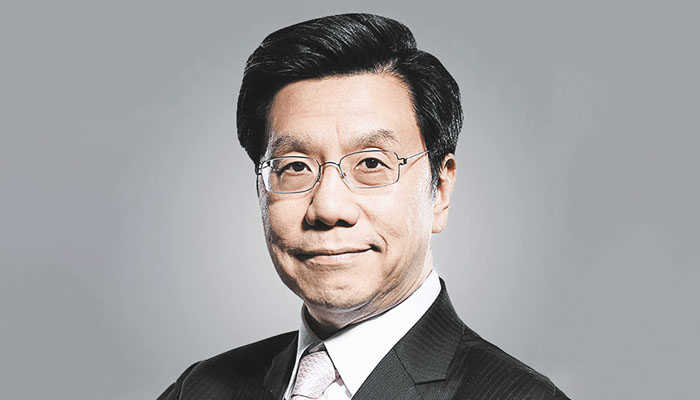
尽管人工智能取得了不俗的进展,也带来了大量的价值创造机会,但作为享誉全球的人工智能专家,以及投资人兼作家,李开复博士依然认为,我们刚刚触及人工智能全部潜力的冰山一角。
李开复绝对有资格给出这样的洞见,他的风险投资公司创新工场资助了数百家成功企业,其中有的提供人工智能解决方案,有的则正在应用人工智能。
近期,李开复与麦肯锡人工智能业务QuantumBlack中国区合伙人沈愷进行对话,探讨了他对于人工智能发展的预期。
李开复认为,自然语言处理(NLP)应用实现了类似于计算机视觉在过去5-10年所取得的突破,而自监督学习(SSL)将推动人工智能投资进入第二个黄金时代。
李开复还就其他一些话题分享了见解,包括企业领导者怎样在运营中充分应用人工智能,如何转型成为一家真正的AI驱动型企业,以及为何我们仍处于人工智能普及的早期阶段。
一、李开复博士
教育经历
以优异成绩毕业于哥伦比亚大学计算机系;1988年获得卡内基梅隆大学计算机科学博士学位,并在那里担任教职至1990年。
职业亮点
2009年创办风险投资公司——创新工场,并担任董事长兼首席执行官,管理30亿美元双币投资基金,着眼于打造下一代中国高科技企业。
担任创新工场人工智能工程院院长,该院致力于孵化为医疗、教育、机器人、计算机金融等领域提供人工智能解决方案的公司。
2005-2009年担任谷歌大中华区总裁,并成功推出GoogleÆcn。
2002-2005年担任微软公司副总裁,领导用户界面、语音、自然语言和辅助技术等。
1998-2005年创办并领导全球顶尖计算机科学实验室——微软中国研究院,并担任院长。
20世纪90年代先后在SGI和苹果公司(Apple)担任高管职位,在苹果时负责为Mac电脑开发AppleBandai Pippin、PlainTalk、Casper和GalaTea语音系统。
迄今为止出版了十余本畅销书,包括登上《纽约时报》畅销书榜的《AI Superpowers∫†China¨†Silicon Valley¨and the New World Order》(2018)以及《人工智能》(Artificial Intelligence,2017)和《向死而生》(2015)。他的新书《AI未来进行式》(AI 2041∫TenVisions for Our Future,2021)成为《华尔街日报》《华盛顿邮报》和《金融时报》的年度图书。
二、对话内容
麦肯锡:您对人工智能的定义是什么?
李开复:我的定义是,这是一项模拟人类认知和智能的研究。人工智能最重要的分支学科是机器学习,而其中的深度学习是一种具有深远全球影响的算法。这两个词经常被混用,这并不正确。
人工智能最常见的用例,是在使用海量数据的系统中利用深度学习,优化与商业意图相一致的目标函数,以做出更好的决策、预测和分类。企业可以利用深度学习来预测未来的销量和股价,或对物体及语音进行识别和分类。
麦肯锡:据您预测,人工智能未来会取得怎样的发展?
李开复:深度学习是一个承载其他技术的平台。这些技术中包括在过去五六年内出现的两个最显著的进步:一是卷积神经网络(CNN),即利用通用深度学习算法来执行计算机视觉任务:在执行具体任务时,可超越人类水平看见和识别物体,并理解场景;二是自监督学习(SSL),例如,可以训练一套基于全球自然语言数据的系统来学习英语或汉语,然后针对某个领域进行快速微调。以上两个例子表明,深度学习不光能实现匹配、制定决策和优化简单的目标函数,还可以具备视觉、听觉和理解能力。随着人工智能在执行自动驾驶、健康医疗等领域的复杂任务方面取得进步,深度学习也会进一步增强。未来5-10年,深度学习仍会是人工智能最大的支撑平台,而像卷积神经网络、自监督学习等绝妙的新主意,也会在此基础上解决过去无法克服的难题。
另一方面,有人认为,深度学习在更多数据输入、更少人工编程的情况下似乎效果更好,所以不适合模拟人类的能力,如推断、类比或获取常识。这种想法认为,利用数据和深度学习的输入输出对人类认知进行建模不是一件容易的事情,所以有必要对其进行提升,甚至用全新算法来取代它。未来有这种可能,但我们尚未挖掘出深度学习技术的所有潜能。短期内,我对上述观点持怀疑态度,其实许多聪明人都已尝试过,但却没有真正成功,大约从40年前的专家系统就开始了。此外,深度学习凭借大量的数据和计算能力持续取得突破,做成了许多之前认为不可能的事情,所以应该还有很大的发展空间。
麦肯锡:您如何看待人工智能在语言中的应用?您认为这种影响是否会比在计算机视觉领域所产生的影响更大?
李开复:确实会。尽管我们主要通过视觉,其次通过听觉来吸取现实世界的信息,但语言却会对人工智能的商业和科学发展产生更深刻的影响,因为语言是我们交流并获取知识和思想的方式。
我们正处于与2012年相似的阶段,当时Geoffrey Hinton等人展示了如何运用卷积神经网络实现计算机视觉。那时,ImageNet性能飙升,有望在三四年内与人类媲美。创新工场最大的成功之一,就是意识到计算机视觉会超越人类并改变世界,于是投资了卷积神经网络和深度学习;我们预计,当这一天真正来临时,应用程序要么与人类合作共生,要么在很多情况下彻底取代人类以节约成本。后来,我们看到了应用如雨后春笋般出现,虽然也出现了深度伪造、人脸识别等争议问题,但其他技术突破还是得到了人们的普遍认可,如自动驾驶、机器人感知、放射学和病理学识别、数字化、图像、视频、3D数据以及制造过程检测应用等,不胜枚举。
大约两年前,OpenAI的GPT-3,即第三代生成预训练转换器,推出了一种新的语言学习范式。这种范式基于这样一个事实:尽管数据越多,人工智能的效果越好,但我们不可能对万亿级数据库使用通用标签标注。如果只用名词、动词这样的标签来标记语言数据,显然是不够的。你可以标注构建航空预订系统这样的特定任务,但无法进行公认的、通用的标签标注。因此GPT-3彻底放弃了标签,转而训练新的数据大脑,并基于可以根据过去预测未来的前提假设,将世界上所有的数据都喂给它,以最高的保真度作为目标函数。这套系统自组织成一个理解并概括语言本质的网络,或许不同于人类的方式,但足以开发预订、聊天室、语音识别、机器翻译、新搜索引擎、问答、广告定位等系统。
我们的观点是,随着自然语言处理(NLP)应用像计算机视觉应用一样大量涌现,人工智能投资的第二个黄金时代将会开启。我们已投资了四家自然语言处理公司,其中一家在中文自然语言处理领域处于领先地位,还开发了一套类似于GPT-3转换器的模型,并将其压缩到原先的千分之一,使之具备实用性。他们花了大约三周时间,仅用一名工程师和两名实习生就开发了一套英语-阿拉伯语机器翻译系统。整个团队中没有一个人会阿拉伯语。这个例子充分说明,基于全球数据打造一个庞大的自监督学习训练模型,然后针对具体应用和语言进行微调的方法似乎可行。与之相似,我们展示了基于大模型的快速定制化自然语言处理应用如何在定向广告等领域发挥作用,这个技术现在非常强大,因为你可以针对不同个体推送不同广告副本。自然语言处理也被应用到语音识别领域,未来五年,我们会看到自然语言公司的覆盖面和影响力进一步提升,估值也可能会增加,超越5-8年前计算机视觉领域所取得的成就。
麦肯锡:如果以篮球比赛打比方,目前人工智能的商业应用处于赛程的哪个阶段?
李开复:显然还在第一节。比分可能是7∫8,我们用深度学习投中了一个三分球,用卷积神经网络和自监督学习投中了两个二分球。整个比赛可能刚打了两分钟。我们还有很长的路要走——正如我在《AI Superpowers》一书里提到的,我们才刚刚触及冰山一角。有多少企业在真正使用人工智能?只有不到10%,就连这些企业也未充分挖掘应用的潜能,在落地实施方面还蕴藏很多机会。比如,麦肯锡研究显示,到2030年,人工智能有望额外创造约13万亿美元的经济价值。路漫漫其修远兮,我们对未来抱有很大期待。
麦肯锡:打造AI驱动型企业意味着什么?
李开复:首先,这意味着要以数据为驱动,因为没有数据,就没有人工智能。企业需要投入资金,将能够数字化的东西全部数字化,这样才能为人工智能提供养分。不要将数据和存储作为成本中心,而将之视为最能创造价值的资产。如果你只是把数据收集和存储作为一笔预算,每年增长5%-10%,那永远都无法成功,必须彻底转变思维。然后要利用大数据体现商业智能,一旦做到这一点,越来越多的决策就会基于数据来制定,而非经验或直觉。
再后来,要寻找易于实现自动化的领域,包括制定决策这种人类处理起来比机器更费时的事情——这通常是为了节约成本。还要不遗余力地提升利润、争取客户。将一切可以量化的商业指标与人工智能关联起来,从而优化并提出人类与人工智能共生合作的解决方案。人工智能完全可以代表我们执行数据丰富、程序相对固定的单一领域任务。
麦肯锡:如果您是一家传统企业的首席执行官,想要推动AI驱动型企业转型,您首先会用人工智能解决什么商业问题?
李开复:首先考虑公司对人工智能的认知是否准确。有些高管可能会对人工智能的效果持怀疑态度,也有些可能抱有不切实际的幻想,这都很正常。我会请一些专家来提供建议,找出一项在数据方面已经准备妥当、能够与商业结果直接挂钩的任务。这样一来,当人工智能落地时,他们就会说:“哦,果然如此,确实有效。”†之后,我会考虑其他机会,前提条件是我在这方面有很多数据,以及能与目标函数相关联的商业指标,如削减成本、提高利润,或是加强客户营销的精准性。如果公司没有数据,我还要面对一个棘手问题——选出一个可以用合理成本收集数据的领域。
但我的首要目标是用生动的人工智能实例启迪我的高管和领导团队,这样做能激发大家源源不断的创造力,想出更多的应用创意。第一个落地的项目很重要,如果失败了,无论是因为无法证明其商业影响,还是因为数据太少或错误,抑或实施不当,无论出于什么原因,领导团队都会失去信心。
麦肯锡:您能举例说明一家公司怎样开始这个过程吗?
李开复:一种方式是让公司先不要考虑人工智能,而是描述其商业驱动力和挑战,然后让专家运用人工智能和其他技术来交付一套解决方案。比如,某钢铁企业最大的问题是他们的液化铁在输送过程中冷却速度过快。我们用物流管理、无人驾驶和安全传感器等方面的人工智能系统解决了这个问题。当我们赢得这家公司的信任后,他们提出了更多问题,这些都迎刃而解,因为我们已经开启数字化旅程,并且安装了传感器来收集数据。
如果你因为没有数据而难以决定从哪里入手,那就必须了解收集数据的成本。初期收集数据很容易,但清洗数据所需的资源和时间往往超出企业高管的预期。一旦清洗好数据,人工智能的时间成本和工作难度反而不像人们想象得那么大。确定问题,获取数据,并了解清洗数据的成本,之后就可以落地实施了。
麦肯锡:以这种方式切入确实很好,但最终要怎样做才能真正成为一家AI驱动型企业?
李开复:需要对商业流程进行全面数字化,只要是人工智能比人类表现更好的任务,就应该用人工智能去辅助或替代。如果有高管只顾着因循守旧、各自为政,而不愿拥抱人工智能,那就要撤换高管,或转变他们的观念。也就是说,首先要信任数据,要制定数据驱动的明智决策,并部署人工智能。如果你做得不好,别人就会抢你的饭碗;人工智能可以提高员工技能,因为它最擅长做常规、量化的事情,而员工则可以从事更高层次的创造性任务来提升竞争力。应该将人工智能用于管理的方方面面——不只是研发或技术,还可以帮助人力资源部门留住核心员工、初筛岗位简历,帮助营销部门优化和定制EDM(电子邮寄宣传),以增加客户阅读的概率。人工智能也可以运用在销售和IT运营管理中,公司的所有部门无一例外都应该利用人工智能工具来提升业绩。
麦肯锡:最后来一组快问快答:数据和算法,哪个更重要?
李开复:数据。两者都需要,但没有数据,一切都是空谈。如果已经有一套合理算法,就要努力获取更多数据,而不是调整算法。
麦肯锡:行业知识和人工智能知识,哪个更重要?
李开复:在某些行业,算法很重要,因为数据相对简单,如一家拥有用户数据的互联网公司。但在某些领域,行业知识异常复杂。不光要开发应用,还要知道如何选择正确的销售渠道。医疗就是很明显的例子。所以两者都需要。你首先要考虑进入哪个行业,以及是否真的需要行业知识。如果答案是肯定的,那就优先获取行业知识。
麦肯锡:当一家公司出售人工智能解决方案时,最重要的是规模化产品,还是更为迅速的定制?
李开复:定制更重要,因为我们还没有能够满足大量不同需求的人工智能平台。定制不可或缺,没有定制就没有业务。我希望,五年后你再问我这个问题时,我会说规模化产品更重要,因为届时人工智能研究人员已经解决了定制问题。
麦肯锡:对想要用人工智能推动业务转型的企业来说,建立MLOps平台(实现机器学习算法自动化的一种手段)和推动文化变革,哪个最重要?
李开复:推动变革更加紧迫,我们看到许多公司都在这方面遇到困难。完成文化变革之后,就可以关注MLOps了。
沈愷是麦肯锡全球董事合伙人,常驻深圳分公司。
翻译:
Artificial intelligence (AI) applications are rapidly gaining popularity across industries. Globally, most companies will use AI technology; According to the 2021 McKinsey Global Survey on AI, 56 percent of companies surveyed said they are applying AI in at least one function, up from 50 percent in 2020.
McKinsey research shows that by 2030, artificial intelligence is expected to create an additional value of about $13 trillion for the economy and society. According to another recent study, AI applications in China are expected to create up to $600 billion in economic value by 2030.
Despite the progress and value creation opportunities presented by AI, Dr. Kai-fu Lee, a world-renowned AI expert, investor and author, believes that we have only just touched the tip of the iceberg of AI’s full potential.
Kai-fu Lee is well qualified to give such insights, as his venture capital firm Innovation Works has funded hundreds of successful companies that either offer AI solutions or are applying AI.
Lee recently sat down with Kai Shen, a partner in McKinsey’s AI practice QuantumBlack in China, to discuss his expectations for AI.
Lee believes that natural language processing (NLP) applications have achieved breakthroughs similar to what computer vision has achieved in the past 5-10 years, and that self-supervised learning (SSL) will propel AI investment into a second golden age.
Lee also shared insights on a number of other topics, including how business leaders can fully apply AI in their operations, how to transform into a true AI-driven business, and why we are still in the early stages of AI adoption.
Dr. Kai-fu Lee
Educational experience
Graduated cum laude from Columbia University, Department of Computer Science; He received his Ph.D. in computer science from Carnegie Mellon University in 1988, where he served on the faculty until 1990.
Career highlights
In 2009, he founded and served as chairman and CEO of Sinovation Works, a venture capital firm, and managed a $3 billion dual-currency investment fund, focusing on building the next generation of Chinese high-tech enterprises.
He is the president of the Artificial Intelligence Engineering Institute of Sinovation Works, which is committed to incubating companies that provide artificial intelligence solutions for medical, education, robotics, computer finance and other fields.
He served as President of Google Greater China from 2005 to 2009 and successfully launched GoogleÆcn.
From 2002 to 2005, he was corporate vice President of Microsoft, where he led user interface, voice, natural language and assistive technologies.
From 1998 to 2005, he founded and led Microsoft Research China, one of the world’s leading computer science laboratories, and served as the president.
In the 1990s, he held executive positions at SGI and then Apple, where he was responsible for the development of the AppleBandai Pippin, PlainTalk, Casper and GalaTea voice systems for the Mac.
He has published more than 10 best-selling books to date, Including the New York Times bestseller AI Superpowers∫†China¨†Silicon Valley¨and the New World Order (2018) and Artificial Intelligence, 2017) and “Born to Die” (2015). His new book, AI 2041∫TenVisions for Our Future (2021), became the Wall Street Journal, Washington Post and Financial Times Book of the Year.
Content of the dialogue
McKinsey: What is your definition of artificial intelligence?
Kai-fu Lee: My definition is that this is a study that simulates human cognition and intelligence. The most important branch of AI is machine learning, and deep learning is an algorithm with far-reaching global implications. The two words are often used interchangeably, which is not true.
The most common use case for AI is the use of deep learning in systems that use massive amounts of data to optimize objective functions that are aligned with business intent to make better decisions, predictions, and classifications. Companies can use deep learning to predict future sales and stock prices, or to identify and classify objects and speech.
McKinsey: What do you foresee for AI in the future?
Kai-fu Lee: Deep learning is a platform that hosts other technologies. These technologies include two of the most significant advances in the past five or six years: Convolutional neural networks (CNNS), which use general-purpose deep learning algorithms to perform computer vision tasks: to see and recognize objects and understand scenes beyond human level when performing specific tasks; The second is self-supervised learning (SSL), where a system based on global natural language data can be trained to learn English or Chinese, for example, and then quickly fine-tune a domain.
These two examples show that deep learning is not only about matching, making decisions, and optimizing simple objective functions, but also about vision, hearing, and understanding. As artificial intelligence advances in performing complex tasks in areas such as autonomous driving and health care, deep learning will be further enhanced. In the next 5-10 years, deep learning will continue to be the largest support platform for artificial intelligence, and wonderful new ideas like convolutional neural networks and self-supervised learning will also solve problems that were insurmountable in the past on this basis.
On the other hand
On the other hand, it has been argued that deep learning seems to work better with more data input and less human programming. So it is not suitable for simulating human abilities such as inference, analogy, or acquiring general knowledge. Modeling human cognition using the inputs and outputs of data and deep learning is no easy task, the thinking goes. So it’s necessary to upgrade it or even replace it with an entirely new algorithm.
This is possible in the future, but we have not yet tapped the full potential of deep learning technologies. In the short term, I’m skeptical of the above view, but many smart people have tried it without really succeeding, starting with expert systems about 40 years ago. In addition, deep learning continues to make breakthroughs with vast amounts of data and computing power, doing many things previously thought impossible, so there should be a lot of room for development.
McKinsey: How do you see AI being used in language? Do you think this impact will be greater than what it has been in computer vision?
Kai-fu Lee: Yes, indeed. Although we absorb information from the real world primarily through sight and then through hearing, language will have a deeper impact on the commercial and scientific development of AI because it is how we communicate and acquire knowledge and ideas.
We are at a similar stage to 2012, when Geoffrey Hinton et al. showed how convolutional neural networks can be used to achieve computer vision. At that time, ImageNet’s performance soared and it was expected to be comparable to humans within three or four years. One of Innovation Works’ biggest successes was investing in convolutional neural networks and deep learning, recognizing that computer vision would surpass humans and change the world; We expect that when that day comes, apps will either co-exist with humans or. In many cases, replace them entirely to save costs. Later, we saw applications mushroomed, and although there were controversial issues such as deep forgery and face recognition, other technological breakthroughs were widely recognized, such as autonomous driving, robot perception, radiology and pathology recognition, digitization, images, video, 3D data, and manufacturing process detection applications, to name but a few.
About two years ago
About two years ago, OpenAI’s GPT-3, the third-generation generative pre-training converter, introduced a new paradigm for language learning. This paradigm is based on the fact that while AI works better with more data. It is impossible to use generic labels for trillion-scale databases. If only nouns and verbs are used to label language data, it is obviously not enough. You can label a specific task like building an airline reservation system. But you can’t label it in a recognized, generic way.
So GPT-3 ditched labels altogether and instead trained a new data brain and fed it all the data in the world, with the highest fidelity as an objective function, based on the premise that it could predict the future based on the past. This system self-organizes into a network that understands and generalizes the essence of language, perhaps in a different way than humans do, but enough to develop systems for reservations, chat rooms, speech recognition, machine translation, new search engines, question-and-answer, AD targeting, and more.
Our view is that a second golden age of AI investment will begin as natural language processing (NLP) applications emerge in the same abundance as computer vision applications.
We have invested in four natural language processing companies, one of which is a leader in Chinese natural language processing, and have developed a model similar to the GPT-3 converter and compressed it to one-thousandth of its original size to make it practical. It took them about three weeks to develop an English-Arabic machine translation system with just one engineer and two interns. No one on the team speaks Arabic. This example demonstrates that it seems possible to build a large self-supervised learning training model based on global data and then fine-tune it for specific applications and languages.
Similarly, we showed how fast, customizable natural language processing applications based on large models can be useful in areas like targeted advertising, which is now very powerful because you can push different copies of ads to different individuals. Natural language processing is also being applied to speech recognition, and in the next five years we will see the reach and influence of natural language companies further increase, and valuations may also increase, surpassing what was achieved in computer vision five to eight years ago.
McKinsey: If you use a basketball game as an analogy, where is the commercial application of AI currently on the schedule?
Kai-fu Lee: Obviously still in the first quarter. The score could be 7∫8, we made one three-pointer with deep learning. And two two-pointers with convolutional neural networks and self-supervised learning. The whole game was probably two minutes old. We still have a long way to go – and as I mentioned in my book AI Superpowers. We’ve only just touched the tip of the iceberg. How many businesses are actually using AI? Only less than 10%, and even these companies have not fully tapped the potential of the application. And there are still many opportunities in the implementation of the implementation. For example, McKinsey research shows that artificial intelligence is expected to create about $13 trillion in additional economic value by 2030. There is a long way to go, and we have great expectations for the future.
McKinsey: What does it mean to build an AI-driven business?
Kai-fu Lee: First of all, it means being data-driven, because without data, there is no AI. Companies need to invest in digitizing everything that can be digitized in order to feed AI. Stop thinking of data and storage as cost centers and think of them as the assets that create the most value. If you just set data collection and storage as a budget and grow it by 5%-10% a year, you will never succeed. Then you have to leverage big data for business intelligence, and once you do that. More and more decisions will be made based on data rather than experience or intuition.
Later, look for areas that can be easily automated. Including making decisions that take more time for humans to handle than machines – often to save costs. And spare no effort to increase profits and win customers. Correlate all quantifiable business metrics with AI to optimize and propose solutions for symbiotic cooperation between humans and AI. Ai is perfectly capable of performing data-rich, relatively fixed, single-domain tasks on our behalf.
McKinsey: If you were the CEO of a traditional business and wanted to drive an AI-driven transformation, what business problem would you solve first with AI?
Kai-fu Lee: The first consideration is whether the company’s perception of artificial intelligence is accurate. Some executives may be skeptical about the effects of AI, and others may have unrealistic fantasies, which is normal. I would ask some experts to advise on finding a task that was data-ready and directly tied to business results. That way, when the AI lands, they can say, “Oh, sure enough, it worked.” † After that, I look at other opportunities, provided I have a lot of data and business metrics that can be linked to the objective function. Such as cutting costs, increasing profits, or improving the precision of customer marketing. If the company doesn’t have the data. I face the tricky problem of choosing an area where it can be collected at a reasonable cost.
But my number one goal is to inspire my executives and leadership team with vivid examples of AI. And in doing so, inspire a constant stream of creativity and application ideas. The first project to land is important, and if it fails, whether it’s because it can’t prove its business impact. Because there’s too little or wrong data, or because it’s not implemented properly, for whatever reason, the leadership team will lose confidence.
McKinsey: Can you give an example of a company that started this process?
Lee: One way is for companies not to think about AI at the moment. But to describe their business drivers and challenges, and then have experts apply AI and other technologies to deliver a set of solutions. For example, one steel company’s biggest problem was that their liquefied iron cooled too quickly during transportation. We solve this problem with AI systems for logistics management, driverless driving and safety sensors. When we earned the trust of the company, they asked more questions, which were solved because we had started the digital journey and installed sensors to collect data.
If you’re having trouble deciding where to start because you don’t have the data. It’s important to understand the cost of collecting it. Collecting data is easy in the beginning. But the resources and time required to clean it often exceed the expectations of business executives. Once the data is cleaned, the time cost and work difficulty of artificial intelligence are not as great as people think. Identify the problem, obtain the data, and understand the cost of cleaning the data, and then you can implement it.
McKinsey: It’s great to start this way, but what does it take to really become an AI-driven business?
Kai-fu Lee: Business processes need to be fully digitized. And as long as artificial intelligence performs better than humans, artificial intelligence should be used to supplement or replace the task. If there are executives who are too conformist and self-serving to embrace AI. They need to be replaced or their mindset changed. That means trusting data first, making informed decisions driven by data, and deploying AI. If you don’t do well, others will take your job. Ai can improve employee skills because it is best at doing routine, quantitative things. While employees can engage in higher-level creative tasks to improve competitiveness.
Ai should be used in every aspect of management -. Not just research and development or technology. But also to help HR retain key employees, screen job resumes.And help marketing optimize and customize EDMs (email campaigns) to increase the probability that customers read them. Ai can also be used in sales and IT operations management. And all departments of the company without exception should use AI tools to improve performance.
McKinsey: A final set of quick questions and answers: Which is more important, the data or the algorithm?
Kai-fu Lee: Data. Both are needed, but without data, everything is empty talk. If you already have a good algorithm, try to get more data, not tweak it.
McKinsey: Which is more important, industry knowledge or AI knowledge?
Kai-fu Lee: In some industries, algorithms are important because the data is relatively simple. Such as an Internet company that has user data. But in some areas, industry knowledge is unusually complex. It’s not just about developing apps, it’s also about knowing how to choose the right distribution channel. Health care is a clear example. So you need both. You should first consider which industry to enter and whether you really need industry knowledge. If the answer is yes, make industry knowledge a priority.
McKinsey: When a company sells an AI solution, is it most important to scale the product, or to customize it more quickly?
Lee: Customization is more important because we don’t yet have an AI platform that can meet a lot of different needs. Customization is indispensable, without customization, there is no business. I hope that when you ask me this question five years from now. I will say that scaling is more important because AI researchers will have solved the customization problem by then.
McKinsey: Which is most important for companies that want to use AI to transform their businesses, building the MLOps platform (a means of automating machine learning algorithms) or driving cultural change?
Kai-fu Lee: It’s more urgent to drive change, and we’re seeing a lot of companies struggle with that. Once the culture change is complete, you can focus on MLOps.
Kai Shen is a global managing partner of McKinsey & Company, based in Shenzhen.
如需加入CXO UNION(CXO联盟)高管社群,请联系社群小伙伴哦~
本文由CXO UNION-CXO联盟(cxounion.cn)转载而成,来源于McKinsey&Company;编辑/翻译:CXO UNIONCXO联盟小宁檬。

免责声明: 本网站(http://www.cxounion.cn/)内容主要来自原创、合作媒体供稿和第三方投稿,凡在本网站出现的信息,均仅供参考。本网站将尽力确保所提供信息的准确性及可靠性,但不保证有关资料的准确性及可靠性,读者在使用前请进一步核实,并对任何自主决定的行为负责。本网站对有关资料所引致的错误、不确或遗漏,概不负任何法律责任。
本网站刊载的所有内容(包括但不仅限文字、图片、LOGO、音频、视频、软件、程序等) 版权归原作者所有。任何单位或个人认为本网站中的内容可能涉嫌侵犯其知识产权或存在不实内容时,请及时通知本站,予以删除。
如需加入CXO UNION(CXO联盟)高管社群,请联系社群小伙伴哦~

免责声明: 本网站(http://www.cxounion.cn/)内容主要来自原创、合作媒体供稿和第三方投稿,凡在本网站出现的信息,均仅供参考。本网站将尽力确保所提供信息的准确性及可靠性,但不保证有关资料的准确性及可靠性,读者在使用前请进一步核实,并对任何自主决定的行为负责。本网站对有关资料所引致的错误、不确或遗漏,概不负任何法律责任。
本网站刊载的所有内容(包括但不仅限文字、图片、LOGO、音频、视频、软件、程序等) 版权归原作者所有。任何单位或个人认为本网站中的内容可能涉嫌侵犯其知识产权或存在不实内容时,请及时通知本站,予以删除。
Search
Popular Posts
-

2024数字化灯塔案例评选申报开启!
“2024数字化灯塔案例评选”于3月正式启动,诚挚欢迎业界同仁自荐和推荐,一起推动产业数字化进程,助力赋能企业…
-

2024 X-Award星盘奖申报通道已开启!
X-Award星盘奖是数字化转型服务、IT服务行业重要的商业奖项,旨在表彰行业里提供杰出数字化转型服务与IT服…
-

2024 N-Award星云奖申报通道已开启!
N-Award是数字化转型领域重要的商业奖项,旨在表彰那些以非凡的远见、超群的领导才能和卓越的成就来激励他人的…