Q1:如今的摩根士丹利与您初任CEO时大不相同,您是如何推动这种变革的?
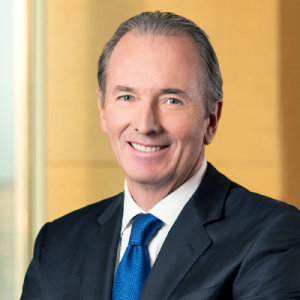
摩根士丹利董事长兼CEOJames Gorman:有几个因素推动了变革,最显而易见的是当时的业务状况。虽然你可以制定世界上最大胆的战略,但如果公司还在为生存挣扎,那么这样的战略得不到任何支持。我们那时刚从金融危机走出来,所以有一种“做实事”的迫切需求。
我那时认为,由于管理欠佳,公司旗下财富管理业务价值被大大低估了,如果我们能进行专业化管理,那么就可以把璞玉雕琢成美玉。并且我认为交易、交易支持、承销等机构业务,虽然吸引人且自带光环,但其波动性很大,有时并不适合投资。
金融危机证明了这一点。绝大多数从事纯机构业务的金融机构都销声匿迹了。我们和高盛等一些机构“幸存”下来,但存在形式已截然不同,我们变成了银行。我在思考战略时认为,首先要评估一下情况到底有多糟。我们此次幸存下来了,但下次呢?什么会让我们再次陷入灾难性境地?CXO UNION-CXO联盟(cxounion.cn)
其次,我把摩根士丹利视为一艘航空母舰。即使遇到惊涛骇浪,我们也要能稳定航行,为此就需要“压舱石”。对于我们而言,财富和资产管理业务就是“压舱石”,这些业务规模必须足够大,才能稳住船体。
我考虑的第三点是, 如果允许信贷和流动性风险高的业务不受限制发展,那么最终可能会失败。因此,我们需要一套“组合拳”:既要积极行动、又要建立压舱石业务,同时还要控制极端风险。
Q2:您最近表示,希望摩根士丹利的资产规模从6.5万亿美元增加到10万亿。您如何平衡“压舱石”业务和其他业务投资?
摩根士丹利董事长兼CEOJames Gorman: 很多人误以为我们的战略“从全球投资转为全球财富管理”,这个理解是错误的。我们想要梳理投资银行业务,同时还会制定一个附加战略,但若想要附加战略发挥作用,投资银行必须具备一定规模。CXO UNION-CXO联盟(cxounion.cn)
回到航空母舰的比喻,当海面风平浪静时,所有船只看起来都行驶平稳。有些船不用像我们一样载着“压舱石”,甚至会跑得更快一些;但我们的战略经得起考验,会在其他公司表现不佳时脱颖而出。至于“压舱石”需要多大?粗略计算是50%/50%。你可以通过缩减规模达到这个比例,但是扩大规模效果更好。我们不得不通过一些交易加速这一进程,否则这将是一个非常漫长的过程。CXO UNION-CXO联盟(cxounion.cn)
Q3:您掌舵摩根士丹利之时正值金融危机爆发。您如何获得信心推动如此巨变的?
摩根士丹利董事长兼CEOJames Gorman: 我并不畏惧。因为对我来说,战略来自对行业架构的基本信念,然后我们围绕这些基本信念制定指导原则。并不是每个人都有平等话语权。很多人告诉我,“你错了”。我对其中一个人说:“好吧,如果我错了,我会失败,那时我自己走人,到时也许他们会请你来管理。但在那之前,要按我的方式来。”C
首先,你需要就行业走向形成自己的观点。例如,很多人认为财富管理咨询模式将完全电子化。至少从20世纪90年代中期开始,我就认为这种看法是错误的,我认为财富管理咨询会迎来多渠道模式。例如,嘉信理财建立了个人退休账户(IRA)业务,我们的观点殊途同归。CXO UNION-CXO联盟(cxounion.cn)
“有很多人告诉我,‘你错了’。我对其中一个人说:‘好吧,如果我错了,我会自己走人。但在那之前,要按我的方式来。’”CXO UNION-CXO联盟(cxounion.cn)
有了这些基本观点之后,我就开始思考,“下次危机到来时,我们会面临哪些灾难性风险?” 在我们的业务中,灾难性风险几乎都是流动性风险。不过一旦消除了灾难性风险,就要在你有天然优势的领域大胆行动,这就像打扑克。我参加过扑克比赛,当你拿到好牌时,就要敢往前冲。你永远不知道自己是否会赢,但如果赢的几率很高,你出牌就会很激进。所以一方面在管理灾难性风险时要非常谨慎;另一方面,拿到好牌时要敢于往前冲,两者应该有机结合。
一旦建立起框架,我就会将战略言简意赅地写下来,与团队一起测试:如果这是我们的目标架构,那么该如何实现?然后我们会列出每项举措的潜在风险,并根据所需时间和实施难度分析举措的回报。CXO UNION-CXO联盟(cxounion.cn)
我会分开考虑公司战略和业务部门战略。企业战略需要单独思考,而业务部门面临的战略问题也不胜枚举。我们是否要成为一家数字化银行,如果是,那么应该投资自建还是外购?分别需要多少费用?我们是否应该进入中型市场并购领域?诸如此类问题成百上千,都是业务部门的战略问题,需要深入分析,也需要对资本资源配置和人才了如指掌。
我们的另外一条指导原则是“战略制定不能人云亦云”,不能仅仅因为别人做了我们就做。一些竞争对手显然选择了不同于我们的道路。CXO UNION-CXO联盟(cxounion.cn)
Q4:作为CEO,您会在多大程度上参与业务部门战略制定?
摩根士丹利董事长兼CEOJames Gorman: 不是太多。我主抓预算流程和季度业绩评估。我的假设是,经营业务的人比我更了解具体业务。虽然我头衔更大,但这并不意味着我的脑容量更大、经验更多或知识更丰富。但若某项业务绩效表现欠佳,我会更深入参与。CXO UNION-CXO联盟(cxounion.cn)
有时我对某一个业务部门有强烈主张,并且已经想出解决方案。可当我告诉团队自己的解决方案时,他们的反应是:“这主意真糟糕。”我说:”那好,你的答案是什么?” 他们却没有,这时我会告诉他们,“如果你没有,那就按我的来做。”这迫使他们更积极寻求答案,直到想出和我一样好或更好的方案。我认为,对于一个组织而言,不能什么事都认为CEO有最终答案。长期以来,CEO面临的问题是,每个人都告诉你,你拥有所有问题的答案。这当然会让你自我感觉良好,但也非常危险。CXO UNION-CXO联盟(cxounion.cn)
Q5:任期内您对业务部门战略的参与度有变化吗?
摩根士丹利董事长兼CEOJames Gorman: 我的理念一直没变。早期,业务部门的人会就其专业领域给我一些指导,但我永远不会成为这个领域的专家。我会参与新兴市场风险测试,尤其是更动荡的市场;我可以抛出一系列问题,推动业务部门负责人在专业能力上更上一层楼。CXO UNION-CXO联盟(cxounion.cn)
我会从大方向或思考框架上提供引导。比如我会问:“如果情况变糟,那么在XYZ国家,业务绩效的一个、两个或三个标准差是什么?”得到答案后,我会继续追问,“如果明早醒来损益表上有个数字让你担忧,那么这个数字是什么?” 接下来的问题是“告诉我这个数字可能发生的概率。千分之一?还是四十二分之一?”业务部门负责人肯定不希望是四十二分之一,所以他们会采取缓释措施、进行对冲、卖掉头寸。除了以上问题,我还会问,“过去三年这块业务的平均收入是多少?”或者“预期回报是多少?”如果CEO不具备基础知识,甚至都问不出这些问题,但CEO了解的知识深度永远不会达到专家水平。CXO UNION-CXO联盟(cxounion.cn)
Q7:您如何分配资本、费用、人才等资源?
摩根士丹利董事长兼CEOJames Gorman: 首先,我会问团队需要什么资源才能实现最大的成功,无论是资本、资产负债表资源、财务资源、还是业务投资和人才资源等。最终你得到的答案是针对理想状态的。我一直在努力分析决策利弊、利弊发生的可能性以及大小。有些情况下,利的可能性很小但回报巨大,而有的情况则相反,弊的可能性很高,但损害有限。CXO UNION-CXO联盟(cxounion.cn)
VQ8:如果这涉及到收购,情况肯定很复杂。
摩根士丹利董事长兼CEOJames Gorman: 每位CEO都有一个收购梦想清单,但组织能吸纳多少,董事会、监管机构和投资者能接受多少,都是有限度的。有时人容易贪婪,就像去冰激凌店一下买三支冰激凌,虽然它们看上去都很好吃,但身体吃不消。我的工作就是管理“消化问题”。CXO UNION-CXO联盟(cxounion.cn)
Q9:我们的研究表明,72%的宏观战略都失败在落地实施上。您如何将愿景变为现实?关键成功因素是什么?
摩根士丹利董事长兼CEOJames Gorman: 我关注的是发展曲线的坡度,以及它是否朝着积极方向发展: 是否从左下到右上发展。至于这条线的坡度是6°、15°、还是8°,可能会受外部环境、运气和努力程度影响;但是它是否稳定向上发展?这是我首要关注的,战略必须显示出积极进展。CXO UNION-CXO联盟(cxounion.cn)
早些年,我一直专注纯战略。在一次250名高管出席的会议上,一位商业教授大谈战略问题。我当时刚刚担任CEO,我知道我们的战略是什么。过了一会儿,我听不下去了。我走到讲台前,说:“抱歉打断您,您讲得很好,但我不能让您带领我们去思考战略问题。我知道我们的战略是什么。” 然后,我用短短72个字提出了我们的战略,即在资本所有者和需求者间架起桥梁——这就是我们的工作。CXO UNION-CXO联盟(cxounion.cn)
然后我们进行了一次员工调查,结果98%的人理解并认同这一战略。信息明确十分关键。我们把这个信息传达出来,是在告诉受众“每个人都很重要。”因为我们的定位是桥梁,所以我告诉大家,“我们不会用自有资本从事自营交易。”这72个字蕴含一些深刻、需要解码的信息,它至今还摆在我桌上。CXO UNION-CXO联盟(cxounion.cn)
“有了明确战略就可以谈论文化了。文化保证战略转型持之以恒、与周围世界保持和谐,并秉持开放态度。”
我关注的第二个重点是文化。有了明确的战略,你就可以谈文化了。文化能确保战略转型持之以恒,并且与周围世界保持和谐。健康组织都有一个关键特质——对变化保持开放心态,这就是文化。领导班子有能力,也是文化。因此,我要求总裁和首席法务官踏上一次只谈文化的世界巡访之旅。我们足够稳定,员工能保住他们的工作。他们不是租客,而是房东。我认为,当企业走出危机时,这种转变至关重要。CXO UNION-CXO联盟(cxounion.cn)
Q10:您是否制定了具体的文化举措?CXO UNION-CXO联盟(cxounion.cn)
摩根士丹利董事长兼CEOJames Gorman: 没有具体措施,文化体现在我们工作的方方面面。不论走进我们的哪栋大楼,价值观都会映入眼帘。我们还改变了绩效考核和招聘评估方法。CXO UNION-CXO联盟(cxounion.cn)
我会问候选人一个问题:“请说出5个能描述你的形容词,即你的邻居、孩子、高尔夫球童会形容你的5个词。这个问题无需多想,直接问就行。” 我们需要真正的对话。在收集考评意见时,我的要求是“不要冗长的绩效评估。告诉我你最欣赏这个人的一点,以及他应该努力提升的一点。”CXO UNION-CXO联盟(cxounion.cn)
每次谈到文化,我常常提到 “归属感”一词。当我们遇到“丰年”,就会给每位员工发奖金。为什么?因为公司做得好离不开每个人的贡献。我们要践行文化。新冠疫情期间,未来发展尚不明确,但我们向员工保证每个人都不会丢工作。那时我告诉大家,由股东、员工和客户组成的三条腿凳子现在只剩员工这一条腿了。
“如果用一个词来形容我,那就是‘有心’:我按照特定计划行事,力求实现变革成果。我专挑能取得成效的地方施力。”CXO UNION-CXO联盟(cxounion.cn)
如果股东因为我们支付裁员补偿金而受到影响,那会很糟糕。如果员工不在了,客户方面也不会有好的表现。
Q11:可以再多讲讲您对人才的看法吗?尤其是人才归属感。您在人才方面投入多少时间,主要涉及组织哪些层面?
摩根士丹利董事长兼CEOJames Gorman: 这是一个不断发展演进的过程。上任之初,我接手的是原有团队,当时在着力应对危机。到了任期中期,我试图加强组织中每个层级的人才引擎,而在职业生涯后期,CEO应着眼于未来。我在培养四名高管,其中一位会接替我。但我今年的任务是:“培养10位最有前途的下一代高管”。这10人中本来只有两人向我汇报,分别是新任首席财务官和首席人力资源官,但我与10人都有交流。CXO UNION-CXO联盟(cxounion.cn)
Q12:那流程呢?作为CEO,在影响组织方面,您是否更倚重某些流程?
摩根士丹利董事长兼CEOJames Gorman: 首先,CEO时间有限,所以必须有所取舍,专注于那些对公司回报最高的流程。第二,我把公司看成一个军事组织。因为我们是全球性企业,规模很大,所以沟通至关重要。我如何参与?每周一次的执行委员会,每三周一次的运营委员会,每六周一次的管理委员会,每18个月一次的250名高管会议,还有每年一度的全公司大会。这就是我参与的节奏。CXO UNION-CXO联盟(cxounion.cn)
我深度参与的另一个流程是风险管理。之前我们没有公司层面的全球风险委员会,所以我成立了全球风险委员会并担任主席。从2013年到去年年底,我一直担任可持续发展研究所主席。我试图通过自己的时间分配向组织传递信息。CEO的工作是管理核心预算、培养提拔人才、进行战略规划、管理执行委员会以及风险、审计职能。CEO可以精选几个关键主题事项,然后在合适的时候参与进去。CXO UNION-CXO联盟(cxounion.cn)
如果要用一个词来形容我,那就是 “有心”:我按照特定计划行事,力求实现变革成果。我专挑能产生成效的地方施力。CXO UNION-CXO联盟(cxounion.cn)
Q13:您如何统一高管团队思想?
摩根士丹利董事长兼CEOJames Gorman: 我会从个人能力和合作精神两个维度考虑。我对能力的定义是,如果主要竞争对手寻找相关人才,你会是他们排名前三的候选人吗?如果你不是市场上排名前三的风险经理、首席财务官或财富业务主管,那你也不能加入我们团队。这是入场券。CXO UNION-CXO联盟(cxounion.cn)
至于合作精神,我认为,一个人可以有强烈的观点,但应对他人的观点持开放态度,以尊重的态度倾听。大家可以辩论,但不会有人怒气冲冲走出房间。“利我”和“利组织”之间要建立一个良好平衡。一个人如果没有强烈自我意识,可能无法很好应对逆境和挫折。但如果你只相信自己,那最好的选择是自立门户。这个地方之所以叫摩根士丹利是有原因的。我们希望人们有强大动力或自我意识,有承压能力,但同时也要知道自己是为摩根士丹利工作的。
Q14:董事会呢?如何让董事们发挥最大作用?
摩根士丹利董事长兼CEOJames Gorman: 首要是能力和凝聚力。当董事会解决问题时,比如受到网络攻击,我希望董事会能推举出一位合理人选,而我们恰好有一位前中情局的部门负责人。董事会就像一幅织锦:我们希望完美的董事能绘制所有图案,但没有人是无所不能的,所以我的工作是进行能力拼搭。每个人都有主业和副业。主业是他们的专业和专长,副业是与人合作的能力。CXO UNION-CXO联盟(cxounion.cn)
此外,我不喜欢区分内部和外部董事会,或不平等的董事会,所以各委员会负责人和主要董事每五年就换届一次。我提议“大家都坐在一张圆桌上,这样就不需要讲究座次。”所以,只有在年度晚宴上,即将退休的董事和新任董事才会坐在我旁边;除此之外座次完全是随机的。这象征着大家都平等。CXO UNION-CXO联盟(cxounion.cn)
Q15:让我们谈谈外部利益相关方,——监管者、投资者、分析师和客户。您如何看待CEO与他们的关系?
摩根士丹利董事长兼CEOJames Gorman: 作为CEO, 我代表公司的对外形象。我曾任职于联邦储备委员会和联邦咨询委员会6年之久,并为此投入大量时间。至于投资者工作,早期我亲历亲为,过去两年开始“退居二线”,因为团队才是未来。我想让投资者知道这一点。CXO UNION-CXO联盟(cxounion.cn)
此外会议节奏也发生了变化。早些年我与客户互动很少,而今客户互动日益频繁。幕僚长团队会跟踪记录我所有的会议和沟通,这个记录可以回溯很多年。年底我会与董事会分享。我不知道这份记录说明什么,但只想告诉董事会:“这些是我做的事,你们可以了解CEO把时间都花在哪儿了。”CXO UNION-CXO联盟(cxounion.cn)

英文翻译:
Q1: Morgan Stanley is a very different place today than it was when you first became CEO. How have you driven this change?
James Gorman, Morgan Stanley Chairman and CEO: There were several factors that drove the change, most obviously the state of the business at the time. You can have the boldest strategy in the world, but it won’t get any support if the company is struggling to survive. We were coming out of the financial crisis, so there was an urgent need to “do something.”CXO UNION-CXO联盟(cxounion.cn)
I thought the wealth management business was vastly undervalued because it was poorly managed, and that if we could manage it professionally, we could turn it into a gem. And I think the institutional business of trading, deal support, underwriting, while attractive and has a halo, is very volatile and sometimes not suitable for investment.CCXO UNION-CXO联盟(cxounion.cn)
The financial crisis proved that. The vast majority of financial institutions engaged in purely institutional business have disappeared. We “survived” with some institutions like Goldman Sachs, but in a very different form, we became banks. When I think about strategy, I think the first thing to do is assess how bad things really are. We survived this time, but what about next time? What could lead us into another disastrous situation? CXO UNION-CXO联盟(cxounion.cn)
Second, I see Morgan Stanley as an aircraft carrier. Even in rough seas, we need to be able to sail steadily, and for this we need ballast. For us, the wealth and asset management businesses are the ballast, and they need to be big enough to hold the ship together.
The third point I consider is that businesses with high credit and liquidity risk may eventually fail if they are allowed to grow unchecked. So we need a combination of being aggressive and building a ballast business, while managing extreme risk.CXO UNION-CXO联盟(cxounion.cn)
Q2: You recently said you want Morgan Stanley to grow from $6.5 trillion to $10 trillion in assets. How do you balance your “ballast” business with other business investments?
James Gorman, Chairman and CEO of Morgan Stanley: A lot of people think that our strategy is “moving from global investment to global wealth management,” which is wrong. We want to sort out the investment banking business and develop an additional strategy, but for the additional strategy to work, the investment bank has to have a certain scale. CXO UNION-CXO联盟(cxounion.cn)
Returning to the analogy of an aircraft carrier, when the sea is calm, all ships appear to ride smoothly. Some ships don’t have to carry ballast stones like we do, and can even go faster; But our strategy stands up to the test and will stand out when others fail. How big is the ballast stone? A rough calculation is 50/50. You can achieve this percentage by scaling down, but scaling up works better. We have to accelerate the process with some deals, otherwise it will be a very long process.
Q3: You took the helm of Morgan Stanley during the financial crisis. How did you gain the confidence to push for such a change?
James Gorman, Morgan Stanley Chairman and CEO: I’m not afraid. Because for me, strategy comes from having fundamental beliefs about the architecture of the industry, and then we develop guiding principles around those fundamental beliefs. Not everyone has an equal say. A lot of people tell me, “You’re wrong.” I said to one of them, “Well, if I’m wrong and I fail, then I’ll go and maybe they’ll ask you to manage me.” But until then, do it my way.” CXO UNION-CXO联盟(cxounion.cn)
First, you need to form your own opinion on where the industry is headed.
For example, many believe the wealth management advisory model will be entirely electronic. Since at least the mid-1990s, I have argued that this view is wrong and that wealth management consulting will embrace a multi-channel model. For example, Schwab set up an IRA business, and our views went the same way.
“I had a lot of people tell me, ‘You’re wrong.’ I said to one of them, ‘Well, if I’m wrong, I’ll go.’ But until then, we do it my way. ‘”
With these basic points in mind, I began to wonder, “What catastrophic risks do we face when the next crisis hits?” In our business, catastrophic risk is almost always liquidity risk. But once you eliminate the risk of disaster, be bold in areas where you have a natural advantage, like playing poker. I’ve been in poker, and when you get a good hand, you go for it. You never know if you’re going to win, but if the odds are high, you play aggressively. So on the one hand you have to be very careful in managing catastrophic risk; On the other hand, when you get a good card, you should dare to rush forward, and the two should be organically combined.CXO UNION-CXO联盟(cxounion.cn)
Once the framework is in place.
I write the strategy down in a nutshell and test it with the team: If this is our goal architecture, how do we get there? We then list the potential risks of each initiative and analyze the returns based on the time required and the difficulty of implementation.
I think about company strategy and business unit strategy separately. Corporate strategy needs to be thought through separately, and there are numerous strategic issues facing business units. Are we going to be a digital bank, and if so, should we invest in building it ourselves or outsourcing it? How much does it cost? Should we get into mid-market M&A? There are hundreds of such questions, all of which are strategic questions of the business unit and require in-depth analysis, as well as thorough knowledge of capital resource allocation and talent.CXO UNION-CXO联盟(cxounion.cn)
Another of our guiding principles is “don’t follow others in making strategy.” We don’t do it just because others do it. Some of our competitors clearly chose a different path than we did.
Q4: As CEO, to what extent will you be involved in business unit strategy?
James Gorman, Morgan Stanley Chairman and CEO: Not too much. I’m in charge of the budget process and quarterly performance reviews. My assumption is that the people running the business know more about the specific business than I do. Just because I have a bigger title doesn’t mean I have a bigger brain, more experience, or more knowledge. But if a business is underperforming, I get more involved.
Sometimes I have a strong opinion about a particular business unit and have come up with a solution. But when I told my team about my solution, they were like, “That’s a terrible idea.” I said, “Well, what’s your answer?” When they don’t, I tell them, “If you don’t, do it my way.” This forces them to be more aggressive in seeking answers until they come up with something as good or better than mine. I don’t think an organization can assume that the CEO has the final answer to everything. The problem with ceos for a long time is that everyone tells you that you have all the answers. It certainly makes you feel good about yourself, but it’s also very dangerous. CXO UNION-CXO联盟(cxounion.cn)
Q5: Has your engagement with the business unit’s strategy changed during your tenure?
James Gorman, Morgan Stanley Chairman and CEO: My philosophy has not changed. Early on, people in the business department would give me some guidance on their areas of expertise, but I would never become an expert in that area. I would participate in risk testing for emerging markets, especially the more volatile markets; I can ask a series of questions that push the head of the business unit to the next level of professional competence. CXO UNION-CXO联盟(cxounion.cn)
I will provide guidance from a general direction or framework of thought. For example, I would ask, “What is one, two, or three standard deviations of business performance in country XYZ if things go bad?” When I get an answer, I keep asking, “If you wake up tomorrow morning with a number on your income statement that worries you, what is it?”
The next question is “Tell me the probability that this number could happen.” One in a thousand? Or one forty-two?” The head of the business unit certainly doesn’t want it to be one in forty-two, so they take relief measures, hedge and sell positions. In addition to the above questions, I would ask, “What was the average revenue in this business over the past three years?” Or “What is the expected return?” If the CEO doesn’t have the basic knowledge, he can’t even ask these questions, but the depth of knowledge the CEO knows will never reach the level of an expert.
Q7: How do you allocate capital, expenses, talent and other resources?
James Gorman, Chairman and CEO, Morgan Stanley: First, I ask what resources the team needs to be most successful, whether it’s capital, balance sheet resources, financial resources, business investment and talent resources. The answer you end up with is ideal. I have been trying to analyze the pros and cons of the decision, the likelihood of the pros and cons happening, and the magnitude. There are situations where the upside is small but the payoff is huge, while there are situations where the downside is high but the damage is limited.CXO UNION-CXO联盟(cxounion.cn)
VQ8: If this involves an acquisition, it’s definitely complicated.
James Gorman, Chairman and CEO of Morgan Stanley: Every CEO has a dream list of acquisitions, but there are limits to how much organizations can absorb and how much boards, regulators and investors can accept. Sometimes people are easy to greedy, like going to the ice cream shop to buy three ice cream at a time, although they look very delicious, but the body can not eat. My job is to manage digestive issues.
Q9: Our research shows that 72% of macro strategies fail to deliver. How do you turn your vision into reality? What are the key success factors?
James Gorman, Chairman and CEO of Morgan Stanley: I look at the slope of the curve and whether it’s moving in a positive direction: whether it’s moving from the bottom left to the top right. Whether the slope of the line is 6°, 15°, or 8° may be affected by external circumstances, luck, and effort; But is it moving steadily upward? That’s my primary focus, the strategy has to show positive progress.
In the early years, I was focused on pure strategy. At a meeting of 250 executives, a business professor talked a lot about strategy. I had just become CEO, and I knew what our strategy was. After a while, I couldn’t listen anymore. I walked up to the podium and said, “I’m sorry to interrupt, you’re doing a great job, but I can’t let you lead us into thinking about strategy.” I know what our strategy is.” Then, in just 72 words, I laid out our strategy to build Bridges between those who own capital and those who need it – that’s what we do.CXO UNION-CXO联盟(cxounion.cn)
We then conducted an employee survey and found that 98% understood and agreed with the strategy.
Clarity of message is crucial. By putting this message out there, we’re telling our audience that “everyone matters.” Because we are positioned as a bridge, I tell people, “We will not engage in proprietary trading with our own capital.” Those 72 words contained something profound and in need of decoding, and it still sits on my desk today.CXO UNION-CXO联盟(cxounion.cn)
“You can talk about culture when you have a clear strategy. Culture guarantees continuity in strategic transformation, harmony with the world around us and openness.”
My second focus is on culture. With a clear strategy, you can talk about culture. Culture ensures that strategic transformation is sustained and in harmony with the world around it. Health organizations share a key trait – openness to change. That’s culture. The leadership team has the ability, but also the culture. So I asked the president and chief legal officer to go on a world tour that only talked about culture. We’re stable enough that employees can keep their jobs. They’re not tenants. They’re landlords. I think this shift is crucial as companies emerge from the crisis.
Q10: Have you developed specific cultural initiatives?
James Gorman, Chairman and CEO of Morgan Stanley: There are no specific measures. Culture is in every aspect of what we do. Whenever you walk into one of our buildings, values come into view. We’ve also changed the way we evaluate performance and hiring.
I ask the candidate a question: “Name five adjectives that describe you – five words that your neighbors, your kids, your golf caddie would describe you.” It’s a no-brainer, just ask.” We need a real conversation. When collecting reviews, my request is “No lengthy performance reviews. Tell me what you admire most about this person and what he should work on improving.”
Whenever I talk about culture, I often use the word “belonging”. When we have a “good year”, we give each employee a bonus. Why? Because the company can’t do well without everyone’s contribution. We have to practice culture. During the COVID-19 pandemic, the future is unclear, but we assure our employees that no one will lose their job. At the time, I told you that the three-legged stool of shareholders, employees and customers was now down to the employee leg.CXO UNION-CXO联盟(cxounion.cn)
“If there is one word to describe me, it is’ heart ‘: I follow a specific plan to achieve a transformative outcome. I focus on where I can make a difference.”
If shareholders are affected because we are paying redundancy compensation, that would be bad. If the employees are gone, the customer side won’t do well either.CXO UNION-CXO联盟(cxounion.cn)
Q11: Could you tell me more about your views on talent? Especially the sense of belonging. How much time do you spend on talent, and at what level of the organization?
James Gorman, Chairman and CEO of Morgan Stanley: It’s an evolving process. At the beginning of the job, I took over the old team and was dealing with a crisis. By the middle of my tenure, I was trying to strengthen the talent engine at every level of the organization, and by the end of my career, the CEO should be looking to the future. I’m grooming four executives, one of whom will succeed me. But my mission this year is: “Develop the 10 most promising next generation executives.” Only two of the 10 were supposed to report to me, the new CFO and the chief human resources officer, but I spoke to all 10.
Q12: What about the process? As CEO, do you rely more on certain processes to influence your organization?
James Gorman, Chairman and CEO of Morgan Stanley: First of all, ceos have limited time, so they have to be selective and focus on those processes that are most rewarding for the company. Second, I see the company as a military organization. Because we are a global business and we are large, communication is crucial. How do I get involved? There is an executive committee once a week, an operations committee every three weeks, a management committee every six weeks, a meeting of 250 executives every 18 months, and an annual company-wide general meeting. That’s the rhythm I’m involved in.
Another process I am deeply involved in is risk management. We didn’t have a global risk committee at the company level, so I set up a Global Risk Committee and chaired it. From 2013 until the end of last year, I was president of the Sustainability Institute. I try to convey a message to the organization through the allocation of my time. The CEO’s job is to manage the core budget, develop and promote talent, conduct strategic planning, and manage the executive committee as well as the risk and audit functions. The CEO can pick a few key thematic issues and then engage when the time is right.
If there is one word to describe me, it is “intentional” : I follow a specific plan to achieve a transformative outcome. I focus on where I can make a difference.
Q13: How do you unify the thinking of the senior management team?
James Gorman, Chairman and CEO of Morgan Stanley: I think in terms of both personal ability and collaborative spirit. My definition of competence is, if major competitors were looking for relevant talent, would you be among their top three candidates? If you’re not one of the top three risk managers, Cfos, or wealth leaders in the market, you can’t join our team. Here’s the ticket.
As for the spirit of cooperation, I believe that one can have strong opinions but should be open to the views of others and listen respectfully. People can debate, but no one will walk out of the room in anger. A good balance should be established between “benefiting myself” and “benefiting the organization”. Without a strong sense of self, a person may not be able to cope well with adversity and setbacks. But if you only believe in yourself, then the best option is to strike out on your own. There’s a reason this place is called Morgan Stanley. We want people to be highly motivated or self-aware, to be able to bear pressure, but also to know that they work for Morgan Stanley.
Q14: What about the board of directors? How do you get the most out of directors?
James Gorman, Chairman and CEO of Morgan Stanley: The first is competence and cohesion. When the board is solving a problem, like a cyberattack, I want the board to put forward a reasonable person, and we happen to have a former CIA department head. Boards are like a tapestry: we want the perfect director to draw all the patterns, but no one can do everything, so my job is to do the matching. Everyone has a main job and a side job. The main occupation is their major and expertise, the side occupation is the ability to work with people. CXO UNION-CXO联盟(cxounion.cn)
In addition, I don’t like to distinguish between internal and external boards, or unequal boards, so committee heads and lead directors are replaced every five years. I suggested “we all sit at one round table, so there’s no need to be picky about seating.” So only at the annual dinner do retiring directors and new directors sit next to me; Other than that, the seating is completely random. It’s a symbol of equality. CXO UNION-CXO联盟(cxounion.cn)
Q15: Let’s talk about external stakeholders – regulators, investors, analysts and customers. How do you see the CEO’s relationship with them?
James Gorman, Chairman and CEO of Morgan Stanley: As CEO, I represent the company to the outside world. I served on the Federal Reserve Board and the Federal Advisory Committee for six years and devoted a lot of time to it. As for investor work, I was hands-on in the early days, but in the past two years I have “taken a back seat” because the team is the future. I want investors to know that.
The pace of meetings has also changed. In the early years I had very little interaction with my clients, but now they interact more and more. The Chief of staff team keeps track of all my meetings and communications, a record that goes back years. I’ll share it with the board at the end of the year. I don’t know what the record says, but I just want to tell the board, “This is what I do, so you can see where the CEO spends his time.” CXO UNION-CXO联盟(cxounion.cn)
本文由CXO UNION-CXO联盟(cxounion.cn)转载而成,来源于CEO訪談网;编辑:CXO UNIONCXO联盟小U;审核/翻译:CXO UNIONCXO联盟小C。
如需加入CXO UNION(CXO联盟)高管社群,请联系社群小伙伴哦~
免责声明: 本网站(http://www.cxounion.cn/)内容主要来自原创、合作媒体供稿和第三方投稿,凡在本网站出现的信息,均仅供参考。本网站将尽力确保所提供信息的准确性及可靠性,但不保证有关资料的准确性及可靠性,读者在使用前请进一步核实,并对任何自主决定的行为负责。本网站对有关资料所引致的错误、不确或遗漏,概不负任何法律责任。
本网站刊载的所有内容(包括但不仅限文字、图片、LOGO、音频、视频、软件、程序等) 版权归原作者所有。任何单位或个人认为本网站中的内容可能涉嫌侵犯其知识产权或存在不实内容时,请及时通知本站,予以删除。
如需加入CXO UNION(CXO联盟)高管社群,请联系社群小伙伴哦~

免责声明: 本网站(http://www.cxounion.cn/)内容主要来自原创、合作媒体供稿和第三方投稿,凡在本网站出现的信息,均仅供参考。本网站将尽力确保所提供信息的准确性及可靠性,但不保证有关资料的准确性及可靠性,读者在使用前请进一步核实,并对任何自主决定的行为负责。本网站对有关资料所引致的错误、不确或遗漏,概不负任何法律责任。
本网站刊载的所有内容(包括但不仅限文字、图片、LOGO、音频、视频、软件、程序等) 版权归原作者所有。任何单位或个人认为本网站中的内容可能涉嫌侵犯其知识产权或存在不实内容时,请及时通知本站,予以删除。
Search
Popular Posts
-

2024数字化灯塔案例评选申报开启!
“2024数字化灯塔案例评选”于3月正式启动,诚挚欢迎业界同仁自荐和推荐,一起推动产业数字化进程,助力赋能企业…
-

2024 X-Award星盘奖申报通道已开启!
X-Award星盘奖是数字化转型服务、IT服务行业重要的商业奖项,旨在表彰行业里提供杰出数字化转型服务与IT服…
-

2024 N-Award星云奖申报通道已开启!
N-Award是数字化转型领域重要的商业奖项,旨在表彰那些以非凡的远见、超群的领导才能和卓越的成就来激励他人的…