这家公司正在领跑中国资产管理行业。
全球资产管理结构正在发生翻天覆地的变化。尽管中国金融业长期将外资拒之门外,但全球顶级的基金管理公司仍跃跃欲试,希望敲开中国市场的大门。去年 4 月,中国有关部门宣布允许海外金融公司建立全资实体或外资控股的合资企业,终于使得跨国公司得以与中国企业公平竞争、一较高下。CXO UNION-CXO联盟(cxounion.cn)
发达市场目前仍然占据着全球资产管理业的半壁江山,但麦肯锡的研究表明,中国机遇之庞大将会改变现有格局。预计到 2021 年,仅中国的银行资管规模就将超过 5 万亿美元,而包括基金、保险和信托在内的各类金融资管业务总规模到 2021 年将超过 22 万亿美元。
届时,中国将成为全球第二大金融市场。麦肯锡预测,未来中国引领下的亚洲资管业创收将达到 700 亿美元。在中国,私募基金在一段时间内将保持收益领先地位。不过,种种迹象表明监管机构将来也很有可能向海外企业开放公募基金市场。因此,全球基金管理巨头们都争先恐后地进军中国金融市场,希望为中国客户提供国际服务的同时,管理流入中国的全球资金。
与此同时,在香港这个中国过去赖以与世界金融对接的窗口,监管机构也在着手进行改革。自今年年初以来,香港金融管理局已向一些企业发放虚拟银行牌照,向在金融产品分销方面长期占据主导地位的传统银行发起了挑战。CXO UNION-CXO联盟(cxounion.cn)
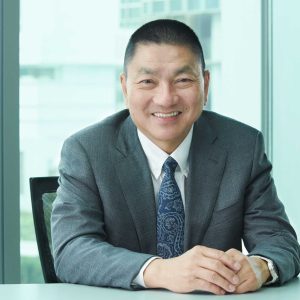
对资产管理公司而言,不断演进发展中的大中华地区无疑正变得越来越重要。有鉴于此,香港最资深的上市资产管理公司——惠理集团的联席主席兼联席首席投资总监拿督斯里谢清海(Cheng Hye Cheah)结合从业 30 多年的经验,分享了自己对这个行业的审慎观察。

谢清海
年龄:64
职业亮点
现任惠理集团联席主席兼联席首席投资总监。他所领导的惠理集团是亚洲最大的本土资产管理公司之一,总部位于香港,在上海、深圳、新加坡、伦敦、吉隆坡和波士顿均设有办事处。CXO UNION-CXO联盟(cxounion.cn)
1993 年 2 月与合伙人联合创办惠理集团,并一直负责管理公司的投资战略和业务运营;带领惠理于2007 年成为首家在香港联合交易所上市的资产管理公司
自2017年至今,出任香港交易及结算所有限公司独立非执行董事
1989 年作为研究主管创建了摩根建富(Morgan Grenfell)的香港/内地股票研究部门
曾任《华尔街日报》(Wall Street Journal)和《远东经济评论》(Far Eastern Economic Review)亚洲版财经记者,负责东亚及东南亚的商业和财经新闻
在与麦肯锡中国区总裁倪以理(Joe Ngai)的谈话中,谢先生评估了中国市场的潜力水平;他认为随着市场愈发成熟,主动型投资将发挥主导作用,并解释了其中原因;他还告诫我们,香港不可能一夕之间彻底改变。以下为编辑后的访谈实录。CXO UNION-CXO联盟(cxounion.cn)
倪以理:亚洲最大的资产管理机遇或趋势是什么?
谢清海:最大和最重要的机遇是中国内地市场的开放。最近有一份报告预测,到 2023 年,中国的资产管理行业将跃居世界第二。还有预测称,中国到 2030 年将成为世界最大的经济体。无论是在全球还是国内范围,这是所有基金管理公司都梦寐以求的机遇。
倪以理:如何与大型、跨国资产管理公司竞争?
谢清海:西方公司,特别是美国和英国的公司,之所以能主导全球资产管理业,是因为二战后,美元本位制成了世界金融体系的基础,美国从而引领了全球经济的发展。盎格鲁-撒克逊经济体往往具有 “金融化”程度更高的特点,这为贝莱德(BlackRock)和富达投资(Fidelity,简称 FMR)等品牌发展成为全球企业提供了一方沃土。另一方面,中国直到1990 年之前都没有上市公司,直到 20 世纪 90 年代后期才有了资产管理公司。惠理集团成立于 1993 年,我们在亚洲算是业内的“领航者”,但其实相较国际市场,起步仍算很晚。即使在香港这样允许公平竞争的开放环境中,要挑战那些老牌企业也很困难。CXO UNION-CXO联盟(cxounion.cn)
倪以理:但是香港当时存在一些机遇,为您迈向成功提供了条件,对吧?
谢清海:我的合作伙伴叶维义(V-Nee Yeh)和我起初创业只是出于爱好。我们当时很年轻,对价值投资充满热情。最开始我们只有两名全职员工——我和我的秘书,我们没有想到会在这个领域成功立足。当时的香港资产管理行业有点儿固步自封。人们满足于购买指数成分股,基金管理人的日子很悠闲,没人想打破陈规。
我们入行前没有任何专业基金管理的经验。我们不知道规则是什么,也敢于打破所有的规则。我们当时买了非指数成分股,坚持进行自下而上的研究,亲自走访调研。我以前是一名财经记者,喜欢凡事亲力亲为。很快,我们便脱颖而出,超过了业内许多老牌公司。还有,就是我们很幸运。当时,中国第一批上市公司即将问世,我们几乎从一开始就搭上了中国经济发展的快车。这是非常难得的运气。CXO UNION-CXO联盟(cxounion.cn)
倪以理:您觉得未来 10 年惠理集团会怎样发展?
谢清海:我们必须充分利用中国即将出现的机遇。不管是为自己、为员工,还是为股东,我们都责无旁贷。我们是在香港上市的第一家独立资产管理公司,身处中国内地市场对外开放的门户和桥梁地区仍然是我们的主要优势。在中国内地开展业务所需的各类牌照,我们大部分都已经获得。
倪以理:中国内地的机构也在培养资产管理能力。这对您的企业有何影响?
谢清海:作为香港品牌,我们拥有一定的声望,而且我们一向遵纪守法,业绩良好。大多数中国内地的竞争企业只有 18 到 20 年的历史,而且很多企业成立还不到10年。通过更好的为客户提供真正的价值,我们学会了如何生存。26 年来,我们也犯过很多错误,但我们学会了从中汲取经验教训。我们就这样一步步走到了为中国投资者服务的行业前沿。
倪以理:在很多成熟市场,主动型投资者的附加价值已开始回落, 交易所交易基金(ETF)和被动基金正在兴起。还要多久亚洲也会出现类似的转变?
谢清海:主动型投资在中国内地仍然表现优异,而且很可能在很长一段时间内都会保持这种优势。一个原因是中国内地市场中 80% 的投资者都是散户,他们通常喜欢跟随趋势,属于当日交易者或“散弹式”交易者,倾向于“高买低卖”。因此,具备基本职业素养、懂得科学研究的专业管理人往往表现更优异。CXO UNION-CXO联盟(cxounion.cn)
我同意,在较发达的市场中,主动型基金管理公司正在苦苦挣扎,但我对此并不感到完全悲观。在美国,被动投资占据了一半以上的买卖交易。这可能非常危险,就好比所有人都同时冲向出口,很可能会引发踩踏事件。但这是西方。在东亚和东南亚地区,踏实做事的主动型基金管理公司仍占上风,而且这种优势应该可以维持很长一段时间。
倪以理:这也吸引了新兴力量进入市场。您对亚洲地区的初创资产管理公司有什么建议?
谢清海:我个人投资过一些这样的初创企业,但失败率非常高。在如今的世界,启动成本必不可少,在香港开展业务成本很高,有严格的合规性限制,在受保护的市场取得牌照几乎不可能,比如马来西亚和中国内地。这些障碍都会使初创公司望而却步。要获得成功,往往需要一位杰出的“主厨”,能突破逆境,开发出绩效卓越的优质基金。现在形势异常艰难,跟我当年所处的时代不同。CXO UNION-CXO联盟(cxounion.cn)
倪以理:哪些改变能让初创企业更轻松地应对竞争?
谢清海:减少限制,简化办证程序,并鼓励推进互联网分销。这些都是需要进行的改革,但是现在,这个行业的固有结构不欢迎新人。
倪以理:未来,技术对该行业有何影响?
谢清海:我所在的领域是由证据和研究驱动的,惠理目前已经在大量地使用数据。例如,我们订阅了中国耳机、化妆品销售的相关数据流。
在分销方面,香港刚刚见证了让一代人为之鼓舞的一件大事,就是虚拟银行牌照的发放。我们正试图分析这对我们的金融产品分销体系意味着什么。这是一次有趣的尝试,时间会告诉我们结果,但这可能会改变香港的分销体系。CXO UNION-CXO联盟(cxounion.cn)
倪以理:新的牌照对香港老牌银行有多大影响?
谢清海:从其他国家/地区,特别是中国来看,会削减一定的成本。互联网有望降低分销成本,但在香港这样的市场,财富管理和金融产品分销行业有成千上万的年轻男女在销售领域工作。如果过快地取代人力,这些员工会怎么样?我们必须慢慢来。如果变革过强,社会将很难应对。
翻译:
The company is leading the asset management industry in China.
The structure of global asset management is changing beyond recognition. Although China’s financial sector has long been shut out of foreign investment, the world’s top fund managers are still eager to crack the door of the market. Last April, Chinese authorities announced that they would allow overseas financial firms to set up wholly owned entities or foreign-controlled joint ventures, finally allowing multinationals to compete on a level playing field with Chinese companies.
Developed markets still account for half of the global asset management industry, but McKinsey’s research suggests that the scale of the opportunity in China will change that. It is expected that by 2021, China’s banking asset management scale alone will exceed $5 trillion, while the total size of various financial asset management businesses, including funds, insurance and trusts, will exceed $22 trillion by 2021.CXO UNION-CXO联盟(cxounion.cn)
By then, China will be the world’s second largest financial market.
McKinsey forecasts that the China-led asset management industry in Asia will generate revenues of $70bn in the future. In China, private equity will remain the return leader for some time. However, there are signs that regulators are also likely to open the market to overseas companies in the future. As a result, global fund management giants are scrambling to enter China’s financial markets, hoping to manage the global money flowing into China while providing international services to Chinese clients.CXO UNION-CXO联盟(cxounion.cn)
At the same time, regulators in Hong Kong, once China’s gateway to the world’s finances, are also making changes. Since the start of the year, the Hong Kong Monetary Authority has issued virtual banking licences to a number of companies, challenging traditional banks that have long dominated the distribution of financial products.
The ever-evolving Greater China region is undoubtedly becoming more and more important to asset managers.
Cheah Ching Hai
Age: 64
Career highlights
Value Partners, which he leads, is one of Asia’s largest homegrown asset managers, headquartered in Hong Kong with offices in Shanghai, Shenzhen, Singapore, London, Kuala Lumpur and Boston.CXO UNION-CXO联盟(cxounion.cn)
In February 1993, he co-founded Value Partners Group and has been responsible for managing the company’s investment strategy and business operations. He led Value Partners to become the first asset management company listed on the Hong Kong Stock Exchange in 2007
Since 2017, he has been an independent non-executive Director of Hong Kong Exchanges and Clearing Limited
Founded Morgan Grenfell’s Hong Kong/Mainland equity research department in 1989 as head of research
He was previously a financial correspondent for the Wall Street Journal and the Far Eastern Economic Review, covering business and financial news in East and Southeast AsiaCXO UNION-CXO联盟(cxounion.cn)
In a conversation with Joe Ngai, head of McKinsey China, Mr. Xie assesses the potential of the Chinese market; He believes that as the market matures, active investing will play a dominant role and explains why. He also warned us that Hong Kong could not change completely overnight. The following is an edited transcript of the interview.
Ni Yili: What is the biggest asset management opportunity or trend in Asia?
Cheah: The biggest and most important opportunity is the opening up of the mainland Chinese market. A recent report predicts that China’s asset management industry will rank second in the world by 2023. It is also predicted that China will become the world’s largest economy by 2030. Whether global or domestic, this is an opportunity that all fund managers dream of.CXO UNION-CXO联盟(cxounion.cn)
Ni Yili: How to compete with large, multinational asset management companies?
Cheah: The reason why Western companies, especially American and British companies, dominate the global asset management industry is that after World War II, the dollar standard formed the basis of the world financial system, and the United States led the development of the global economy. Anglo-Saxon economies tend to be more “financialised”, which has provided fertile ground for brands such as BlackRock and Fidelity to develop into global companies. China, on the other hand, had no listed companies until 1990 and had no asset management companies until the late 1990s. Value Partners Group was founded in 1993, we are considered to be the “leader” in Asia, but in fact, compared to the international market, it is still a late start. Even in an open environment such as Hong Kong, which allows for fair competition, it is difficult to challenge the established players.CXO UNION-CXO联盟(cxounion.cn)
Ni Yili: But there were opportunities in Hong Kong that set you up for success, right?
Cheah: My partner, V-Nee Yeh, and I started out as a hobby. We were young and passionate about value investing. We started with just two full-time employees – me and my secretary – and we didn’t expect to succeed in this field. At the time, the Hong Kong asset management industry was a bit stuck in its rut. People are content to buy index stocks, fund managers have a leisurely life, and no one wants to break the mold.CXO UNION-CXO联盟(cxounion.cn)
We had no prior experience in professional fund management. We don’t know what the rules are, and we dare to break all the rules. We bought non-index stocks, insisted on bottom-up research, and conducted personal interviews. I used to be a financial journalist and I like to do everything myself. Soon, we stood out, surpassing many established players in the industry. Plus, we’re lucky. At that time, China’s first public companies were about to be launched, and we were on the fast train of China’s economic development almost from the beginning. This is very rare luck.
Ni Yili: How do you see Value Partners developing in the next 10 years?
Cheah: We have to make the most of the opportunities that are coming up in China. We have a responsibility to ourselves, our employees and our shareholders. We were the first independent asset manager to be listed in Hong Kong, and being at the gateway and bridge to the open market in mainland China remains our key advantage. We already have most of the licenses we need to do business in mainland China.
Ni Yili: Institutions in mainland China are also developing asset management capabilities. How does this affect your business?
Cheah: As a Hong Kong brand, we have a certain reputation, and we have always been law-abiding and have a good track record. Most mainland Chinese competitors are only 18 to 20 years old, and many are less than 10 years old. By better providing real value to our customers, we learn how to survive. In 26 years, we have made many mistakes, but we have learned from them. In this way, step by step, we have come to the forefront of the industry serving Chinese investors.
Ni Yili: In many mature markets, the added value of active investors has started to fall, and exchange traded funds (ETFs) and passive funds are emerging. How long before a similar shift takes place in Asia?
Cheah: Active investment is still outperforming in mainland China and is likely to remain so for a long time. One reason is that 80 per cent of investors in the mainland market are retail investors, who tend to follow trends and are day traders or “scattershot” traders who tend to “buy high and sell low”. Therefore, professional managers who have basic professional qualities and understand scientific research tend to perform better.CXO UNION-CXO联盟(cxounion.cn)
I agree that active managers are struggling in the more developed markets, but I am not entirely pessimistic about it. Passive investments account for more than half of all buying and selling in the United States. This can be very dangerous, as if everyone were rushing for the exit at the same time, which could cause a stampede. But this is the West. In East and South-East Asia, the down-to-earth active managers still have the upper hand, and should do so for a long time.
Ni Yili: It also attracts new players to enter the market. What advice do you have for start-up asset managers in Asia?
Cheah: I have personally invested in some of these start-ups, but the failure rate is very high. In today’s world, start-up costs are essential, doing business in Hong Kong is expensive, there are strict compliance restrictions, and obtaining a licence in protected markets, such as Malaysia and mainland China, is almost impossible. All of these obstacles can deter startups. To be successful, it often takes an exceptional “chef” who can break through adversity and develop quality funds that perform well. It’s a very difficult time. It’s different from the time I lived in.
Ni Yili: What changes will make it easier for startups to deal with competition?
Cheah: Reduce restrictions, simplify licensing procedures, and encourage Internet distribution. These are reforms that need to be made, but right now, the inherent structure of the industry does not welcome new people.
Ni Yili: How will technology affect the industry in the future?
Cheah: My field is driven by evidence and research, and Value Partners is already using data a lot. For example, we subscribe to data streams related to the sales of headphones and cosmetics in China.CXO UNION-CXO联盟(cxounion.cn)
On the distribution side, Hong Kong has just witnessed an event that has inspired a generation with the issuance of virtual banking licences. We are trying to analyze what this means for our financial product distribution system. It’s an interesting experiment and time will tell, but it could change the distribution system in Hong Kong.
Ni Yili: How will the new licence affect Hong Kong’s established banks?
Cheah: From other countries, especially China, there will be some cost reductions. The Internet promises to reduce distribution costs, but in markets like Hong Kong, the wealth management and financial product distribution industries have thousands of young men and women working in sales. What happens to those workers if they are replaced too quickly? We have to take it slow. If change is too strong, societies will struggle to cope.CXO UNION-CXO联盟(cxounion.cn)
本文由CXO UNION-CXO联盟(cxounion.cn)转载而成,来源于McKinsey Greater China;编辑/翻译:CXO UNIONCXO联盟O。
如需加入CXO UNION(CXO联盟)高管社群,请联系社群小伙伴哦~

免责声明: 本网站(http://www.cxounion.cn/)内容主要来自原创、合作媒体供稿和第三方投稿,凡在本网站出现的信息,均仅供参考。本网站将尽力确保所提供信息的准确性及可靠性,但不保证有关资料的准确性及可靠性,读者在使用前请进一步核实,并对任何自主决定的行为负责。本网站对有关资料所引致的错误、不确或遗漏,概不负任何法律责任。
本网站刊载的所有内容(包括但不仅限文字、图片、LOGO、音频、视频、软件、程序等) 版权归原作者所有。任何单位或个人认为本网站中的内容可能涉嫌侵犯其知识产权或存在不实内容时,请及时通知本站,予以删除。
如需加入CXO UNION(CXO联盟)高管社群,请联系社群小伙伴哦~

免责声明: 本网站(http://www.cxounion.cn/)内容主要来自原创、合作媒体供稿和第三方投稿,凡在本网站出现的信息,均仅供参考。本网站将尽力确保所提供信息的准确性及可靠性,但不保证有关资料的准确性及可靠性,读者在使用前请进一步核实,并对任何自主决定的行为负责。本网站对有关资料所引致的错误、不确或遗漏,概不负任何法律责任。
本网站刊载的所有内容(包括但不仅限文字、图片、LOGO、音频、视频、软件、程序等) 版权归原作者所有。任何单位或个人认为本网站中的内容可能涉嫌侵犯其知识产权或存在不实内容时,请及时通知本站,予以删除。
Search
Popular Posts
-

2024数字化灯塔案例评选申报开启!
“2024数字化灯塔案例评选”于3月正式启动,诚挚欢迎业界同仁自荐和推荐,一起推动产业数字化进程,助力赋能企业…
-

2024 X-Award星盘奖申报通道已开启!
X-Award星盘奖是数字化转型服务、IT服务行业重要的商业奖项,旨在表彰行业里提供杰出数字化转型服务与IT服…
-

2024 N-Award星云奖申报通道已开启!
N-Award是数字化转型领域重要的商业奖项,旨在表彰那些以非凡的远见、超群的领导才能和卓越的成就来激励他人的…