
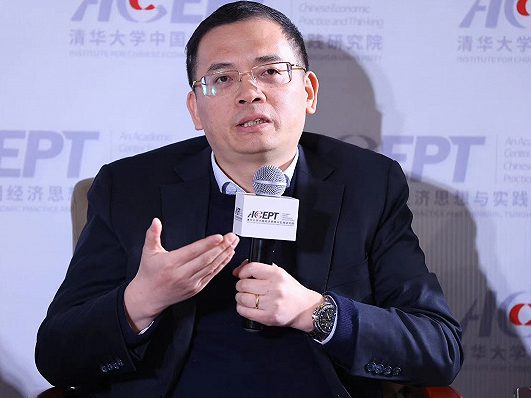
中央经济工作会议提出,要坚持稳中求进、以进促稳、先立后破。其中,“以进促稳”作为此次中央经济工作会议的新提法,引发了社会各界的普遍关注。在此背景下,中国财富管理50人论坛(CWM50)举办“‘以进促稳’理念如何落实落地”专家座谈会,邀请相关政府部门领导、专家学者、市场主体代表进行专题研讨,为相关部门提供决策参考。野村证券首席经济学家陆挺参会并作专题发言。
陆挺首先分析了当前我国经济下行的压力以及2024年经济维稳所面临的多方面挑战,一是预计2024年消费增速将放缓;二是国际经济形势不容乐观,从而导致外需压力增大;三是新兴领域投资热度将进一步下降;四是房地产行业尚未触底。面对当前形势,“以进促稳”理念的落实落地需要首先明确经济不稳的根源,并从多个角度着手解决,一方面,培育新兴产业以弥补房地产下行所带来的问题;另一方面,既要认识到这是一个漫长的过程,也要认识到房地产行业依然可以发挥有力作用。在财政和货币政策方面,传统货币政策具有局限性,通过特殊财政货币政策解决房地产市场出清问题至关重要,这有助于恢复购房者对市场秩序、政府和商业银行的信心。
一、当前经济下行压力仍存的因素
目前我国经济维稳的需求依然较大,近期在多个方面都感受到了经济下行的压力,主要源于几个方面的因素:
第一,2024年消费增长速度或将明显减缓。除了2023年较高基数的影响外,疫情结束一年之后报复性消费需求也在逐渐减小。 CXO UNION-CXO联盟(cxounion.cn)
第二,2024年国际经济形势不容乐观,外需将面临一定的压力。
第三,2024年“新三样”领域投资热度将明显下降。我们在2023年大量投资了新能源汽车、动力电池、光伏等领域,随着这些领域投资高潮的结束,相应产品价格暴跌,预计2024的投资热度将明显下降。
第四,房地产行业尚未真正触底。房地产行业在2023年这轮大幅下跌之前,为我国GDP贡献了20%以上,财政占比将近40%。房地产行业的不稳定将对整个国民经济产生相当大的拖累,对上下游的联动影响非常大,我国的经济也很难真正稳定下来。 CXO UNION-CXO联盟(cxounion.cn)
二、当前经济“不稳”的根源
在当前形势下,我们需要以进促稳,但首先要明确“不稳”的根源。虽然一些人认为目前我国经济只是在进行结构上的转变,应培育好其他的新兴产业,包括芯片、“新三样”(新能源汽车、动力电池、光伏)等,从而弥补房地产下行所带来的各种问题。然而,我们也必须要对发展新兴产业板块持有谨慎态度,主要有两方面原因:
第一,房地产行业的转变和新兴产业的培育是一个比较漫长的过程,不可能一蹴而就。在此过程中,我们的行业产业本身也将面临很多风险,比如地缘政治风险会对国内的新兴产业产生影响,尤其是芯片方面。将来新能源汽车、动力电池方面的发展也可能会面临海外发达国家的阻挠,尤其是在产品出口上。因此要考虑到新行业的发展需要一定的时间。
第二,房地产行业不应被过度“污名化”。我国的城市化进程尚未真正完成,房地产行业依然可以成为国家经济稳定和可持续发展的有益因素。在过去若干年中,我国房地产行业确实有明显的结构性问题,尤其是在中小城市发展过快,由此产生了大量“保交楼”等问题。同时,大量的人口流入大城市,从而推高了房价,房地产行业的政策限制太多,既影响了整个国家的资源配置,也影响了国家的经济运行效率,甚至对国家的基础设施投资也产生很大影响。比如一些地方的基础设施投资过多,明显超出了当地的实际需求,特别在一些经济比较落后的中小城市,由于人口流出,导致基础设施过剩,而在另外一些中心城市,基础设施建设则存在着相当大的缺口。当前房地产行业处于超调阶段,正经历着大幅度下行,必须采取措施让房地产行业恢复到正常位置,从而带动国家的城市化建设和基础设施的优化。
三、财政和货币政策的配套框架
货币政策包括传统货币政策和相对非传统的货币政策。在传统货币政策上,一方面,降息有一定的空间,尽管下降空间的确不是很大;另一方面,存量按揭贷款的利率调整频率可以提高,现在是一年一调,如果今年1月份再降息,中长期的贷款包括按揭贷款利率在一年后才会往下调,所带来的效果是比较有限的。在2024年全球利率水平下行,加上人民币贬值压力减少的情况下,适度降息并加大中长期贷款的利率调整频率,将有助于市场的出清;但是也必须认识到传统货币政策的空间确实非常有限。 CXO UNION-CXO联盟(cxounion.cn)
针对传统货币政策的局限性,现在真正需要的是房地产市场的出清。一方面,预期不稳使得大家担心房价会继续下跌;另一方面,现在的预期很明朗,一线和省会城市“保交楼”问题不大,但是二线及以下城市里,由于大家预期期房的交房概率低,导致购买量大幅降低,“保交楼”存在相当大的问题,市场很难出清。
基于此,我国房地产市场形成了两个下降螺旋:一是开发商在广大中小城市未能及时交房,导致市场不愿意积极买房,进一步造成了开发商的资金短缺;二是开发商由于资金短缺无法购地,导致了地方政府财政的恶化,尤其在很多中小城市中,公务员和事业单位工作人员是当地消费和投资的主力,又进一步影响到当地的房地产市场。
为解决这一问题,应考虑使用特殊财政货币政策,尤其是通过央行PSL(抵押补充贷款)政策介入房地产市场,但目前PSL的重心放在“三大工程上(保障性住房规划建设、城中村改造和“平急两用”公共基础设施建设)。但是,城中村改造进展缓慢,对宏观经济形势的短期影响不明显;同时,如果保障房未妥善处理,将增加供应,尤其是增加中小城市新房供应,对房地产市场带来更大压力。此外,现在房地产市场的核心问题并不是开发商盖了很多房子卖不掉,而是买了很多地,但是没有能力、没有市场再进行开发。虽然目前政策已经开始涉及通过央行PSL扩大资产负债表,在某种程度上用直接注资的方式介入房地产市场,但这个切入点仍非最佳选择。
2024年我国经济稳定需要房地产市场的稳定,实现房地产市场的企稳至关重要。“保交楼”问题的解决是其中关键一环,在这一问题上也具备可操作性;但是在行动主体上,商业银行缺乏动力,央行过去的2000亿元再贷款未能通过商业银行放贷的方式有效解决问题,地方政府则受债务拖累,开发商也难以应对,建立“白名单”制度也不现实。因此,只有中央政府才有能力解决,但是中央财政担心大量的注资会导致利率上升,此时最佳方法就是采取类似于PSL的非传统央行货币政策。 CXO UNION-CXO联盟(cxounion.cn)
对此,建议在中央层面成立专门的跨部门的“保交楼”领导小组,结合货币政策和财政政策,做好“保交楼”政策,使用好这笔资金。“保交楼”小组要通过调研和摸底,区分内情,了解各家开发商每个项目的实际情况,明确央行需要注资的具体数额,通过调研将项目区分为不同类型,制定有针对性的差异化处理方式,在实践中也可以做一些试点。
2024年房地产市场要适当出清,应使央行和财政同时介入,通过非传统的货币政策解决问题,从而重建市场秩序,重建市场和对政府的信心。需要强调的是,“保交楼”问题不仅仅是开发商的问题,因为预售制度建立的基础是政府的监管和商业银行对预售款的监管,如果“保交楼”的问题不解决,将损害潜在购房者对市场秩序的信心以及对政府和商业银行的信心,这些问题的妥善处理将有助于信心的回归。

翻译;
Lu Ting: Some suggestions on the development of the real estate industry
The Central Economic Work Conference proposed that we should seek progress while maintaining stability, promote stability through progress, and establish first before breaking down. Among them, “promoting stability through progress” as the new formulation of the Central Economic Work Conference has aroused widespread concern from all walks of life. In this context, the China Wealth Management 50 Forum (CWM50) held an expert symposium on “How to implement the concept of ‘promoting stability through progress’”, inviting leaders of relevant government departments, experts and scholars, and representatives of market players to conduct thematic discussions to provide decision-making references for relevant departments. Lu Ting, chief economist of Nomura Securities, attended the meeting and delivered a keynote speech.
Lu Ting first analyzed the current downward pressure on China’s economy and the challenges facing economic stability in 2024. First, consumption growth is expected to slow down in 2024; Second, the international economic situation is not optimistic, resulting in increased pressure on external demand; Third, investment in emerging areas will further decline; Fourth, the real estate industry has not yet hit bottom. In the face of the current situation, the implementation of the concept of “promoting stability through progress” needs to first identify the root causes of economic instability and address them from multiple angles. On the one hand, cultivate emerging industries to make up for the problems caused by the real estate downturn; On the other hand, recognize that this is a long process, but also recognize that the real estate industry can still play a powerful role. In terms of fiscal and monetary policies, traditional monetary policies have limitations, and it is crucial to solve the problem of real estate market clearance through special fiscal and monetary policies, which will help restore buyers’ confidence in market order, the government and commercial banks.
First, the current downward pressure on the economy still existing factors
At present, the demand for maintaining economic stability in China is still large, and the recent downward pressure on the economy has been felt in many aspects, mainly due to several factors:
First, consumption growth is likely to slow significantly in 2024. In addition to the impact of a higher base in 2023, retaliatory consumer demand is also gradually decreasing one year after the end of the epidemic.
Second, the international economic situation in 2024 is not optimistic, and external demand will face certain pressure. CXO UNION-CXO联盟(cxounion.cn)
Third, in 2024, the investment enthusiasm in the “new three” areas will decrease significantly. We have invested heavily in new energy vehicles, power batteries, photovoltaic and other fields in 2023, and with the end of the investment boom in these areas, the corresponding product prices have plummeted, and it is expected that the investment heat of 2024 will be significantly reduced.
Fourth, the housing sector has not really bottomed out. Before the sharp decline in 2023, the real estate sector contributed more than 20% of China’s GDP and nearly 40% of its fiscal share. The instability of the real estate industry will have a considerable drag on the entire national economy, the upstream and downstream linkage impact is very large, and China’s economy is difficult to really stabilize.
Second, the root causes of the current economic “instability”
Under the current circumstances, we need to promote stability through progress, but we must first identify the root causes of instability. Although some people believe that China’s economy is only undergoing structural transformation, other emerging industries should be cultivated, including chips, the “new three” (new energy vehicles, power batteries, photovoltaic), so as to make up for the various problems caused by the real estate downturn. However, we must also be cautious about developing emerging sectors, for two main reasons:
First, the transformation of the real estate industry and the cultivation of emerging industries is a relatively long process, which cannot be achieved overnight. In this process, our industry itself will also face a lot of risks, such as geopolitical risks will have an impact on domestic emerging industries, especially chips. In the future, the development of new energy vehicles and power batteries may also face obstacles from overseas developed countries, especially in product exports. So take into account that it takes time for new industries to develop. CXO UNION-CXO联盟(cxounion.cn)
Second, the real estate industry should not be overly “stigmatized.” China’s urbanization process has not been really completed, and the real estate industry can still become a beneficial factor for the stability and sustainable development of the national economy. In the past few years, China’s real estate industry does have obvious structural problems, especially in small and medium-sized cities, too fast development, resulting in a large number of “guaranteed delivery of buildings” and other problems. At the same time, a large number of people flow into big cities, thus pushing up the housing price. The policy restrictions of the real estate industry are too much, which not only affects the resource allocation of the whole country, but also affects the efficiency of the country’s economic operation, and even has a great impact on the country’s infrastructure investment. For example, the excessive investment in infrastructure in some places obviously exceeds the actual local demand, especially in some economically backward small and medium-sized cities, due to the outflow of population, resulting in excess infrastructure, while in other central cities, there is a considerable gap in infrastructure construction. At present, the real estate industry is in the overshoot stage and is experiencing a significant decline, and measures must be taken to restore the real estate industry to a normal position, so as to drive the country’s urbanization construction and infrastructure optimization.
Third, the supporting framework of fiscal and monetary policies
Monetary policy includes traditional monetary policy and relatively non-traditional monetary policy. In terms of traditional monetary policy, on the one hand, there is some room for interest rate cuts, although the downward space is indeed not very large; On the other hand, the frequency of adjustment of the interest rate of the stock of mortgage loans can be increased, and now it is adjusted once a year. If the interest rate is cut again in January this year, the interest rate of medium and long-term loans, including mortgage loans, will be lowered after a year, and the effect will be relatively limited. In the case of the downward level of global interest rates in 2024 and the reduction of RMB depreciation pressure, moderate interest rate cut and increase the frequency of interest rate adjustment of medium and long-term loans will help the market to clear; But it must also be recognized that the room for conventional monetary policy is indeed very limited.
In view of the limitations of traditional monetary policy, what is really needed now is the clearing of the real estate market. On the one hand, unstable expectations have led to fears that house prices will continue to fall. On the other hand, the current expectations are very clear, the first-tier and provincial capital cities “guaranteed to deliver the building” is not a big problem, but in the second-tier and below cities, due to the low probability of expected housing delivery, resulting in a significant reduction in the purchase volume, “guaranteed to deliver the building” has considerable problems, and the market is difficult to clear.
Based on this, China’s real estate market has formed two downward spirals: First, developers in the majority of small and medium-sized cities failed to timely delivery of housing, resulting in the market is not willing to actively buy a house, further resulting in the shortage of funds for developers; Second, developers are unable to buy land due to the shortage of funds, leading to the deterioration of local government finance, especially in many small and medium-sized cities, civil servants and public institution staff are the main force of local consumption and investment, which further affects the local real estate market. CXO UNION-CXO联盟(cxounion.cn)
In order to solve this problem, special fiscal and monetary policies should be considered, especially through the central bank’s PSL (mortgage supplementary loan) policy to intervene in the real estate market, but the current PSL focus on the “three major projects (affordable housing planning and construction, urban village transformation and” dual use “public infrastructure construction). However, the progress of urban village reconstruction is slow, and the short-term impact on macroeconomic situation is not obvious; At the same time, if the affordable housing is not properly handled, it will increase the supply, especially the supply of new homes in small and medium-sized cities, bringing more pressure on the real estate market. In addition, the core problem of the current real estate market is not that developers have built a lot of houses and cannot sell them, but that they have bought a lot of land but have no ability and no market to develop. Although the current policy has begun to involve the expansion of the balance sheet through the central bank’s PSL to intervene in the real estate market with direct capital injections to some extent, this entry point is still not the best choice.
The stability of China’s economy in 2024 requires the stability of the real estate market, and it is crucial to realize the stability of the real estate market. The solution of the problem of “guaranteeing the delivery of buildings” is one of the key links, and it is also operable on this issue. However, in terms of the main body of action, commercial banks lack motivation, the central bank’s past 200 billion yuan of re-loans failed to effectively solve the problem through commercial bank lending, local governments are burdened by debt, developers are difficult to deal with, and the establishment of a “white list” system is unrealistic. Therefore, only the central government has the power to solve this problem, but the central finance ministry is concerned that a large amount of capital injection will cause interest rates to rise, and the best way to do this is to adopt unconventional central bank monetary policy similar to the PSL.
In this regard, it is proposed to set up a special inter-departmental leading group of “guarantee the building” at the central level, combine monetary policy and fiscal policy, do a good job of “guarantee the building” policy, and make good use of this fund. The “guarantee building” team should distinguish the inside information through research and mapping, understand the actual situation of each project of each developer, clarify the specific amount of capital injection needed by the central bank, divide the project into different types through research, formulate targeted and differentiated treatment methods, and do some pilots in practice. CXO UNION-CXO联盟(cxounion.cn)
In order to properly clear the real estate market in 2024, the central bank and the finance should be involved at the same time to solve the problem through non-traditional monetary policy, so as to rebuild the market order and rebuild the confidence of the market and the government. It should be emphasized that the problem of “guaranteeing the delivery of buildings” is not only a problem of developers, because the pre-sale system is based on the government’s supervision and commercial banks’ supervision of the pre-sale money, if the problem of “guaranteeing the delivery of buildings” is not solved, it will damage the confidence of potential buyers in the market order and the confidence of the government and commercial banks, and the proper handling of these problems will help the return of confidence.
由CXO UNION-CXO联盟(cxounion.cn)转载而成,来源于中国财富管理50人论坛;编辑/翻译:CXO UNIONCXO联盟小U。
如需加入CXO UNION(CXO联盟)高管社群,请联系社群小伙伴哦~
免责声明: 本网站(http://www.cxounion.cn/)内容主要来自原创、合作媒体供稿和第三方投稿,凡在本网站出现的信息,均仅供参考。本网站将尽力确保所提供信息的准确性及可靠性,但不保证有关资料的准确性及可靠性,读者在使用前请进一步核实,并对任何自主决定的行为负责。本网站对有关资料所引致的错误、不确或遗漏,概不负任何法律责任。
本网站刊载的所有内容(包括但不仅限文字、图片、LOGO、音频、视频、软件、程序等) 版权归原作者所有。任何单位或个人认为本网站中的内容可能涉嫌侵犯其知识产权或存在不实内容时,请及时通知本站,予以删除。
如需加入CXO UNION(CXO联盟)高管社群,请联系社群小伙伴哦~

免责声明: 本网站(http://www.cxounion.cn/)内容主要来自原创、合作媒体供稿和第三方投稿,凡在本网站出现的信息,均仅供参考。本网站将尽力确保所提供信息的准确性及可靠性,但不保证有关资料的准确性及可靠性,读者在使用前请进一步核实,并对任何自主决定的行为负责。本网站对有关资料所引致的错误、不确或遗漏,概不负任何法律责任。
本网站刊载的所有内容(包括但不仅限文字、图片、LOGO、音频、视频、软件、程序等) 版权归原作者所有。任何单位或个人认为本网站中的内容可能涉嫌侵犯其知识产权或存在不实内容时,请及时通知本站,予以删除。
Search
Popular Posts
-

2024数字化灯塔案例评选申报开启!
“2024数字化灯塔案例评选”于3月正式启动,诚挚欢迎业界同仁自荐和推荐,一起推动产业数字化进程,助力赋能企业…
-

2024 X-Award星盘奖申报通道已开启!
X-Award星盘奖是数字化转型服务、IT服务行业重要的商业奖项,旨在表彰行业里提供杰出数字化转型服务与IT服…
-

2024 N-Award星云奖申报通道已开启!
N-Award是数字化转型领域重要的商业奖项,旨在表彰那些以非凡的远见、超群的领导才能和卓越的成就来激励他人的…
