一、个人简介
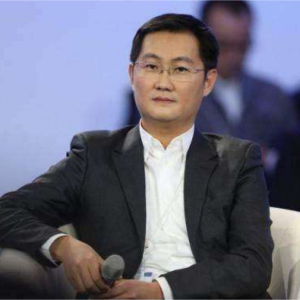
马化腾,男,汉族,无党派人士,1971年10月29日生于广东省东方县八所港(今属海南省东方市),祖籍广东省汕头市潮南区,深圳大学理学学士学位,腾讯公司创始人。曾任第十二届全国青联副主席,第十二、十三届全国人大代表,现任腾讯公司董事会主席、首席执行官。
1984年随父母从海南迁至深圳,1993年毕业于深圳大学计算机系。同年进入深圳润迅通讯发展有限公司开始寻呼系统的研究开发工作。1995年创建惠多网深圳站,名为ponysoft。
1998年,马化腾和同学张志东注册成立深圳市腾讯计算机系统有限公司,随后陈一丹、许晨晔、曾李青相继加入。
2017年8月7日,腾讯股价盘中再创历史新高价320.6港元,马化腾身家361亿美元成为中国首富。
2018年4月,获《时代周刊》2018年全球最具影响力人物荣誉。
2018年10月25日,马化腾以2263.2亿元财富位列2018福布斯中国400富豪榜第2名。
2018年12月18日,党中央、国务院授予马化腾“改革先锋”称号,颁授改革先锋奖章。
2019年3月,马化腾以388亿美元财富位列2019年福布斯全球亿万富豪榜第20位。
2019年9月5日,突破奖基金会及其赞助人——马化腾等人共同宣布2020年突破奖及新视野奖的获得者。2019福布斯中国慈善榜排名第4位。
2019年10月19日,马化腾入选2019福布斯年度商业人物之跨国经营商业领袖名单。
2019年11月7日,马化腾以2545.5亿元财富蝉联2019福布斯中国400富豪榜第2名。
2020年11月9日,财付通支付科技有限公司发生工商变更,马化腾不再担任法定代表人职务。
二、个人经历
1、早年时期
马化腾,广东省汕头市潮南区成田镇家美人。1971年10月29日,出生在广东省东方县八所港(今属海南省东方市)。1984年,东方风来满眼春,深圳经济特区成立的第四个年头,13岁的马化腾随父母定居深圳。后转入深圳中学,1989年,高考以739分的优异成绩考入深圳大学电子工程系计算机专业。
1993年毕业后进入深圳润迅通讯发展有限公司,开始做编程工程师,专注于寻呼机软件的开发,至升任开发部主管。该段经历使马化腾明确了开发软件的意义就在于实用,而不是写作者的自娱自乐。润讯提升了马化腾的视野,以及给马化腾在管理上必要的启蒙。
2、第一桶金
1998年,实用软件概念不仅培养了马化腾敏锐的软件市场感觉,也使他从中盈利不菲。马化腾是风靡一时的股霸卡的作者之一,他和朋友合作开发的股霸卡在赛格电子市场一直卖得不错。马化腾还不断为朋友的公司解决软件问题。这使他不仅在圈内小有名气,而且也有了相当的原始积累。
但他真正意义上的第一桶金是来自股市。他最精彩的一单是将10万元炒到70万元。这为马化腾独立创业打下了基础。
3、创立腾讯
1998年马化腾与他的同学张志东“合资”注册了深圳腾讯计算机系统有限公司。之后又吸纳了三位股东:曾李青、许晨晔、陈一丹。作为一家没有风险资金介入就成立的软件公司,初期的每一笔支出都让马化腾和他的同伴心惊。
在决定做OICQ的时候,当时国内已经有了两家公司先做,产品比腾讯更有市场名气。马化腾没有想得更多,除了因为这个产品可以和公司的主项发展业务移动局、寻呼台、无线寻呼方案和项目相互促进外,也因为当时飞华、中华网等许多公司有意向做即时通讯项目,市场显得很有发展前景。
4、困难机遇
(1)官司缠身
初期发展过程中,腾讯经过一个很重要的赔偿官司:在1999-2000年左右,仿照ICQ开发的OICQ抢了很多ICQ的用户群,尤其是中国大陆用户,后来ICQ公司通过法律途径,最终判定腾讯败诉,停止使用OICQ这个名称,并归还OICQ域名给ICQ公司,同时赔偿了一定金额的费用,自此腾讯便使用了QQ这个名称。
(2)资金困难
创业之初,马化腾率领自己的团队做网页、做系统集成、做程序设计。但由于不懂市场和市场运作,腾讯的产品拿出去向运营商推销,却经常被拒之门外。跟其他刚开始创业的互联网公司一样,资金和技术是腾讯最大的问题。
1999年2月,腾讯开发出第一个“中国风味”的ICQ,即OICQ后,受到用户欢迎,注册人数疯长,很短时间内就增加到几万人。人数增加就要不断扩充服务器,而那时一两千元的服务器托管费对公司都不堪重负。
2000年,第一次网络泡沫席卷了整个中国互联网,腾讯进入了最为困难的时期,在面临资金困难时,曾险些把开发出的ICQ软件以60万元的价格卖给深圳电信数据局,但终因价格原因告吹。
(3)柳暗花明
软件卖不掉,但用户增长却很快,运营QQ所需的投入越来越大,马化腾只好四处去筹钱,马化腾拿着改了6个版本、20多页的商业计划书开始寻找国外风险投资,最后碰到了IDG和盈科数码,获得了第一笔投资。腾讯的发展逐渐步入了正轨。
2004年6月16日,马化腾带领腾讯在香港交易所主板挂牌上市。
5、榜单排名
2014年3000中国家族财富榜中马化腾以1007亿元财富荣登榜首,相比于2013年,财富增长了540亿元。
2015年2月13日,马化腾入选“2014中国互联网年度人物”活动获奖名单。
2015年3月2日,《福布斯》发布2015年福布斯中国富豪榜单,马化腾以161亿美元位列第六。
2015年4月,《财富》2015“中国最具影响力的50位商界领袖”排行榜马化腾荣登第2位。
2015年10月,《2015信中利·胡润IT富豪榜》发布,马化腾以1030亿元位居第二。
2015年10月26日,2015年福布斯中国富豪榜发布,马化腾以176亿美元位居三。
2016年10月13日,2016年胡润百富榜发布,马化腾以1650亿元排名第三。
2016年10月18日,《2016胡润IT富豪榜》发布,马化腾以1340亿元保持第二。
2016年10月27日,2016福布斯中国富豪榜公布,马化腾以245亿美元财富,排名第三位。
2017年,马化腾以249亿美元净资产位列《2017全球亿万富豪榜》第31名。
2017年,马化腾以249亿美元净资产位列《2017华人富豪榜》第4名。
2018年5月,福布斯十大最具影响力CEO排名发布,马化腾位列第十位。
2018年8月28日,福布斯实时富豪榜排行榜,马化腾身家达到410亿美元。
2018年,马化腾以2263.2亿元财富位列《2018福布斯中国400富豪榜》第2名。
2019年11月7日,马化腾以2545.5亿元财富值位列《2019福布斯中国400富豪榜》第2名。
2020年福布斯全球亿万富豪榜,马化腾以381亿美元排名第20位。
2020年6月23日,马化腾以3200财富(亿元人民币)位列《胡润全球百强企业家》第22名。
2020年7月,马化腾入选福布斯2020中国慈善榜,排名第6,现金捐赠总额85,000万元。
2020年11月3日,胡润研究院发布《2020胡润慈善榜》,马化腾2020年一年共捐赠2.3亿元,位列第15名。
2020年,马化腾以3683.2亿元财富位列《2020福布斯中国400富豪榜》第2名。
2021年,马化腾以3162亿元财富位列《2021福布斯中国内地富豪榜单》第4名。
2022年,马化腾以234亿美元财富位列《2022福布斯中国内地富豪榜》第4名。
2022年,马化腾以2150亿元位列2022年衡昌烧坊·胡润百富榜第5名。
6、支持家乡
近年来,马化腾先生已累计投资汕头家乡建设超过 2000 万元,完成了家一中心小学校舍修缮工程、家一村溪河整治、家美社区公园建设和扶贫济困活动等一批公益项目。 2017年11月,为支持家乡公益福利事业建设,由马化腾先生捐资设立的扶贫专项基金向汕头市潮南区成田镇公益慈善会捐资 1300 万元,用以成田镇公益慈善会、家一村开展公益慈善事业。
7、政治生涯
2013年,当选为第十二届全国人民代表大会代表。
2015年7月,当选为第十二届中华全国青年联合会副主席。
2018年1月,当选为第十三届全国人民代表大会代表。
2018年5月9日,当选中国网络社会组织联合会副会长。
8、图书作品
2018年4月28日,马化腾出版图书《指尖上的中国》正式上市,讲述了中国作为移动互联大国整个社会变迁的过程。在书里有各个领域的非常鲜活、生动的案例。
三、职务任免
2022年8月31日,深圳市腾讯臻益企业管理有限公司成立,注册资本2亿人民币,马化腾为法定代表人、董事长。
翻译:
Personal profile
Ma Huateng, male, Han nationality, independent, born on October 29, 1971 in Badsuogang, Dongfang County, Guangdong Province (now part of Dongfang City, Hainan Province), his ancestral home is Chaonan District, Shantou City, Guangdong Province, Bachelor of Science from Shenzhen University, founder of Tencent Company. He was the vice president of the 12th All-China Youth Federation and a deputy of the 12th and 13th National People’s Congress. Currently, he is the Chairman and CEO of Tencent.
He moved to Shenzhen from Hainan with his parents in 1984 and graduated from the Department of Computer Science at Shenzhen University in 1993. In the same year, he joined Shenzhen Runxun Communication Development Co., LTD., and began the research and development of paging system. 1995 set up Huiduo network Shenzhen station, named ponysoft.
In 1998, Ma Huateng and his classmate Zhang Zhidong registered and established Shenzhen Tencent Computer System Co., LTD. Later, Chen Yidan, Xu Chenye and Zeng Liqing joined in succession.
On August 7, 2017, Tencent shares hit a record high of HK $320.6 in intraday trading, making Ma Huateng the richest man in China with a net worth of $36.1 billion.
In April 2018, he was named the World’s Most Influential Person of 2018 by Time Magazine. Ma Huateng ranked second on the 2018 Forbes 400 list of China’s richest people with a fortune of 226.32 billion yuan on Oct 25, 2018. On December 18, 2018, the CPC Central Committee and The State Council awarded Ma Huateng the title of “Pioneer of Reform” and the medal of Reform Pioneer. In March 2019, Ma Huateng ranked 20th on the 2019 Forbes list of the world’s Billionaires with a fortune of $38.8 billion.
On 5 September 2019, the Breakthrough Prize Foundation and its patron, Pony Ma Huateng, announced the winners of the Breakthrough Prize and New Vision Prize 2020. Ranked 4th on the 2019 Forbes China Philanthropy List. On October 19, 2019, Ma Huateng was named to the 2019 Forbes Business People of the Year list of Business Leaders with multinational operations. On November 7, 2019, Ma Huateng ranked second on the 2019 Forbes 400 list of the richest people in China with a fortune of 254.55 billion yuan. On November 9, 2020, Tenpay Payment Technology Co., Ltd. experienced an industrial and commercial change, and Ma Huateng no longer served as its legal representative.
Personal Experience
The early years
Ma Huateng, Shantou City, Guangdong Province Chaonan District Chengtian Town home beauty. He was born on October 29, 1971 in Palsuogang, Dongfang County, Guangdong Province (now part of Dongfang City, Hainan Province). In 1984, the fourth year of the establishment of the Shenzhen Special Economic Zone, Ma Huateng settled in Shenzhen with his parents at the age of 13. Then he transferred to Shenzhen Middle School. In 1989, he was admitted to the computer major of Electronic Engineering Department of Shenzhen University with 739 points in the college entrance examination.
After graduation in 1993, I joined Shenzhen Runxun Communication Development Co., Ltd. as a programming engineer, focusing on the development of pager software, and was promoted to director of development Department. This experience made Ma Huateng clear that the meaning of developing software is practical, not for the pleasure of writers. Runxun improved Ma Huateng’s vision, and gave Ma Huateng the necessary enlightenment in management.
The first bucket of gold
In 1998, the concept of practical software not only developed Ma Huateng’s keen sense of the software market, but also made him profitable. Ma Huateng is one of the authors of the popular Stock Ba Card, which he developed with a friend and has been selling well on the Sager electronics market. Ma also constantly solved software problems for his friend’s company. This makes him not only a small fame in the circle, but also a considerable primitive accumulation.
But his real first fortune came from the stock market. His best move was to raise 100,000 yuan to 700,000 yuan. This laid the foundation for Ma Huateng to start his own business.
Founded Tencent
In 1998 Ma Huateng and his classmate Zhang Zhidong “joint venture” registered the Shenzhen Tencent Computer System Co., LTD. Then it absorbed three shareholders: Zeng Liqing, Xu Chenye and Chen Yidan. As a software company founded without venture capital, Ma and his colleagues were terrified by every initial expense.
When I decided to do OICQ, there were already two companies in China, and the products were more famous than Tencent in the market. Ma Huateng did not think much more. In addition to the fact that this product could promote each other with the company’s main development business mobile office, paging station, wireless paging program and project, it was also because many companies such as Fei Hua and Zhonghua Net were interested in doing instant messaging projects at that time, and the market seemed to have a promising development prospect.
Difficult opportunities
(1) being beset by lawsuits
In the early development process, Tencent went through a very important compensation lawsuit: Around 1999-2000, OICQ, which was developed in imitation of ICQ, stole a lot of ICQ users, especially those in mainland China. Later, ICQ Company decided Tencent lost the lawsuit through legal channels, stopped using the name OICQ, returned the OICQ domain name to ICQ Company, and paid a certain amount of compensation. Tencent has since used the name QQ.
(2) Financial difficulties
In the beginning, Ma led his team to do web pages, system integration and programming. However, due to lack of understanding of the market and market operation, Tencent’s products out to operators to promote, but often rejected. As with other Internet start-ups, money and technology are Tencent’s biggest problems.
In February 1999, Tencent developed the first “Chinese style” ICQ, also known as OICQ, which was welcomed by users and the number of registrants soared to tens of thousands in a short time. As the number of people increased, it was necessary to constantly expand the server, and at that time, the server management fee of one or two thousand yuan was too heavy for the company.
In 2000, when the first Internet bubble swept the entire Chinese Internet, Tencent entered the most difficult period. Faced with financial difficulties, it almost sold the ICQ software it developed to Shenzhen Telecom Data Bureau for 600,000 yuan, but finally failed due to the price.
(3) The flowers are bright
The software could not be sold, but the number of users increased rapidly, and the investment needed to operate QQ became larger and larger. Ma Huateng had to go around to raise money. With a business plan of more than 20 pages and six revised versions, Ma began to look for foreign venture capital, and finally met IDG and Yingke Digital and got the first investment. Tencent’s development is gradually on track.
On June 16, 2004, Ma Huateng led Tencent to be listed on the main board of the Hong Kong Stock Exchange.
Chart ranking
Ma Huateng topped the 2014 China 3000 Family Wealth List with a fortune of 100.7 billion yuan, an increase of 54 billion yuan from 2013.
On February 13, 2015, Ma Huateng was selected as the winner of the “2014 China Internet Personality of the Year” event.
On March 2, 2015, Forbes released the 2015 Forbes List of China’s richest people. Pony Ma ranked sixth with 16.1 billion dollars.
In April 2015, Ma Huateng ranked second on Fortune’s 2015 “50 Most Influential Business Leaders in China” list.
In October 2015, the “Credit Zhongli · Hurun IT Rich List 2015” was released, and Ma Huateng ranked second with 103 billion yuan.
On Oct 26, 2015, the Forbes China Rich List was released. Pony Ma ranked third with $17.6 billion.
Ma Huateng ranked third with 165 billion yuan in the 2016 Hurun Report Rich List released on Oct 13, 2016.
On October 18, 2016, Hurun IT Rich List was released, and Ma Huateng kept the second place with 134 billion yuan.
On October 27, 2016, the 2016 Forbes China Rich List announced that Pony Ma Huateng ranked third with a fortune of $24.5 billion.
In 2017, Ma Huateng ranked 31st on the 2017 World Billionaires List with a net worth of $24.9 billion.
In 2017, Ma Huateng ranked fourth on the 2017 Chinese Rich List with a net worth of $24.9 billion.
In May 2018, Forbes released a list of the 10 most powerful ceos, and Pony Ma ranked 10th.
On August 28, 2018, according to Forbes real-time Rich List, Ma Huateng’s wealth reached $41 billion.
In 2018, Ma Huateng ranked No.2 on the 2018 Forbes China 400 list with a fortune of 226.32 billion yuan.
On November 7, 2019, Ma Huateng ranked second on the 2019 Forbes 400 Richest People in China list with a fortune of 254.55 billion yuan.
In the 2020 Forbes list of the world’s billionaires, Ma Huateng ranked 20th with $38.1 billion.
On June 23, 2020, Ma Huateng ranked 22nd in the Hurun Global Top 100 Entrepreneurs List with a fortune of 3200 million yuan.
In July 2020, Ma ranked 6th on Forbes China Philanthropy List with a total cash donation of 850 million yuan.
Ma Huateng ranked 15th in the Hurun Charity List published by Hurun Research Institute on November 3, 2020, with a total donation of 230 million yuan.
In 2020, Ma Huateng ranked No.2 on Forbes China’s 400 Richest People List with a fortune of 368.32 billion yuan.
In 2021, Ma Huateng ranked fourth in the 2021 Forbes China Rich List with a fortune of 316.2 billion yuan.
In 2022, Mahuateng ranked 4th on Forbes’ 2022 Mainland China Rich List with a fortune of $23.4 billion.
In 2022, Ma Huateng ranked fifth on the 2022 Hengchang Burning House Hurun Report Rich List with 215 billion yuan.
Support your hometown
In recent years, Mr. Ma Huateng has invested more than 20 million yuan in the construction of Shantou hometown. He has completed a number of public welfare projects, such as the renovation of the primary school building of Jiayi Central School, the renovation of rivers and streams in Jiayi Village, the construction of Jiayi Community Park and the activities of poverty alleviation. In November 2017, in order to support the construction of public welfare undertakings in his hometown, the special poverty alleviation fund set up by Mr. Ma Huateng donated 13 million yuan to the public charity Association of Chengtian Town, Chaonan District, Shantou City, to carry out public charity undertakings in Chengtian Town and Jiayi Village.
Political career
In 2013, he was elected a deputy to the 12th National People’s Congress.
In July 2015, he was elected Vice President of the 12th All-China Youth Federation.
In January 2018, he was elected a deputy to the 13th National People’s Congress.
On May 9, 2018, he was elected Vice President of the China Federation of Network Social Organizations.
Book works
On April 28, 2018, Ma Huateng published his book China at Fingertips, which tells the whole process of social change in China as a mobile Internet power. There are very vivid, vivid examples in various fields.
Appointment and removal of posts
On August 31, 2022, Shenzhen Tencent Zhenyi Enterprise Management Co., Ltd. was established with a registered capital of 200 million RMB. Pony Ma is the legal representative and chairman of the board.
如需加入CXO UNION(CXO联盟)社群,可联系社群助手,添加好友时请备注【公司+部门职位+姓名+来意】。
免责声明: 本网站(http://www.cxounion.cn/)内容主要来自原创、合作媒体供稿和第三方投稿,凡在本网站出现的信息,均仅供参考。本网站将尽力确保所提供信息的准确性及可靠性,但不保证有关资料的准确性及可靠性,读者在使用前请进一步核实,并对任何自主决定的行为负责。本网站对有关资料所引致的错误、不确或遗漏,概不负任何法律责任。
本网站刊载的所有内容(包括但不仅限文字、图片、LOGO、音频、视频、软件、程序等) 版权归原作者所有。任何单位或个人认为本网站中的内容可能涉嫌侵犯其知识产权或存在不实内容时,请及时通知本站,予以删除。
如需加入CXO UNION(CXO联盟)高管社群,请联系社群小伙伴哦~

免责声明: 本网站(http://www.cxounion.cn/)内容主要来自原创、合作媒体供稿和第三方投稿,凡在本网站出现的信息,均仅供参考。本网站将尽力确保所提供信息的准确性及可靠性,但不保证有关资料的准确性及可靠性,读者在使用前请进一步核实,并对任何自主决定的行为负责。本网站对有关资料所引致的错误、不确或遗漏,概不负任何法律责任。
本网站刊载的所有内容(包括但不仅限文字、图片、LOGO、音频、视频、软件、程序等) 版权归原作者所有。任何单位或个人认为本网站中的内容可能涉嫌侵犯其知识产权或存在不实内容时,请及时通知本站,予以删除。
Search
Popular Posts
-

2024数字化灯塔案例评选申报开启!
“2024数字化灯塔案例评选”于3月正式启动,诚挚欢迎业界同仁自荐和推荐,一起推动产业数字化进程,助力赋能企业…
-

2024 X-Award星盘奖申报通道已开启!
X-Award星盘奖是数字化转型服务、IT服务行业重要的商业奖项,旨在表彰行业里提供杰出数字化转型服务与IT服…
-

2024 N-Award星云奖申报通道已开启!
N-Award是数字化转型领域重要的商业奖项,旨在表彰那些以非凡的远见、超群的领导才能和卓越的成就来激励他人的…