
若优秀的人才能在创造价值的岗位上工作,不仅能为企业带来竞争优势,还能提升企业的敏捷性。那么管理者应该如何通过人才管理产生价值?
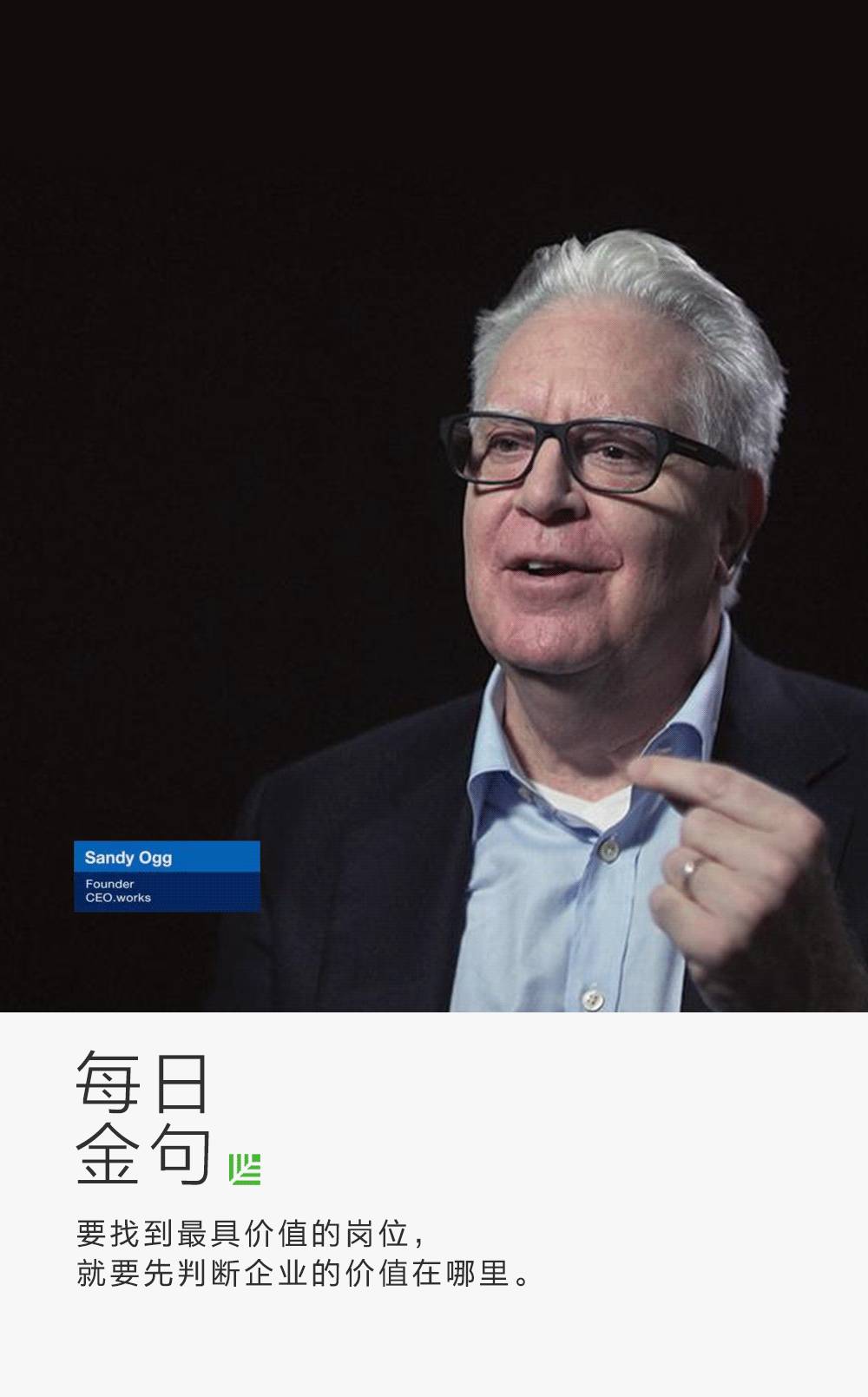
我们可以在麦肯锡出版部资深执行主编Rik Kirkland对人力咨询公司CEO.works创始人、联合利华前任CHO首席人力资源官Sandy Ogg先生的采访中找到答案。
在采访中,Sandy Ogg先生谈到了如何通过人才管理提升运营效率、如何让工作与其创造的价值挂钩,如何通过人才管理实现规模化价值创造,以及CEO最大化价值创造的方式等问题。本文是编辑后的访谈实录。
一、部分要点摘录
- 首席人力资源官应该从“业务伙伴”转变到“业务领袖”,学会像业务领袖一样说话。
- 人力资源部门可以致力于减少工作中的拖沓,成为通过提升效率赢得竞争的价值创造部门。
- 人力资源的工作就是将价值创造转化为一系列具体工作。这里所说的工作并非穷尽公司所有的职能,而是梳理创造最大价值的核心职能。
- 要找到最具价值的岗位,就要先判断企业的价值在哪里,再识别真正创造价值的岗位。
过去,我们总在谈什么样的人才是人中龙凤,不过我们也只是说说而已,并未落于实践。但好像一夜之间,大家都开始抛弃“以人为本”,转而要“以才为本”。
被称作“人才”的人,往往有过人之处,并能为企业创造优势。我总是把Jim Collins的著作《从优秀到卓越》(Good to Great)挂在嘴边,但一听到“人才”二字,我想到的不是从优秀到卓越的人,而是从卓越到极致的人。企业需要这样的人来创造价值。
二、从优秀到卓越
如果企业能迅速重新调配这些人才,那无论是1 个人、10 个人、100 人、1,000 人还是更多,大型企业的敏捷性就能提高,从而实现规模化发展。
三、重新定义人力资源
目前人力界对自身的职能界定有了新的思考,有人提出“人力资源”这个职位名称可能要换换,我觉得不用换,因为这一职能管理的就是人力资源的调配。
但如果要做得更好,我们就需要对人力资源进行重新构想和设计。你去看私募股权基金公司,它们识别和关注价值的方式非常直接,从来都是直入主题。
对它们而言,每笔投资都要处理好两件事情:
- 第一,以合适的价格购买合适的资产;
- 第二,用足够多的人才,在最短的时间内创造价值。
接下来,要找到合适人才,以便更快地创造相应价值。所以在私募公司中,人力资源管理的作用显得尤为重要。因为一旦人才管理滞后,就会对价值创造带来风险。而当你能比别人更好地管理风险时,你就能在竞争中取胜。
我还一直在关注人力团队所使用的语言。我发现,即使是在为首席人力资源官撰写前瞻性能力模型的人,都在以远程“业务伙伴”的口吻说话。
我认为首席人力资源官应该从“业务伙伴”转变到“业务领袖”,学会像业务领袖一样说话。比如:“我们要领导变革。我要进行合理的资源调配。我要优化企业组织架构。”他要做的,不再只是变革管理和人才管理之类的工作了。
如此一来,人力资源的工作将更注重效率。我认为,人力资源部门可以致力于减少工作中的拖沓,成为通过提升效率赢得竞争的价值创造部门。
通过人才管理创造规模化价值
人力资源的工作就是将价值创造转化为一系列具体工作。这里所说的工作并非穷尽公司所有的职能,而是梳理创造最大价值的核心职能。
在一个典型的业务单元中,可能会涉及1万名员工和30个工作岗位。若将这些岗位按价值大小排序,就会发现排名第一的岗位不是与当前EBITDA 有关,就是与未来的EBITDA 有关。最具价值的岗位而非最“重要”的岗位,也不是层级最高的岗位。那究竟什么才是最具价值的岗位呢?
要找到答案,就要先判断企业的价值在哪里,再识别真正创造价值的岗位。人力资源管理者应尽量避免被自称重要的岗位和人所迷惑,准确识别真正的价值创造岗位。
当我们逐个将所有岗位的价值创造都进行了识别与判断,便能确定不同岗位的价值排序。当识别出最具价值的岗位后,下一个问题便是,我们为这些岗位配备了足够的人才了吗?
接下来就是对这些最具价值的岗位进行人才盘点与人才配置。如果你觉得目前某些岗位上的人才不符合要求,应该立刻采取措施,不要等待。不然价值创造将会每天流失难以追回。
翻译:
If talented people can work in value-creating positions, it will not only bring competitive advantage to the enterprise, but also enhance the agility of the enterprise. So how should managers create value through talent management?
We can find out in an interview with Sandy Ogg, founder of staffing consultancy CEO.works and former chief human resources officer of Unilever, conducted by Rik Kirkland, senior managing editor of McKinsey Publishing.
In the interview, Sandy Ogg talked about how to improve operational efficiency through talent management, how to connect work to the value it creates, how to achieve scale value creation through talent management, and how ceos maximize value creation. This is an edited transcript of the interview.
Here are some highlights
- Chief human resources officer should shift from a “business partner” to the “leader”, learn to like business leader to speak.
- Human resources can be devoted to reduce procrastination in the work and become efficiency through ascension to win competition value creation of the department.
- The work of human resources is to value creation into a series of specific work. The work in question is not exhaustive, but rather sorting out the core functions that create the most value.
- To find the most valuable jobs, where is the first to judge the value of the enterprise, create value to identify real jobs.
In the past, we always talked about what kind of people are the best, but we were just talking about it, not falling behind in practice. But seemingly overnight, everyone started to move away from “people first” to “talent first”.
“Talent”, as it is called, is often exceptional and can create an advantage for the company. I keep saying the book Good to Great by Jim Collins, but when I hear the word “talent,” I don’t think of good to great. I think of great to great. Companies need people like this to create value.
From good to great
If you can quickly redeploy that talent — whether it’s 1, 10, 100, 1,000, or more — large organizations can become more agile and scale.
Redefine human resources
At present, the human resources industry has a new thinking about the definition of its functions. Some people propose that the title of “Human resources” may be changed. I think it is unnecessary to change, because this function manages the allocation of human resources.
But to do better, we need to re-imagine and re-engineer human resources. When you look at private equity firms, the way they identify and focus on value is very straightforward. It’s always straight to the point.
For them, every investment has to do two things:
- First, at the right price to buy the right assets;
- Second, with enough talent, create value in the shortest possible time.
Next, find the right people to create value faster. Therefore, the role of human resource management is particularly important in private companies. Because once talent management lags behind, there will be a risk to value creation. And when you can manage risk better than others, you can win the competition.
I’ve also been looking at the language the human team uses. I find that even the people who are writing forward-looking capability models for chief human resources officers speak as remote “business partners”.
I think the chief human resources officer should move from “business partner” to “business leader” and learn to talk like a business leader. For example: “We are going to lead change. I want to allocate resources wisely. I want to optimize the corporate structure.” It’s not just about change management and talent management anymore.
In this way, the work of human resources will focus more on efficiency. In my opinion, the human resources department can focus on reducing procrastination at work and become a value-creating department that wins the competition by improving efficiency.
Create scale value through talent management
The job of human resources is to translate value creation into a series of concrete tasks. The work in question is not exhaustive, but rather sorting out the core functions that create the most value.
In a typical business unit, there may be 10,000 employees and 30 jobs involved. If you rank the jobs in order of value, the top jobs are either related to current or future EBITDA. The most valuable positions are not the most “important” ones, nor are they the most senior positions. So what is the most valuable job?
To find the answer, we must first determine where the value lies in the company, and then identify the jobs that really create value. Human resource managers should try to avoid being confused by the positions and people claiming to be important, and accurately identify the real value-creating positions.
When we identify and judge the value creation of all positions one by one, we can determine the value ranking of different positions. After identifying the most valuable jobs, the next question is, are we hiring enough people for those jobs?
The next step is to check and allocate talents for these most valuable positions. If you feel that someone currently in a position is not qualified, take action immediately, don’t wait. Otherwise value creation will be lost daily and hard to recover.
本文由CXO UNION-CXO联盟(cxounion.cn)转载而成,来源于网络;编辑/翻译:CXO UNIONCXO联盟小C。
如需加入CXO UNION(CXO联盟)高管社群,请联系社群小伙伴哦~

免责声明: 本网站(http://www.cxounion.cn/)内容主要来自原创、合作媒体供稿和第三方投稿,凡在本网站出现的信息,均仅供参考。本网站将尽力确保所提供信息的准确性及可靠性,但不保证有关资料的准确性及可靠性,读者在使用前请进一步核实,并对任何自主决定的行为负责。本网站对有关资料所引致的错误、不确或遗漏,概不负任何法律责任。
本网站刊载的所有内容(包括但不仅限文字、图片、LOGO、音频、视频、软件、程序等) 版权归原作者所有。任何单位或个人认为本网站中的内容可能涉嫌侵犯其知识产权或存在不实内容时,请及时通知本站,予以删除。
如需加入CXO UNION(CXO联盟)高管社群,请联系社群小伙伴哦~

免责声明: 本网站(http://www.cxounion.cn/)内容主要来自原创、合作媒体供稿和第三方投稿,凡在本网站出现的信息,均仅供参考。本网站将尽力确保所提供信息的准确性及可靠性,但不保证有关资料的准确性及可靠性,读者在使用前请进一步核实,并对任何自主决定的行为负责。本网站对有关资料所引致的错误、不确或遗漏,概不负任何法律责任。
本网站刊载的所有内容(包括但不仅限文字、图片、LOGO、音频、视频、软件、程序等) 版权归原作者所有。任何单位或个人认为本网站中的内容可能涉嫌侵犯其知识产权或存在不实内容时,请及时通知本站,予以删除。
Search
Popular Posts
-

2024数字化灯塔案例评选申报开启!
“2024数字化灯塔案例评选”于3月正式启动,诚挚欢迎业界同仁自荐和推荐,一起推动产业数字化进程,助力赋能企业…
-

2024 X-Award星盘奖申报通道已开启!
X-Award星盘奖是数字化转型服务、IT服务行业重要的商业奖项,旨在表彰行业里提供杰出数字化转型服务与IT服…
-

2024 N-Award星云奖申报通道已开启!
N-Award是数字化转型领域重要的商业奖项,旨在表彰那些以非凡的远见、超群的领导才能和卓越的成就来激励他人的…