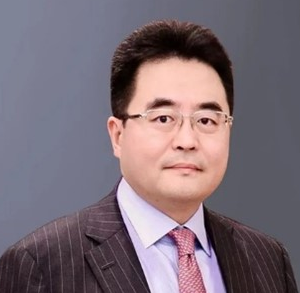
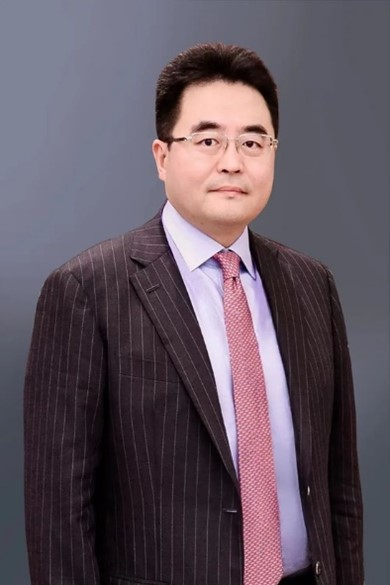
嘉实基金总经理经雷先生个人简介:
经雷先生拥有20年国际和国内知名大型跨国投资公司专业投资及企业管理经验。1998-2008年,经雷先生在美国国际集团(AIG)国际投资公司美国纽约总部担任研究投资工作。
2008-2013年,经雷先生历任友邦保险(AIA)中国区资产管理中心副总监、首席投资总监及资产管理中心负责人。2013年10月,经雷先生加盟嘉实基金管理有限公司,担任机构投资与固定收益业务首席投资官(CIO)、董事总经理。2018年3月21日,经雷先生担任嘉实基金管理有限公司总经理。CXO UNION-CXO联盟(cxounion.cn)
Q1:随着资管新规的正式落地,中国资管行业迈入高质量发展新阶段。展望2030,您认为能为中国资管机构显著贡献净流入、或对行业商业模式带来根本转变的重大发展机遇有哪些?
嘉实基金总经理经雷:未来5-10年,我认为大财富、养老、客户导向为三大关键机遇。资管机构唯有充分拥抱这些大势,才有机会在未来成为行业领跑者。
财富管理时代不可逆转。2019年开始,财富管理已成为一个大趋势,“零售客户机构化,机构客户专业化”的特点仍将持续。零售端来看,各渠道专业性提升,基金产品池背后的筛选与管理、客户准入要求等正在向标准化发展;零售客户的重要性不仅体现在客户数量上,更包括客户体验等维度,这要求资管机构更好理解零售客户渠道筛选标准,并将标的与客户需求进行精准匹配。机构端来看,包括理财子、社保、养老金、投顾等机构客户的专业性都在提升。当下市场环境以beta驱动为主,要求基金公司对一个行业或产业形成更深入的分析判断。机构客户的专业化向基金公司提出了更高、更综合的目标,如收益目标、风险管理、过程体验等,倒逼基金公司加速转型与调整。CXO UNION-CXO联盟(cxounion.cn)
国内三支柱体系落位,养老将创造显著增量机遇。2022年底个人养老金制度正式落地,成为国内三支柱体系形成的重要标志。国内人口老龄化趋势加剧,未来养老金市场蛋糕很大、增量也大。当前国内一支柱、二支柱更多是投资目标驱动,而不是负债驱动,如何围绕负债端进行养老金管理将成为资管机构的重要议题。
我认为未来将从产品及策略转向负债管理,从资本利得转向收入驱动。养老基金在产品形态、客户形态等跟传统公募基金不同,这就要求资管机构在养老产品创设、策略形成、投资研究、交易等建立独立队伍,打造养老专业能力。CXO UNION-CXO联盟(cxounion.cn)
从产品导向到客户导向。近年来渠道关注点从中收到保有量、到盈利体验、再到客户目标的实现,体现了客户导向的逐步深化。客户对资管机构至关重要,基金公司需通过全渠道覆盖,下沉到理财师、产品经理,以了解客户需求背后深层次驱动因素。
目前,客户拥有方与资金管理方两者对客户的理解还远远不够,尽管双方都充分意识到了客户的重要性,但没有一方了解客户信息全貌,大家更多基于片面信息与小样本客户行为决策。未来,资管机构将与渠道方一同,以客户为核心,深度理解客户需求。
Q2:在财富管理领域,我们正看到从原来的产品货架模式,逐步向买方投顾转型,您认为资管机构应如何顺应这一模式转型?
嘉实基金总经理经雷:在我看来,现在更多还是两种模式的结合,买方投顾要以产品货架为基础。真正做实买方投顾,需要以客户为中心,客户利益是唯一标准。产品货架维度,经历了几年的市场波动后我们看到两个趋势,一是各项标准在提升,包括产品准入、基金经理准入等;
二是业绩的可持续性越发重要。要实现业绩可持续性不仅依靠基金经理,还需要平台和人两者的融合交互,平台能力赋能给基金经理,帮助基金经理拓展能力圈。未来5-10年,基金公司需要构建新的投研与管理框架,通过平台能力,体系化加强对beta的捕捉。
Q3:在中国养老体系下,您认为资管机构能做些什么,以更好把握养老发展机遇?CXO UNION-CXO联盟(cxounion.cn)
嘉实基金总经理经雷:一方面,资管机构可作为产品提供方,充分发挥在多个资产类别的投资能力,为养老金资产配置提供丰富的底层产品和工具。另一方面,资管机构可在渠道端发力,进行更精细化渠道管理及拓展。渠道作为客户拥有方,需下沉到每个客户,通过年龄、性别、区域等维度,进行客户分层分群管理,从而逐步构建起负债端能力。
Q4:您认为中国资管机构正面临哪些结构化问题以及中长期挑战?
嘉实基金总经理经雷:如同我前面提到的,我认为最关键的挑战在于业绩的可持续性。
资管机构通常较为依赖个人,基金经理的流动容易对业绩形成干扰。越来越多资管机构开始对基金经理进行分层管理,构建人才梯队机制,以实现业绩可持续。业绩可持续的第二个层次需要考虑如何更好满足客户需求。
我认为客户的实际需求可分为三大方面,包括流动性、确定性、风险收益性,资管机构可相应匹配货币和短债、非标和固收、股票等产品,以充分满足客户多样化需求。CXO UNION-CXO联盟(cxounion.cn)
第二个挑战来自客户认知不充分。
基金公司以产品生产为核心,不直接拥有客户,很长一段时间内都处于“盲人摸象”模式。相比之下,银行、保险、券商、互联网等机构在客户端更有优势,基金公司可考虑与几个核心渠道方深度合作,对客户形成更完整、清晰的认知。
第三个挑战主要围绕运营及管理。
金融本质上是服务行业,服务行业所面临的挑战其实资管机构都会碰到,如科技应用、定价问题、人才管理。具体来看,在科技端,各项技术在资管业务中的应用愈发广泛,未来如何更好将智能技术与人工相结合、如何搭建配套机制及体系以支持人机结合的全新生态等,都将成为资管机构需要攻克的重要课题。
在定价端,我们看到整个行业费率呈持续下降趋势,导致产品利润承压,资管机构需构建应对策略以缓解降费带来的潜在冲击。在人才端,人才一直是资管机构的核心竞争力,持续完善人才培育机制、构建与扩展人才梯队、提升人才留存与吸引力,将成为资管机构持续面对的挑战之一。
Q5:为充分把握上述机遇,应对挑战,并在未来激烈竞争格局中脱颖而出,您认为新一代资管机构需具备哪些核心特质?以及应采取哪些关键行动?CXO UNION-CXO联盟(cxounion.cn)
嘉实基金总经理经雷:第一是纪律性,意味着资管机构要“说到做到”。
现在客户越来越专业,且客户要求的确定性在不断提升,这就要求资管机构将强化纪律性放在首位,并通过流程和管理模式升级实现。
第二是适应性,需要资管机构不断进行转型调整来应对快速变化的市场环境。
现在客户的个性化要求越来越多,很难用一个产品或策略满足客户需求,因此需要强化产品丰富性,且每一个策略都应该鲜明。同时,我们看到beta集中度在提升,如何更好对beta进行切分将是未来胜出的关键。适应性需要机构自上而下推动,在宏观政策变化时,及时调整投研能力、策略方向等。CXO UNION-CXO联盟(cxounion.cn)
第三是数字化,资管机构需要充分拥抱数字化大趋势并坚持数字化转型,搭建人机结合的全新生态,否则未来一定会被市场淘汰。
科技投入庞大且往往前期效果并不显著,需要作为“一号工程”自上而下坚持与推动。

翻译:
Mr. Jing Lei has 20 years of professional investment and business management experience in well-known international. And domestic large multinational investment companies. From 1998 to 2008, Mr. Ray worked as a research investor at the New York headquarters of American International Group (AIG).
From 2008 to 2013, Mr. Jinglei served as Deputy Director, Chief Investment Officer and Head of Asset Management Center of AIA China.
In October 2013, Mr. Jing Lei joined Harvest Fund Management Limited as Chief Investment Officer (CIO) and Managing Director of Institutional Investment and Fixed Income business. On March 21, 2018, Mr. Lei became the General Manager of Harvest Fund Management Co., LTD.
McKinsey: With the official landing of new regulations on asset management. China’s asset management industry has entered a new stage of high-quality development. Looking ahead to 2030, what do you think are the major development opportunities that will significantly contribute to net inflows for Chinese asset management institutions or bring about a fundamental shift in the industry’s business model?
Jing Lei: In the next 5-10 years, I think big wealth, pension and customer orientation are the three key opportunities. Only by fully embracing these trends can asset management institutions have the opportunity to become industry leaders in the future.
The era of wealth management is irreversible.
Since the beginning of 2019, wealth management has become a general trend, and the characteristics of “institutional retail customers. And professional institutional customers” will continue. At the retail end, the professionalism of each channel has been improved, and the screening and management behind the fund product pool, as well as customer access requirements, are developing toward standardization.
The importance of retail customers is not only reflected in the number of customers, but also includes customer experience and other dimensions, which requires asset management institutions to better understand the selection criteria of retail customer channels, and accurately match the target with customer needs. CXO UNION-CXO联盟(cxounion.cn)
On the institutional side, the professionalism of institutional customers, including financial management, social security, pensions, and investment consulting, is improving. The current market environment is mainly beta driven, which requires fund companies to form a more in-depth analysis and judgment of an industry or industry.
The specialization of institutional clients has put forward higher and more comprehensive goals to fund companies, such as income targets, risk management, process experience, etc., forcing fund companies to accelerate transformation and adjustment.
The domestic three-pillar system falls into place, and the elderly care will create significant incremental opportunities.
The personal pension system officially landed at the end of 2022, becoming an important symbol of the formation of the domestic three-pillar system. The aging trend of the domestic population is intensifying. And the future pension market cake is large and the increment is also large.
At present, the first and second pillars in China are more driven by investment objectives than by liabilities. How to conduct pension management around liabilities will become an important issue for asset management institutions.
I think the future will shift from product and strategy to debt management, from capital gains to revenue driven. Pension funds are different from traditional public funds in terms of product form and customer form, which requires asset management institutions to establish independent teams in the creation of pension products, strategy formation, investment research, trading, etc., and build professional capabilities for pension.
From product orientation to customer orientation.
In recent years, the channel focus has received the amount of stock, to the profit experience. And then to the realization of customer goals, reflecting the gradual deepening of customer orientation. Customers are crucial to asset management institutions.
And fund companies need to reach out to wealth managers and product managers through omni-channel coverage to understand the deep-seated drivers behind customer demand.CXO UNION-CXO联盟(cxounion.cn)
At present, both the customer owner and the fund manager have a far insufficient understanding of the customer. Although both sides are fully aware of the importance of the customer, neither side understands the full picture of the customer information.
And everyone makes decisions based on one-sided information and small samples of customer behavior. In the future, asset management institutions will work with channel parties to take customers as the core and deeply understand customer needs.
McKinsey: In the wealth management space. We are seeing a gradual transition from the product shelf model to the buyer advisory model. How do you think asset management institutions should adapt to this transition?
Jing Lei: In my opinion, now more or the combination of two models. Buyer investment should be based on product shelves.
To truly implement buyer investment, we need to focus on the customer, and the customer’s interests are the only standard. Product shelf dimension, after several years of market fluctuations, we see two trends, one is the improvement of standards, including product access, fund manager access;CXO UNION-CXO联盟(cxounion.cn)
Second, the sustainability of performance is increasingly important.
To achieve performance sustainability not only depends on fund managers, but also requires the integration and interaction of platforms and people.
Platform capabilities empower fund managers and help fund managers expand their circle of competence. In the next 5-10 years, fund companies need to build a new investment research and management framework. And strengthen the capture of beta through platform capabilities and systematization.
McKinsey: In the context of China’s pension system, what do you think asset management institutions can do to better grasp the opportunities for pension development?CXO UNION-CXO联盟(cxounion.cn)
Jinglei: On the one hand, asset management institutions can act as product providers, give full play to their investment capabilities in multiple asset classes, and provide a wealth of underlying products and tools for pension asset allocation.
On the other hand, asset management institutions can exert efforts at the channel end to carry out more refined channel management and expansion.
As a customer owner, the channel needs to sink to each customer, and carry out hierarchical and group management of customers through age, gender, region and other dimensions, so as to gradually build the debt-side capability.
McKinsey: What structural issues and medium – and long-term challenges do you think Chinese asset management institutions are facing?
J: As I mentioned earlier, I think the key challenge is the sustainability of performance.
Asset managers are often more reliant on individuals, and the movement of fund managers can easily disrupt performance. More and more asset management institutions begin to stratify the management of fund managers. And build a talent echelon mechanism to achieve sustainable performance. The second level of sustainability involves thinking about how best to meet customer needs.
In my opinion, the actual needs of customers can be divided into three aspects, including liquidity, certainty and risk-return.
Asset management institutions can match currency and short bonds, non-standard and fixed income, stocks and other products accordingly to fully meet the diversified needs of customers.CXO UNION-CXO联盟(cxounion.cn)
The second challenge comes from inadequate customer perception.
Fund companies take product production as the core, do not directly own customers, and are in the mode of “blind people and elephant” for a long time. In contrast, banks, insurance, securities brokerages, the Internet and other institutions have more advantages in the client side, and fund companies can consider in-depth cooperation with several core channels to form a more complete and clear understanding of customers.
The third challenge revolves around operations and management.
Finance is essentially a service industry, and the challenges faced by the service industry are all encountered by asset management institutions, such as technology application, pricing issues, and talent management. Specifically, at the science and technology end, the application of various technologies in the asset management business is becoming more and more extensive.
And how to better combine intelligent technology with manual labor in the future, how to build supporting mechanisms and systems to support the new ecology of man-machine combination will become an important topic that asset management institutions need to overcome.
On the pricing side, we see that the rate of the entire industry continues to decline, resulting in pressure on product profits, and asset management institutions need to build coping strategies to mitigate the potential impact of fee reductions.
On the talent side, talent has always been the core competitiveness of asset management institutions.
And continuously improving the talent cultivation mechanism, building and expanding the talent echelon, and improving talent retention and attractiveness will become one of the challenges that asset management institutions continue to face.
McKinsey: What core characteristics do you think the next generation of managers will need to have in order to take advantage of these opportunities, meet the challenges, and stand out in the competitive landscape of the future? And what key actions should be taken?
Jing Lei: The first is discipline, which means that asset management institutions should “do what they say”.
Clients are becoming more and more professional, and the certainty of customer requirements is increasing, which requires asset management institutions to strengthen discipline in the first place, and through the upgrading of processes and management models.
The second is adaptability, which requires asset management institutions to constantly make transformation and adjustment to cope with the rapidly changing market environment.
Nowadays, customers have more and more personalized requirements, it is difficult to use a product or strategy to meet customer needs, so it is necessary to strengthen product richness, and each strategy should be distinct. At the same time, we see that beta concentration is improving, and how to better slice beta will be the key to future success.
Adaptability needs to be promoted from top to bottom by institutions, and timely adjust investment and research capabilities and strategic directions when macro policies change.CXO UNION-CXO联盟(cxounion.cn)
The third is digitalization, asset management institutions need to fully embrace the digital trend and adhere to digital transformation, build a new human-machine integration ecology, otherwise it will be eliminated by the market in the future.
Science and technology investment is huge and often the early effect is not significant, and it needs to be adhered to and promoted from top to bottom as the “No. 1 project”.
本文由CXO UNION-CXO联盟(cxounion.cn)转载而成,来源于CEO訪談网;编辑/翻译:CXO UNIONCXO联盟小U。
如需加入CXO UNION(CXO联盟)高管社群,请联系社群小伙伴哦~
免责声明: 本网站(http://www.cxounion.cn/)内容主要来自原创、合作媒体供稿和第三方投稿,凡在本网站出现的信息,均仅供参考。本网站将尽力确保所提供信息的准确性及可靠性,但不保证有关资料的准确性及可靠性,读者在使用前请进一步核实,并对任何自主决定的行为负责。本网站对有关资料所引致的错误、不确或遗漏,概不负任何法律责任。
本网站刊载的所有内容(包括但不仅限文字、图片、LOGO、音频、视频、软件、程序等) 版权归原作者所有。任何单位或个人认为本网站中的内容可能涉嫌侵犯其知识产权或存在不实内容时,请及时通知本站,予以删除。
如需加入CXO UNION(CXO联盟)高管社群,请联系社群小伙伴哦~

免责声明: 本网站(http://www.cxounion.cn/)内容主要来自原创、合作媒体供稿和第三方投稿,凡在本网站出现的信息,均仅供参考。本网站将尽力确保所提供信息的准确性及可靠性,但不保证有关资料的准确性及可靠性,读者在使用前请进一步核实,并对任何自主决定的行为负责。本网站对有关资料所引致的错误、不确或遗漏,概不负任何法律责任。
本网站刊载的所有内容(包括但不仅限文字、图片、LOGO、音频、视频、软件、程序等) 版权归原作者所有。任何单位或个人认为本网站中的内容可能涉嫌侵犯其知识产权或存在不实内容时,请及时通知本站,予以删除。
Search
Popular Posts
-

2024数字化灯塔案例评选申报开启!
“2024数字化灯塔案例评选”于3月正式启动,诚挚欢迎业界同仁自荐和推荐,一起推动产业数字化进程,助力赋能企业…
-

2024 X-Award星盘奖申报通道已开启!
X-Award星盘奖是数字化转型服务、IT服务行业重要的商业奖项,旨在表彰行业里提供杰出数字化转型服务与IT服…
-

2024 N-Award星云奖申报通道已开启!
N-Award是数字化转型领域重要的商业奖项,旨在表彰那些以非凡的远见、超群的领导才能和卓越的成就来激励他人的…