
围绕社会经济领域逆全球化与信息技术领域大语言模型(LLM)和生成式AI(AIGC)这两个热点话题深入思考后,笔者产生了三点认识:一是信息技术生态必然是开源和闭源的交织,二是软件供应链全球化至少在基础软件领域开源是不可逆的,三是大模型和生成式AI的发展或将大幅度提升开源开发的质量与效率。
一、信息技术生态必然是开源和闭源的交织
开源和闭源同整个信息技术生态紧密关联。开源的发展一直是追求多方共赢的过程,开源的历史则是软件在创新自由与版权收益之间的博弈过程。开源虽然以理想主义为缘起,但在商业的蓬勃助力下汇聚群体智慧,成为开放创新的典范。

人们认为软件源代码一开始就是开放的,其实是后来Linux模式和其他自由软件竞争才导致“开源”的出现。可以说,没有商业就没有开源,从商业模式支撑的软件模式开发,到多种开源模式探索,再到企业积极拥抱开源和如今的开源全球化,开源已经形成多元化商业模式。
开源一定离不开理想主义,开源需要奉献精神。早期的开源都是围绕微软“帝国”周边,特别是操作系统生态。事实上,在每一个垄断性的软件领域都必然会有一群理想主义者投入研发一个开源版本,比如操作系统Linux、浏览器、办公系统、工业软件等,所以理想主义是激发开源的一个重要动因。不过,企业追求商业利益最大化也是合理的,否则就没有企业存在的必要了。但是显然,理想主义和商业利益需要平衡。
开源成为当前的热点,从微软对开源的态度就可以看出来。起初,微软是开源最大的反对者。2001年,微软CEO巴尔默说开源是癌症、是病毒,后来他却成为开源的积极拥抱者,甚至在开源社区收购了GitHub。让人疑惑不解的是,2022年,微软以OpenAI名义推出ChatGPT,尽管有消息称GPT3大概要开源,但微软为什么不直接开放呢?这也恰好说明一个道理,但凡能够在这个领域独享利益时,绝大多数企业或个人可能都会选择一个相对闭源的态度。所以,信息技术生态必然是开源和闭源的交织。 CXO UNION-CXO联盟(cxounion.cn)
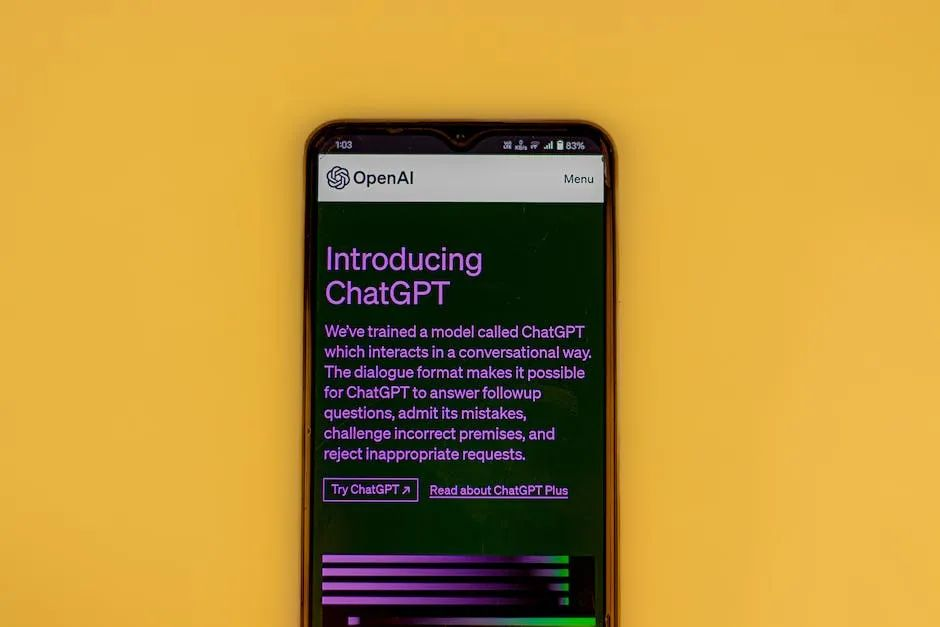
“抱团取暖”一直是开源发展的重要驱动力。当出现垄断时,我们希望大家团结起来,开源社区为大家提供了一个抱团取暖的平台,大家在共同社区维护共同版本,就有可能形成一定的优势。以生成式AI开源的情况来看,ChatGPT的问世带来了大语言模型的百花齐放,其中GPT4的优势目前最为明显。那么现在,众多跟随者大概又到了抱团取暖的时刻,只是尚未明确抱团取暖的基本态势。从目前大模型开源、闭源的情况以及各个大模型发展的时间线来看,这些模型目前还处于“战国时代”,也就是说,大家都在各自为营。如何形成一个大家共同维护的开源大模型的合力,技术上仍有许多值得探讨的事情,这正是开源闭源交织的问题。
二、软件供应链全球化在基础软件领域开源不可逆
虽然当前社会经济领域有逆全球化的趋势,但软件供应全球化至少在基础软件领域开源是不可逆的。在经济全球化受阻的大背景下,科技领域尤其是开放科学还在持续进行。开放科学涉及开放硬件、开放软件、开放访问、开放数据、开放教育资源等,即所谓的“HSADES”,其中科学数据开放已成为全球共识。近年来,世界各国在科技领域的竞争日趋激烈,虽然一些少数团体要求审视科学数据完全开放政策,但从全球态势看,还没有出现科学数据共享通道关闭的征兆,所以开放科学仍然是进行时。
在过去近20年间,云计算、大数据、AI的发展均受益于开源。以AI为例,其快速发展离不开代码的开源和数据的开放,包括开放开源的框架、开源的算法和开源的数据,这些开放推动了大数据和AI的快速发展。开源软件,具体到软件的生态领域已然全球化,而且已经形成覆盖全球的错综复杂的开源软件生态链。从硬件资源的供应链到系统技术的供应链,一直到上层应用的供应网络,形成了一个非常复杂的网络。 CXO UNION-CXO联盟(cxounion.cn)
开源已经离散在生活中的每一个角落。2021年,有两个报告均提到行业领导者90%都在使用企业开源软件。而Synonsys(全球排名第一的电子设计自动化EDA解决方案提供商)提到17个行业里的1500个代码中,有98%都是开源代码。由此可见,开源是不可逆的,即便开源行动没有涵盖所有领域,但就基础软件领域和程序员的全球生态化而言,开源的确不可逆。例如Linux,其已经成为日常生活中绝大多数人都会使用的系统,R语言更是有上千个软件包并建立了上万个复杂的依赖关系,这就是信息技术生态的复杂性。
再举两例。一是开源的云计算管理平台OpenStack14,现已有817个代码仓、2439个开放者和250个机构模式、8种贡献模式、4种任务选择模式、3种协作模式,然后是提供部分解决方案、业务集成等一系列支持,形成了一个巨复杂的OpenStack生态。二是深度学习框架,以TensorFlow和PyTorch为代表的开源深度学习框架支撑了大量的深度学习应用。
与此同时,全球化开源生态也会带来很多不确定性,特别是在安全领域。开放供应链的复杂性,使得开源供应链面临的风险受到持续关注,如Apache Log4j漏洞事件曾引起巨大轰动(编者注:自2021年12月7日公开,Apache Log4j 漏洞被认为是“2021年最重要的安全威胁之一”,称其为“核弹级”漏洞并不夸张。该漏洞已被广泛应用于勒索、挖矿、僵尸网络上,黑产组织则利用Log4j漏洞发起多个攻击事件),当然还有更多的类似事件。人们在大量使用开源软件的同时也会担忧其安全性,于是从政府到社区、从产业界到学术界都在建立各个级别的安全保障体系。2021年,美国发布了关于改善国家网络安全的总统行政令,明确要求政府加强对供应链的安全管控。2022年,阿里巴巴的王坚提出供应链安全试验,尤其是开放带来的复杂软件供应链问题,已经引起政府、社区、企业和学术界的普遍关注。
有鉴于此,国家层面需要考虑构建面向全球的开源生态体系,这将涉及政府、市场、社区、企业和个体。尽管开源社区有常用的治理体系,但全球化的开源生态需要全球化的体系,这涉及全球层面,包括很多国家的法律法规、标准规范和技术工具等相关方面。 CXO UNION-CXO联盟(cxounion.cn)
三、大模型和生成式AI的发展或将大幅提升开源开发的质量与效率
过去几年,国内的相关研究团队围绕群体智能做过一些开源软件开发工作,提出了人工群体智能概念和构建群体智能的构造性模型。群体智能是科学家长期关注并研究的一种自然现象,也就是说群体中间每个个体可能不具备智能或者智能非常有限,但由个体构成的群体会展现出远远超出个体能力的智能行为,这是低等生物群体里的矛盾现象之一。西方起初把社会性生物群体层面展现的群体智能称为Smart,后来为了从社会层面进行区分改称为Collective,两个单词本质是一个意思,只是针对的群体不同。以低等生物群体智能为例,菌群聚合、蜂群筑巢、鱼群避敌、蚁群寻食等,都不是靠个体单独完成的任务。但微小的个体最后产生的效果却非常好,甚至堪称精美,这是低等生物群体智能现象。放大到人类社会,平庸的人在一起协作也能产生群体智能现象,歇后语“三个臭皮匠顶个诸葛亮”揭示的就是这个意思。市场经济通过一只“看不见的手”,却能够进行大规模资源的有效配置,这也可以被视为群体智能的典型现象之一。
怎样理解生物群体智能?早期有一位法国科学家提出了环境激发效应,并用这个概念解释生物群体智能形成的机理。环境激发一词来源于两个希腊词根,一个是刺激,一个是工作,受刺激而工作。基于环境激发效应,个体在工作中就会留下痕迹,这个痕迹被其他个体感受到,从而刺激这些个体留下新的工作痕迹,慢慢汇聚起来的工作痕迹形成了群体智能。互联网产生以后出现的网络空间,汇聚了人类智能群体,为人类跨时空大规模协同提供了可能。随着互联网技术的不断发展,大量网络应用出现,这使得互联网上一批松散的人群可以通过直接或间接的交互完成一系列需要大家共同完成的工作,维基百科就是一个典型的例子。现实中的众包模式,也是通过大规模用户分工合作完成的。此外,还有利用群体力量通过玩游戏的方式设计RNA(核糖核酸)分子结构,利用群体力量求解单向选择题,等等。
我们能否把群体智能用于开发软件这种更为复杂的知识逻辑制品呢?显然,开源软件开发就是人类聚集群智非常典范的例证之一。但这一群体智能本身仍属于比较原始的形态,通过大规模开发者群体的持续协同,能够维护开发一个复杂的软件系统,这涉及多种成功技术因素,比如开发技术有效的信息管理、自上而下的任务分解和自下而上的人员组成等。之所以其为原始形态,是因为它还没有达到群体智能所探讨和追求的完全分布式的社会化软件开发目标。当下,大多数成功的开源软件项目都依赖于一个小规模的精英群体完成顶层架构设计,并对版本发布进行严格规划和设置,他们更多集中于对源代码的管理和汇聚,对需求设计的支持不够。 CXO UNION-CXO联盟(cxounion.cn)
环境激发效应这一概念,为理解群体智能现象提供了一种解释性模型,目前的研究主要关注群体智能的构造性模型。群体智能系统包括三个关键因素:一是信息激发,即如何有效激发每个个体提供与问题相关的信息片段;二是信息融合,即如何对不同个体提供的信息进行有效的融合;三是信息反馈,即把融合后的信息有效反馈至每个个体。激发、融合、反馈,这一过程不断循环,迭代起来,就是IFE(交互式前端技术)构造模型。
这个模型对群体智能系统的形成主要在两个框架内发生:一是物理空间,也就是现实世界,二是网络空间,包括数字化的物理空间。进一步观察信息的反馈融合是否为自然发生,或者是否有人造的自动化系统参与,用这两个标准来划分自然的群体智能现象、半人工的群体智能现象或人工的群体智能现象。我们用AI设计,是希望解决用人类设计智慧信息的融合反馈算法。在物理空间,有纯自然的群体智能,比如蜂群筑巢等。在网络空间,智能也少有人工介入,只是利用网络上原始信息的储存和具有传播能力的材料,比如开源主要是通过邮件列表做,还有众包。人工群体智能就是加入人的干预,这在物理世界还没有找到具体案例,但我们认为在网络空间也许能找到,也许还可以构造。网络空间具有高效的信息融合能力以及个性化信息高效的反馈能力,这是一种业内追求的群体智能的理想形态。
人工群体智能借助人工设计的智能模型预算法,实现了对群体中海量信息的有效融合与个性化反馈,在群体内部形成信息的正反馈回路,进而在群体层面涌现形成超越个体智能的智能现象,这就是所谓的群体智能。
那么大模型和生成式AI能带来什么?它或将为海量信息的高效融合与个性化反馈提供创新性解决方案,可能会大幅度地提升开源软件的质量和效率,进而提升开源开发的群体智能水平。大模型作为海量信息的融合器,靠大模型融合而不是靠人。AIGC则针对软件开发领域,结合个性化能力形成个性化信息反馈,再回到模型就变成一个大模型矢能的ACI。人工群体智能把大模型作为信息融合器,将使得上述这个循环运转得更快,汇聚得更快。
四、如何更好地推进开源发展
第一,对开源生态的构建,要大力弘扬开源精神,把握开放、共享、协同、生态的开源本质,鼓励奉献,尊重市场,积极探索开源的商业模式。第二,积极推进构建面向全球的开源生态治理体系,从人类命运共同体的视角来促进全球化开源生态。第三,积极探索LLM/AIGC在开源软件开发中的应用,构建面向开源软件协同开发的ACI系统,在维护开发者群体多样性和持续创造性的前提下,有效提升开发效率和质量。 CXO UNION-CXO联盟(cxounion.cn)
现在业内在谈开源软件面临的各种各样的问题,很多专家说未来人类文明就运行在软件之上,而在整个软件体系中,毫无疑问开源软件是非常重要的组成部分,特别是在越来越基础的层面,开源软件构成了人类社会的基础设施,因此我们有必要站在人类命运共同体的视角维护人类社会的基础设施,而不是走向逆全球化之路。实际上,开源社区治理体系已经相当成熟,在这种情况下,我们仍在探索有没有新的模式,特别是适合于中国开源发展的模式。

翻译:
Academician Mei Hong: Three points of understanding on the development of open source under the current hot topics
After deeply thinking about the two hot topics of anti-globalization in the socio-economic field and Large Language Model (LLM) and generative AI (AIGC) in the field of information technology, the author has three understandings: First, the information technology ecology is necessarily the interweaving of open source and closed source, second, the globalization of software supply chain is irreversible, at least in the field of basic software, open source is irreversible, and third, the development of large models and generative AI may greatly improve the quality and efficiency of open source development.
The ecology of information technology is necessarily the intersection of open source and closed source
Open source and closed source are closely related to the entire information technology ecosystem. The development of open source has always been a process of pursuing win-win results, and the history of open source is a game process between software freedom of innovation and copyright income. Although open source is based on idealism, it gathers collective wisdom under the booming help of business and becomes a model of open innovation. CXO UNION-CXO联盟(cxounion.cn)
People think that software source code is open from the beginning, but it was later that the Linux model and other free software competition led to the emergence of “open source”. It can be said that there is no open source without business, from the development of software models supported by business models, to the exploration of multiple open source models, to the enterprise actively embracing open source and today’s open source globalization, open source has formed a diversified business model.
Open source must be inseparable from idealism, open source needs dedication. Early open source was all around the Microsoft “empire,” specifically the operating system ecosystem. In fact, in every monopolistic software field, there will inevitably be a group of idealists invested in the development of an open source version, such as the operating system Linux, browsers, office systems, industrial software, etc., so idealism is an important motivation to inspire open source. However, it is also reasonable for enterprises to pursue the maximization of commercial interests, otherwise there would be no need for enterprises to exist. But clearly, idealism and commercial interests need to be balanced.
Open source has become the current hot spot, from Microsoft’s attitude to open source can be seen. At first, Microsoft was the biggest opponent of open source. In 2001, Microsoft CEO Ballmer said that open source was a cancer and a virus, but later he became an active embracer of open source, and even acquired GitHub in the open source community. What is puzzling is that in 2022, Microsoft launched ChatGPT under the name of OpenAI, although there is news that GPT3 is probably open source, but why does Microsoft not open it directly? This also just shows a truth, if you can enjoy the exclusive interests in this field, the vast majority of enterprises or individuals may choose a relatively closed-source attitude. Therefore, the information technology ecology is necessarily the intersection of open source and closed source.
“Huddling for warmth” has always been an important driving force for open source development. When there is a monopoly, we hope that everyone can unite, and the open source community provides a platform for everyone to stay together, and everyone can maintain a common version in a common community, which may form certain advantages. In the case of generative AI open source, the advent of ChatGPT has brought about a flowering of large language models, of which GPT4’s advantages are currently the most obvious. So now, many followers have probably come to the moment of huddling to warm, but the basic situation of huddling to warm has not yet been clarified. From the current situation of open source and closed source of large models and the time line of the development of various large models, these models are still in the “Warring States era”, that is, everyone is in their own business. How to form a joint open source model for common maintenance, there are still many things worth discussing in technology, which is the problem of open source closed source interweaving. CXO UNION-CXO联盟(cxounion.cn)
The globalization of software supply chain is irreversible in the field of open source basic software
Although there is a trend of anti-globalization in the current social and economic field, the globalization of software supply is irreversible, at least in the field of basic software open source. In the context of economic globalization, the field of science and technology, especially open science, is still continuing. Open science involves open hardware, open software, open access, open data, open educational resources, etc., the so-called “HSADES”, in which scientific data openness has become a global consensus. In recent years, the world’s competition in the field of science and technology has become increasingly fierce, although some minority groups have called for a review of the full open policy of scientific data, but from the global situation, there is no sign of scientific data sharing channels closed, so open science is still a work in progress.
In the past 20 years, the development of cloud computing, big data, and AI have all benefited from open source. Take AI as an example, its rapid development is inseparable from the open source of code and open data, including open source frameworks, open source algorithms and open source data, which promote the rapid development of big data and AI. Open source software, specific to the ecological field of software has been globalized, and has formed a complex open source software ecological chain covering the world. From the supply chain of hardware resources to the supply chain of system technology to the supply network of upper applications, a very complex network has been formed.
Open source has been scattered in every corner of life. In 2021, two reports both mentioned that 90% of industry leaders are using enterprise open source software. Synonsys, the world’s number one provider of EDA solutions for electronic design automation, mentions that 98 percent of its 1,500 code in 17 industries is open source code. Thus, open source is irreversible, even if the open source movement does not cover all areas, but in terms of the basic software field and the global ecology of programmers, open source is indeed irreversible. For example, Linux has become a system used by the vast majority of people in daily life, and R language has thousands of software packages and tens of thousands of complex dependencies, which is the complexity of information technology ecology.
To take two more examples. One is the open source cloud computing management platform OpenStack14, which now has 817 code repositories, 2439 openers and 250 institutional models, 8 contribution models, 4 task selection models, 3 collaboration models, and then provides a series of support such as partial solutions and business integration, forming a hugely complex OpenStack ecosystem. The second is deep learning framework. Open source deep learning frameworks represented by TensorFlow and PyTorch support a large number of deep learning applications. CXO UNION-CXO联盟(cxounion.cn)
At the same time, the global open source ecosystem also brings a lot of uncertainty, especially in the field of security. The complexity of open supply chains has made the risks faced by open source supply chains a constant concern, such as the Apache Log4j vulnerability incident that caused a huge stir (editor’s note: Public since December 7, 2021, the Apache Log4j vulnerability is considered “one of the most important security threats of 2021,” and calling it a “nuclear bomb grade” vulnerability is not an exaggeration. The vulnerability has been widely used for ransomware, mining, botnets, and hacking groups using Log4j vulnerabilities to launch multiple attacks), and of course there are many more similar incidents. People are concerned about the security of open source software while using it in large numbers, so from the government to the community, from industry to academia are establishing security systems at all levels. In 2021, the United States issued a presidential executive order on improving national cybersecurity, which clearly requires the government to strengthen the security control of the supply chain. In 2022, Alibaba’s Wang Jian proposed that supply chain security experiments, especially the complex software supply chain problems brought about by opening up, have attracted widespread attention from the government, communities, enterprises and academia.
In view of this, the national level needs to consider building open source ecosystems for the world, which will involve governments, markets, communities, enterprises, and individuals. Although the open source community has a common governance system, the global open source ecosystem requires a global system, which involves the global level, including laws and regulations, standards and technical tools in many countries. CXO UNION-CXO联盟(cxounion.cn)
The development of large models and generative AI may significantly improve the quality and efficiency of open source development
In the past few years, relevant research teams in China have done some open source software development work around swarm intelligence, and proposed the concept of artificial swarm intelligence and a constructive model for building swarm intelligence. Swarm intelligence is a natural phenomenon that scientists have long paid attention to and studied, that is, each individual in the group may not have intelligence or intelligence is very limited, but the group composed of individuals will show intelligent behavior far beyond the ability of the individual, which is one of the paradoxical phenomena in the group of lower organisms. In the West, the group intelligence displayed at the group level of social organisms was initially called Smart, and later it was changed to Collective in order to distinguish it from the social level. The two words are essentially the same meaning, but for different groups. Taking the swarm intelligence of low organisms as an example, the aggregation of bacteria, the nesting of bees, the avoidance of fish, and the hunting of ant colonies are not tasks that can be completed by individuals alone. However, the effect of small individuals is very good, even beautiful, which is the phenomenon of group intelligence of lower organisms. Magnifying to human society, mediocre people working together can also produce the phenomenon of group intelligence, the allegorical “three heads are better than one head” reveals this meaning. Through an “invisible hand”, the market economy can effectively allocate large-scale resources, which can also be regarded as one of the typical phenomena of swarm intelligence.
How to understand biological swarm intelligence? Early on, a French scientist proposed the environmental excitation effect and used this concept to explain the mechanism of the formation of biological group intelligence. The word environmental stimulation comes from two Greek roots, one to stimulate and the other to work, to be stimulated to work. Based on the environmental stimulation effect, individuals will leave traces in their work, which are felt by other individuals, thus stimulating these individuals to leave new traces of work, and the gradually aggregated traces of work form swarm intelligence. The cyberspace that emerged after the emergence of the Internet has brought together human intelligence groups and provided the possibility for large-scale collaboration across time and space. With the continuous development of Internet technology, a large number of network applications appear, which enables a group of loose people on the Internet to complete a series of tasks that need to be completed by everyone through direct or indirect interaction. Wikipedia is a typical example. The crowdsourcing model in reality is also completed through large-scale user division of labor and cooperation. In addition, there is the use of group power to design RNA (ribonucleic acid) molecular structure by playing games, the use of group power to solve one-way choice problems, and so on.
Can we apply swarm intelligence to more complex logical artifacts of knowledge such as software development? Obviously, open source software development is one of the best examples of human clustering intelligence. However, this swarm intelligence itself still belongs to the relatively primitive form, through the continuous collaboration of large-scale developer groups, it can maintain and develop a complex software system, which involves a variety of successful technical factors, such as the development of technically effective information management, top-down task decomposition and bottom-up personnel composition. The reason why it is a primitive form is that it has not reached the goal of completely distributed social software development that swarm intelligence discusses and pursues. At present, most successful open source software projects rely on a small elite group to complete the top-level architecture design, and carry out strict planning and setting of the version release, they focus more on the management and aggregation of the source code, and insufficient support for the design of requirements. CXO UNION-CXO联盟(cxounion.cn)
The concept of environmental excitation provides an explanatory model for understanding the phenomenon of swarm intelligence, and the current research focuses on the constructive model of swarm intelligence. Swarm intelligence system consists of three key factors: first, information stimulation, that is, how to effectively motivate each individual to provide information fragments related to the problem; The second is information fusion, that is, how to effectively integrate the information provided by different individuals; The third is information feedback, that is, the integrated information is effectively fed back to each individual. Excitation, fusion, feedback, this process continues to cycle, iterating, is the IFE (Interactive Front-end Technology) construction model.
The formation of swarm intelligence systems by this model mainly occurs in two frames: one is physical space, that is, the real world, and the other is cyberspace, including the digital physical space. To further observe whether the feedback fusion of information is naturally occurring or whether there is artificial automation system involved, these two criteria are used to divide natural swarm intelligence phenomenon, semi-artificial swarm intelligence phenomenon or artificial swarm intelligence phenomenon. When we design with AI, we hope to solve the fusion feedback algorithm of intelligent information designed by humans. In physical space, there is purely natural swarm intelligence, such as swarms building nests. In cyberspace, too, there is little human intervention, but only the storage of raw information on the network and the dissemination of materials, such as open source, mainly through mailing lists, and crowdsourcing. Artificial swarm intelligence is the addition of human intervention, which has not yet been found in the physical world, but we think it may be found in cyberspace, and perhaps can be constructed. Cyberspace has the ability of efficient information fusion and efficient feedback of personalized information, which is an ideal form of swarm intelligence pursued in the industry. CXO UNION-CXO联盟(cxounion.cn)
Artificial swarm intelligence, with the help of artificially designed intelligent model budgeting algorithm, realizes the effective integration and personalized feedback of massive information in the group, forms a positive feedback loop of information within the group, and then emerges at the group level to form an intelligence phenomenon beyond individual intelligence, which is the so-called swarm intelligence.
So what can big models and generative AI bring? It may provide innovative solutions for the efficient integration and personalized feedback of massive information, which may greatly improve the quality and efficiency of open source software, and thus enhance the level of swarm intelligence of open source development. As a fusion device for mass information, big models rely on big models rather than people. AIGC for the software development field, combined with personalized ability to form personalized information feedback, and then back to the model becomes a large model vector energy ACI. Artificial swarm intelligence using large models as information melders will make this cycle run faster and converge faster. CXO UNION-CXO联盟(cxounion.cn)
How to better promote the development of open source
First, for the construction of open source ecology, we should vigorously promote the spirit of open source, grasp the open nature of openness, sharing, collaboration, and ecology, encourage dedication, respect the market, and actively explore open source business models. Second, actively promote the construction of a globally-oriented open source ecological governance system, and promote a global open source ecology from the perspective of a community of human destiny. Third, actively explore the application of LLM/AIGC in open source software development, build an ACI system for open source software collaborative development, and effectively improve the development efficiency and quality under the premise of maintaining the diversity and continuous creativity of developers.
Now the industry is talking about a variety of problems faced by open source software, many experts say that the future of human civilization will run on software, and in the entire software system, there is no doubt that open source software is a very important part, especially at the more and more basic level, open source software constitutes the infrastructure of human society. Therefore, it is necessary for us to maintain the infrastructure of human society from the perspective of a community with a shared future for mankind, rather than going down the road of anti-globalization. In fact, the open source community governance system is quite mature, in this case, we are still exploring whether there is a new model, especially suitable for China’s open source development model.
由CXO UNION-CXO联盟(cxounion.cn)转载而成,来源于新经济导刊,作者梅宏;编辑/翻译:CXO UNIONCXO联盟小U。
如需加入CXO UNION(CXO联盟)高管社群,请联系社群小伙伴哦~
免责声明: 本网站(http://www.cxounion.cn/)内容主要来自原创、合作媒体供稿和第三方投稿,凡在本网站出现的信息,均仅供参考。本网站将尽力确保所提供信息的准确性及可靠性,但不保证有关资料的准确性及可靠性,读者在使用前请进一步核实,并对任何自主决定的行为负责。本网站对有关资料所引致的错误、不确或遗漏,概不负任何法律责任。
本网站刊载的所有内容(包括但不仅限文字、图片、LOGO、音频、视频、软件、程序等) 版权归原作者所有。任何单位或个人认为本网站中的内容可能涉嫌侵犯其知识产权或存在不实内容时,请及时通知本站,予以删除。
如需加入CXO UNION(CXO联盟)高管社群,请联系社群小伙伴哦~

免责声明: 本网站(http://www.cxounion.cn/)内容主要来自原创、合作媒体供稿和第三方投稿,凡在本网站出现的信息,均仅供参考。本网站将尽力确保所提供信息的准确性及可靠性,但不保证有关资料的准确性及可靠性,读者在使用前请进一步核实,并对任何自主决定的行为负责。本网站对有关资料所引致的错误、不确或遗漏,概不负任何法律责任。
本网站刊载的所有内容(包括但不仅限文字、图片、LOGO、音频、视频、软件、程序等) 版权归原作者所有。任何单位或个人认为本网站中的内容可能涉嫌侵犯其知识产权或存在不实内容时,请及时通知本站,予以删除。
Search
Popular Posts
-

2024数字化灯塔案例评选申报开启!
“2024数字化灯塔案例评选”于3月正式启动,诚挚欢迎业界同仁自荐和推荐,一起推动产业数字化进程,助力赋能企业…
-

2024 X-Award星盘奖申报通道已开启!
X-Award星盘奖是数字化转型服务、IT服务行业重要的商业奖项,旨在表彰行业里提供杰出数字化转型服务与IT服…
-

2024 N-Award星云奖申报通道已开启!
N-Award是数字化转型领域重要的商业奖项,旨在表彰那些以非凡的远见、超群的领导才能和卓越的成就来激励他人的…