流行病、政治动荡、气候变化和宏观经济的不确定性,对全球化经营的公司造成了一定冲击,让大企业主宰世界的格局开始出现松动。对于世界500强企业而言,他们如何在克服这些复杂性的同时保持敏捷和创新,让不可能再次成为可能?
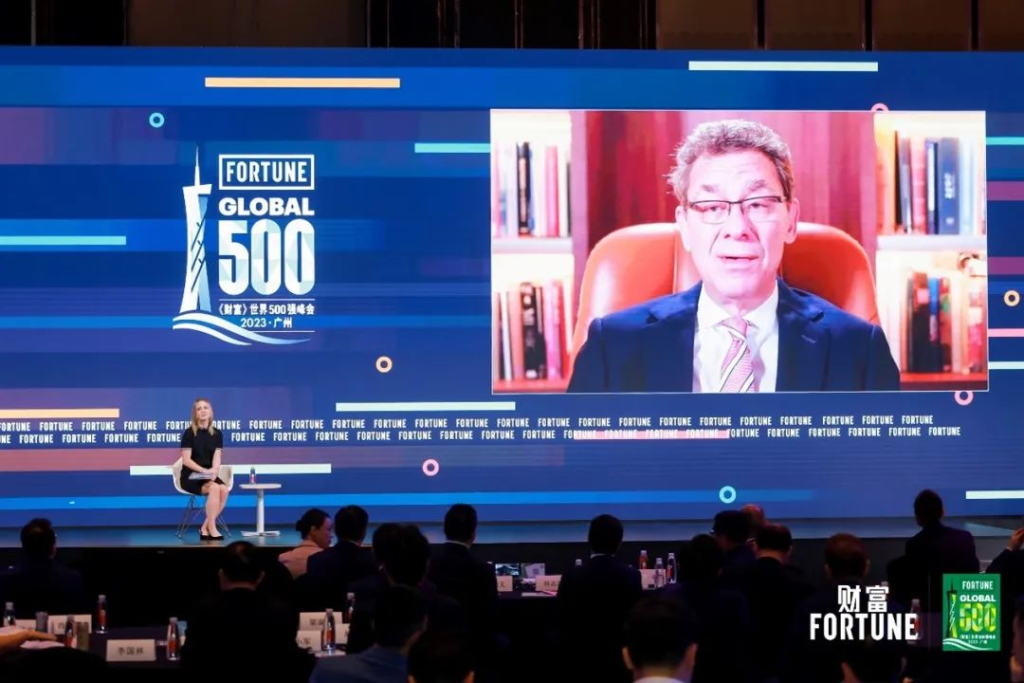
辉瑞公司董事长兼首席执行官艾伯乐(Dr. Albert Bourla)的个人简介
艾伯乐(Albert Bourla)于2019年1月1日成为辉瑞公司首席执行官。此前,艾伯乐担任辉瑞首席运营官(COO),负责公司的商业战略、制造和全球产品开发等职能。之前,艾伯乐曾任辉瑞创新医疗集团(PIH)总裁,负责炎症与免疫、内科、肿瘤、罕见病、疫苗及健康药物业务。他还创建了“患者和健康影响小组”,致力于增加患者可及性的解决方案、展示我们的创新价值并力保商业模式创新的延展性。
艾伯乐在辉瑞工作了将近25年,在多个市场和学科领域担任过高级全球职位。此前,他还曾担任辉瑞全球疫苗、肿瘤和健康药物部的集团总裁,以及辉瑞核心产品业务总裁兼总经理。
艾伯乐于1993年加入辉瑞的动物健康保健部,担任希腊技术部门总监。他在2001年前往辉瑞纽约总部担任美国动物保健业务集团营销总监之前,一直在欧洲市场担任动物健康业务的管理工作。2004年,他成为业务开发与新产品市场推广副总裁,负责动物保健业务全球许可和收购活动以及研发的投资组合业务。2006年,他被任命为欧洲、非洲以及中东地区总裁,并于2009年他又被赋予亚太地区的管理职责。艾伯乐是兽医学博士,拥有亚里士多德大学兽医学院繁殖生物技术博士学位。他还是辉瑞公司董事会、辉瑞基金会和纽约合作伙伴的成员。
Q1:在过去几年,我们经历了疫情,疫苗以惊人的速度被开发出来,数十亿剂疫苗在全球分配给普罗大众。您必须重整供应链才能实现这一目标。现在,我们的企业面临着新的挑战和新的商机。首先,我想谈谈你们在中国所做的事情。今年早些时候,辉瑞在中国签署了一个与《“健康中国2030”规划纲要》有关的协议,是否能够先介绍一下辉瑞在中国的下一步计划?
艾伯乐:科技发展的速度日新月异,所以我们必须利用科技的发展来造福人类。辉瑞在中国已经有几十年的发展历程,我们在中国有庞大的商业网络,有研发中心和数千名员工。辉瑞这一品牌获得了广泛的消费者群体及中国政府的信任和支持。辉瑞会继续扎根中国、深耕中国,中国对于我们来说非常重要,中国政府的支持对于我们的商业发展也非常重要。 CXO UNION-CXO联盟(cxounion.cn)
中国政府的规划非常具有前瞻性,其整体目标和使命非常清晰。《“健康中国2030”规划纲要》奠定了中国在2030年之前的健康战略,将造福中国人民。我们也意识到,必须使商业规划与中国的健康战略保持一致的步伐,这是能够产生最佳影响的、最可靠的方式。
Q2:辉瑞如今在很多方面都与您刚接手时不同。您在今年5月说过,新冠疫情将不再是我们工作的中心。您对辉瑞新的关注点是什么?您在书中谈到了如何真正激励团队去做不可能的事情,并给出一句座右铭:时间就是生命。如果不够快,生命就处于危险之中。当世界发生日新月异的变化时,辉瑞如何应对下一个挑战?
艾伯乐:在疫情期间,辉瑞非常荣幸能够带来世界上少有公司能够产生的影响。我们将资金投入疫苗和药物研发,不仅因此获得了财务回报,也从人们身上获得了爱,从世界各国的政府和消费者中得到了信任。人们通常会说,“我接种了你们(辉瑞)的三针/四针/五针疫苗”,这对我来说意义重大,因为这是消费者与我们互动的一种特别的方式。
过去几年,我们的重心是疫苗的开发和分配。疫情之后的世界已经完全不同,这一点对于辉瑞来说非常重要。一个充满挑战的时机已经过去了,世界不是一成不变的。我们现在进入了一个新的时期,需要不同的技能、不同的目标来引领公司应对下一项使命。 CXO UNION-CXO联盟(cxounion.cn)
正如你提到的,在生物医药行业,时间就是生命。如果我们能够提前一年带来癌症药物,这对父母来说,意义完全不同,将使他们能够看到女儿毕业、参加儿子的婚礼。我们高度意识到这样做对社会的责任,所以辉瑞必须争分夺秒地进行新药开发。
那么我对辉瑞新的关注点是什么?辉瑞会继续通过医药的创新和发展来改变患者的生活,我们的资金、资源、技术将投入到新药的开发当中。
我们有非常雄心勃勃的目标,这种信心来自疫情期间的经验。新冠疫情爆发后,我们用8个月而非8年,开发出能够拯救数百万人生命的疫苗。但是我们经常自问,能否以研发新冠疫苗的速度来应对癌症这样的顽疾?肿瘤学和癌症是我们现在关注的重点。我想,这也是人类面临的一个重大使命。
Q3:我们都希望能看到癌症的终结。你觉得需要多快才能实现这一目标?mRNA疫苗是应对癌症这类顽疾的关键吗?
艾伯乐:我认为多种技术将在其中发挥关键作用。但谈到攻克癌症领域的相关技术,我相当乐观。因为科学已经取得了长足进步,癌症生物学的研究非常先进。现在,我们非常了解为什么癌症会产生;为什么有些药物有效,然后又失效;为什么15年后会发生转移。我们了解驱动某种癌症的基因是什么。在此基础上,就可以运用化学、医学等方面的专业知识和技术,找到能够解决问题的靶标和分子。 CXO UNION-CXO联盟(cxounion.cn)
在这个领域,我认为将立即看到持续的进展。每一年,每个月,都会有新药、新的治疗技术进入市场,不仅来自辉瑞,而是来自所有的生物科技公司和制药公司。比如,我们刚开始推出一种治疗白血病的药物,也继续在乳腺癌和前列腺癌等影响大众的癌症领域进行创新。在接下来的十年里,将年复一年地出现重大进步,未来癌症患者的生活将与今天的情况非常不同。
Q4:您说过,将在未来18个月推出19种新药,这是前所未有的速度。在新冠疫情期间,药物和疫苗的运输及分销的速度非常快,您从中获得的经验如何用于制药创新?
艾伯乐:我想最重要的一点是,要把“人”放在我们整个商业的核心。以前,我们可能无法想象要在短时间内开发疫苗,并且制造、分销数十亿剂疫苗,但这一切在疫情期间都实现了。把不可能变成可能的经历,有助于我们应对这个快速发展的世界。人类的聪明才智甚至可以扭转最具挑战性的问题。当你拥有这种文化时,这是一个非常大的竞争优势。
在我们这次推出的19款新产品中,有18种在技术上已经完全成熟,正在进入市场;只有一个我们仍在等待数据,希望能够成功,将在未来推出。我认为这样的目标将为整个组织带来巨大的能量,从而为世界各地的患者提供重要的服务,他们正在寻求这些新的药物和技术创新,将治疗标准提升到更高水平,以便他们能够看到自己的孩子和父母过上更好、更健康的生活。 CXO UNION-CXO联盟(cxounion.cn)
Q5:据我所知,辉瑞在疫苗研发方面投入了约100亿美元,付出了巨大的精力。但在研发之初,并不完全知道哪种疫苗会起作用,或者一种疫苗是否会起作用。在巨大的投入与疫苗成本、疫苗价格必须保持可负担性方面会面临矛盾,你们如何应对这个矛盾?我想知道,作为一名领导者,你如何在对公司有利和对世界有利之间取得平衡?
艾伯乐:这种矛盾关系是一直存在的。在疫情期间,我们针对不同收入的国家制定了分层级的疫苗分销战略。对于高收入国家,为向公民免费提供疫苗,政府给予了大力的支持,但是他们必须要以一定的价格来支付疫苗;对于中等收入的国家,我们会给予他们50%的折扣;对于低收入国家,我们是按成本提供疫苗的。通过不同的协议将疫苗提供给不同的国家,可以确保低收入国家免费获得疫苗。
不同国家获取疫苗的方法不同,在疫情期间,我们从一开始就决定要以免费提供疫苗的策略来支持低收入国家。在去年的世界经济论坛上,我们推出了“健康世界协议”,辉瑞公司将向生活在世界上45个最贫困国家的12亿人提供药物,不仅仅是疫苗,包括我们拥有的所有专利或非专利药物。这些成本并非研发和管理费用,而是制造并分销的一部分。
还有一些非洲国家,比如卢旺达,他们也正从上述协议当中获益,辉瑞也在为该国从未获得这些产品的人,能够使用最先进的技术提供帮助。当然,我希望其他国家政府也能够通过类似的策略和协议来获取这些药物,这样我们就可以推动非洲的健康发展。
Q6:作为一家在华运营的跨国企业,辉瑞如何鼓励更多的全球合作来实现可持续发展目标和健康目标?
艾伯乐:我想,对于商业和企业来说,我们可以成为各国政府之间合作的桥梁。在中国,辉瑞就获得了中国政府的大力支持。吸引我们的不仅是中国的营商环境,除了在中国开展业务,我们也有兴趣与中国的科学界合作,一同进行新药的创新和开发,并将中国的创新成果带到全世界。作为一家全球性公司,我们有足够的规模来做到这一点。
我们看到了中国新药开发领域的飞速发展。目前,中国涌现了越来越多生物科技初创企业,其中一些取得了卓越的成果。我们可以帮助中国的生物医药企业做得更好。我希望在未来几年中,我们能够有具体的合作实例,有助于为两国合作带来更好的氛围。 CXO UNION-CXO联盟(cxounion.cn)

翻译:
Dr. Albert Bourla, Chairman and CEO of Pfizer: How do you make the impossible possible again?
Pandemics, political instability, climate change and macroeconomic uncertainty have taken their toll on companies operating globally, loosening the grip of big business on the world. For Fortune 500 companies, how can they overcome these complexities while remaining agile and innovative to make the impossible possible again? CXO UNION-CXO联盟(cxounion.cn)
A profile of Dr. Albert Bourla, Chairman and Chief Executive Officer of Pfizer
Albert Bourla became Chief Executive Officer of Pfizer on January 1, 2019. Previously, Eberle served as Pfizer’s Chief Operating Officer (COO), responsible for the company’s business strategy, manufacturing and global product development functions. Previously, Ebbler was President of Pfizer’s Innovative Healthcare Group (PIH), where he was responsible for the Inflammation and Immunity, internal medicine, oncology, rare diseases, vaccines and health Medicines businesses. He also created the Patient and Health Impact Group, which focuses on solutions that increase patient access, demonstrate the value of our innovations, and ensure the scalability of business model innovations.
Eberle has been with Pfizer for nearly 25 years, holding senior global positions in a number of markets and subject areas. Previously, he served as Group President of Pfizer’s Global Vaccines, Oncology and Health Pharmaceuticals Division and as President and General Manager of Pfizer’s core Products business.
Eberle joined Pfizer’s Animal Health Division in 1993 as Director of Technology for Greece. He managed the animal health business in Europe before moving to Pfizer’s New York headquarters in 2001 as group Marketing Director for the Animal Health Business in the United States. In 2004, he became Vice President of Business Development and New Product Marketing, responsible for the portfolio of global licensing and acquisition activities and research and development for the Animal Health business. In 2006, he was appointed President of Europe, Africa and the Middle East, and in 2009 he was given responsibility for the Asia Pacific region. Ebbler is a doctor of Veterinary Medicine and holds a PhD in reproductive Biotechnology from the Faculty of Veterinary Medicine of Aristotle University. He is also a member of the Pfizer Board of Directors, the Pfizer Foundation and New York Partners.
Q1: In the past few years, we have experienced outbreaks, vaccines have been developed at an astonishing rate, and billions of doses have been distributed globally to the general population. You have to restructure your supply chain to make this happen. Now, our businesses face new challenges and new business opportunities. First, I’d like to talk about what you’re doing in China. Earlier this year, Pfizer signed an agreement in China related to the “Healthy China 2030” plan Outline. Can you tell us about Pfizer’s next step in China?
Abel: Technology is moving at such a rapid pace that we have to use it for the benefit of humanity. Pfizer has been in China for decades, and we have a large business network in China. With research and development centers and thousands of employees. The Pfizer brand has gained the trust and support of a wide range of consumers and the Chinese government. Pfizer will continue to be deeply rooted in China, China is very important to us. And the support of the Chinese government is very important to our business development. CXO UNION-CXO联盟(cxounion.cn)
The Chinese government’s planning is very forward-looking and its overall goals and mission are very clear. The Outline of the Healthy China 2030 Plan lays down China’s health strategy until 2030, which will benefit the Chinese people. We also recognize the need to align business planning with China’s health strategy at a pace that is the surest way to have the best impact.
Q2: Pfizer is in many ways different today than it was when you took over. You said in May that the COVID-19 pandemic would no longer be at the center of our work. What is your new focus for Pfizer? You talk in the book about how to really motivate teams to do the impossible and give a motto: Time is life. If it’s not fast enough, lives are in danger. As the world changes rapidly, how does Pfizer respond to the next challenge?
Abel: Pfizer is proud to have had an impact during the pandemic that few companies in the world have had. We invest in vaccines and drugs, and not only do we get financial returns for it. But we also get love from people and trust from governments and consumers around the world. People often say, “I got your (Pfizer) three/four/five shot vaccine,” and that means a lot to me because it’s a special way for consumers to engage with us.
Over the past few years, our focus has been on vaccine development and distribution. The post-pandemic world is a very different place, and that’s important for Pfizer. A challenging time has passed, and the world is not static. We are now entering a new period that will require different skills and different goals to lead the company to its next mission. CXO UNION-CXO联盟(cxounion.cn)
As you mentioned, in the biomedical industry, time is of the essence.
“If we can bring cancer drugs a year earlier, it will make all the difference to parents, enabling them to see their daughter graduate and attend their son’s wedding.” We are highly aware of our social responsibility to do so, so Pfizer must race against time to develop new drugs.
So what’s my new focus for Pfizer? Pfizer will continue to change the lives of patients through innovation and development of medicine. And our capital, resources and technology will be invested in the development of new drugs.
We have very ambitious targets, and that confidence comes from experience during the pandemic. In the wake of the COVID-19 pandemic. It took eight months, not eight years, to develop a vaccine that could save millions of lives. But we often ask ourselves, can we tackle a disease as stubborn as cancer at the pace of developing a COVID-19 vaccine? Oncology and cancer are our focus right now. I think this is also a major mission facing mankind.
Q3: We all want to see the end of cancer. How fast do you think it will take to get there? Are mRNA vaccines the key to fighting stubborn diseases like cancer?
Abel: I think a variety of technologies will play a key role in this. But when it comes to conquering cancer, I’m pretty optimistic. Because science has come a long way, the study of cancer biology is very advanced. Now, we know a lot about why cancer occurs; Why some drugs work and then fail; Why the transfer happened 15 years later. We know what genes drive certain cancers. On this basis, professional knowledge and technology in chemistry, medicine, etc. can be used to find targets and molecules that can solve the problem. CXO UNION-CXO联盟(cxounion.cn)
This is an area where I think we will see immediate and sustained progress. Every year, every month, new drugs, new treatments come to market, not just from Pfizer. But from all biotech companies and pharmaceutical companies. For example, we’ve just launched a drug to treat leukemia. And we continue to innovate in cancers that affect the general public, like breast and prostate cancer. The next decade will see major advances year after year. And the life of a cancer patient in the future will be very different from what it is today.
Q4: You have said that 19 new drugs will be launched in the next 18 months, which is an unprecedented pace. During the COVID-19 pandemic, drugs and vaccines have been transported and distributed very quickly. How can you apply the lessons learned to pharmaceutical innovation?
Abel: I think the most important thing is to put people at the heart of our entire business. Previously, it might have been unimaginable to develop a vaccine in such a short period of time. And to manufacture and distribute billions of doses, but all this has been achieved during the pandemic. The experience of making the impossible possible helps us cope with this fast-moving world. Human ingenuity can turn around even the most challenging problems. When you have that culture, it’s a very big competitive advantage.
Of the 19 new products we launched this time, 18 are technically fully mature and entering the market. Only one we are still waiting for data and hope to be successful will be launched in the future. I think a goal like this will bring tremendous energy to the entire organization and thus provide an important service to patients around the world who are looking to these new medicines and technological innovations to raise the standard of care to a higher level so that they can see their children and parents living better, healthier lives.” CXO UNION-CXO联盟(cxounion.cn)
Q5: As far as I know, Pfizer has invested about $10 billion in vaccine research and development. But at the beginning of development, it was not entirely known which vaccine would work, or whether a vaccine would work at all. How do you deal with the contradiction between the huge investment and the cost of the vaccine and the need to keep the price of the vaccine affordable? I wonder, as a leader, how do you balance what’s good for your company and what’s good for the world?
Abel: This paradox is always there. During the pandemic, we developed a tiered vaccine distribution strategy for countries with different incomes. For high-income countries, there is strong government support to provide free vaccines to citizens. But they must pay a certain price for the vaccines; For middle-income countries, we will give them a 50% discount. For low-income countries, we provide vaccines at cost. Providing vaccines to different countries through different agreements ensures free access to vaccines in low-income countries. CXO UNION-CXO联盟(cxounion.cn)
Different countries have different ways of accessing vaccines, and during the pandemic, we decided from the beginning to support low-income countries with a strategy of providing vaccines free of charge. At the World Economic Forum last year, we launched the Healthy World Agreement, where Pfizer will provide 1.2 billion people living in 45 of the world’s poorest countries with access to medicines, not just vaccines, but all of our patented and generic medicines. These costs are not R&D and administrative expenses, but part of manufacturing and distribution.
Other African countries, such as Rwanda, are also benefiting from these agreements. And Pfizer is helping people in that country who have never had access to these products have access to the most advanced technologies. Of course, I hope that other governments will be able to access these medicines through similar strategies and protocols. So that we can promote healthy development in Africa.”
Q6: As a multinational operating in China, how can Pfizer encourage more global collaboration to achieve the Sustainable Development Goals and health goals?
Abel: I think for business and enterprise, we can be a bridge of cooperation between governments. In China, Pfizer has received strong support from the Chinese government. It is not only the business environment in China that attracts us, in addition to doing business in China. We are also interested in collaborating with the Chinese scientific community to innovate and develop new drugs and bring Chinese innovation to the world. As a global company, we have the scale to do this.
We have seen the rapid development of new drug development in China. At present, more and more biotech startups have emerged in China, some of which have achieved remarkable results. We can help Chinese biopharmaceutical companies do better. I hope that in the next few years, we can have concrete examples of cooperation, which will help create a better atmosphere for cooperation between the two countries.
本文由CXO UNION-CXO联盟(cxounion.cn)转载而成,来源于财富FORTUNE;编辑/翻译:CXO UNIONCXO联盟小U。
如需加入CXO UNION(CXO联盟)高管社群,请联系社群小伙伴哦~
免责声明: 本网站(http://www.cxounion.cn/)内容主要来自原创、合作媒体供稿和第三方投稿,凡在本网站出现的信息,均仅供参考。本网站将尽力确保所提供信息的准确性及可靠性,但不保证有关资料的准确性及可靠性,读者在使用前请进一步核实,并对任何自主决定的行为负责。本网站对有关资料所引致的错误、不确或遗漏,概不负任何法律责任。
本网站刊载的所有内容(包括但不仅限文字、图片、LOGO、音频、视频、软件、程序等) 版权归原作者所有。任何单位或个人认为本网站中的内容可能涉嫌侵犯其知识产权或存在不实内容时,请及时通知本站,予以删除。
如需加入CXO UNION(CXO联盟)高管社群,请联系社群小伙伴哦~

免责声明: 本网站(http://www.cxounion.cn/)内容主要来自原创、合作媒体供稿和第三方投稿,凡在本网站出现的信息,均仅供参考。本网站将尽力确保所提供信息的准确性及可靠性,但不保证有关资料的准确性及可靠性,读者在使用前请进一步核实,并对任何自主决定的行为负责。本网站对有关资料所引致的错误、不确或遗漏,概不负任何法律责任。
本网站刊载的所有内容(包括但不仅限文字、图片、LOGO、音频、视频、软件、程序等) 版权归原作者所有。任何单位或个人认为本网站中的内容可能涉嫌侵犯其知识产权或存在不实内容时,请及时通知本站,予以删除。
Search
Popular Posts
-

2024数字化灯塔案例评选申报开启!
“2024数字化灯塔案例评选”于3月正式启动,诚挚欢迎业界同仁自荐和推荐,一起推动产业数字化进程,助力赋能企业…
-

2024 X-Award星盘奖申报通道已开启!
X-Award星盘奖是数字化转型服务、IT服务行业重要的商业奖项,旨在表彰行业里提供杰出数字化转型服务与IT服…
-

2024 N-Award星云奖申报通道已开启!
N-Award是数字化转型领域重要的商业奖项,旨在表彰那些以非凡的远见、超群的领导才能和卓越的成就来激励他人的…