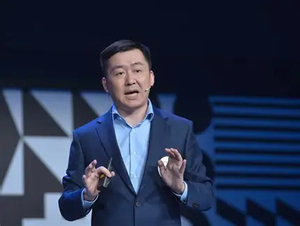
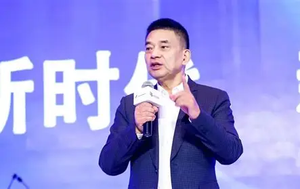
近日,清华五道口在线大讲堂邀请清华大学社会科学学院经济所教授、所长,清华大学五道口金融学院访问教授汤珂,与中国电子副总经理、中国电子数据产业集团董事长、中国数字经济50人论坛委员陆志鹏,围绕“数据要素与数据资产化”主题展开对话,带领我们探索数据要素化治理的科学方法及数据资产化的实现路径。
在这个“数据为王”的时代,数据已经成为了各行各业的核心资源,视为关键要素和战略性资产。将数据治理好、使用好,企业才能实现高质量发展,在竞争激烈的市场中立于不败之地。陆志鹏在数据要素领域长期耕耘,对我国数据要素的产权制度、技术创新、市场发展都有很深入的了解。在本次讲座中,他从数据要素中间态入手,分享了中国电子在数据要素化治理方面所做的理论研究和实践成果,以及他对数据资产化的深刻洞察。
陆志鹏指出,纵观世界,欧美等发达经济体近年来都在加强自身的数据战略部署。我国也从战略高度重视数据发展,去年年底发布“数据二十条”,系统性布局了数据基础制度体系的“四梁八柱”,历史性地绘制了数据要素发展的长远蓝图,具有里程碑式的重要意义。“我国明确提出把数据作为第五大生产要素,这是我们的一个重大战略选择。” 陆志鹏表示,数据正在成为经济社会发展的核心引擎,对于推动数字经济升级、数字政府和数字社会建设、加快技术创新速度,乃至对提升大国竞争实力和保障国家安全都具有重大意义。然而,数据的安全和流通之间存在天然的矛盾。如何才能化解这个矛盾,真正以数字经济强劲动力赋能高质量发展?为此,中国电子与清华大学多个院系合作,在数据要素化治理方面做了大量学术研究,并通过在德阳、郑州、大理、武汉等城市的工程试点,积累了丰富的实践成果。
陆志鹏指出,土地、劳动力、资本和技术,这些生产要素都要经过一个从资源采集、处理到流通的过程。数据要素也不例外,它也需要经过处理和加工,成为数据初级产品,或者说是一种中间态,方可入市流通。“我们将这种中间态称为‘数据元件’。”他解释说,数据元件就是“数据资源+元件模型”,即通过对数据脱敏处理后,根据需要由若干相关字段形成的数据集,或是由数据的关联字段通过建模形成的数据特征,从而实现数据的可确权、可定价、可计量、可监管和安全流通,真正实现数据资源和数据应用的解耦,从而推动数据要素市场化的高效配置。
在谈到数据资产化的实现路径时,陆志鹏表示,数据资产化需要确认权属、明确主体、定义客体与分配收益,要做到主体明确,客体稳定,权属清晰,收益有预期;数据资产化是以数据要素市场化配置为前提,涵盖从数据资源、数据要素到数据产品的形态演变和价值蝶变,并且这三种形态都可以形成数据资产。据了解,中国电子目前正在温州和深圳参与数据资产化工程试点。“推进数据资产化,能够为我们带来巨量的新资产和新财富,进而为推动经济增长和扩大就业提供更广阔的空间。”他说。
在主题分享结束后,汤珂与陆志鹏还围绕企业如何做好数据治理、公共数据运营、数据科学的发展前景、数据时效性对数据价值的影响、数据保险等话题展开了讨论,分享他们的专业见解和判断。
翻译:
Lu Zhipeng: Promote data elements and data assets, and seize major opportunities for data development
Recently, Tsinghua Pudaokou Online Lecture Hall invited Tang Ke, professor and director of the Institute of Economics, School of Social Sciences, Tsinghua University, visiting Professor of Pudaokou School of Finance, and Lu Zhipeng, Deputy General manager of China Electronics, chairman of China Electronic Data Industry Group, and member of China Digital Economy 50 Forum, to start a dialogue on the theme of “Data elements and data assets”. Lead us to explore the scientific method of data factor governance and the realization path of data assets.
In this “data is king” era, data has become the core resource of all walks of life, as a key element and strategic asset. With good data governance and use, enterprises can achieve high-quality development and be invincible in a highly competitive market. Lu Zhipeng has worked in the field of data elements for a long time, and has a deep understanding of the property rights system, technological innovation and market development of data elements in China. In this lecture, he started from the intermediate state of data elements, shared the theoretical research and practical achievements of China Electronics in data factor governance, as well as his profound insight into data assets.
Lu Zhipeng pointed out that throughout the world, developed economies such as Europe and the United States have strengthened their data strategic deployment in recent years. China also attaches great importance to the development of data from a strategic height, the end of last year issued the “twenty data”, systematically laid out the “four beams and eight columns” of the data basic system, and historically drew a long-term blueprint for the development of data elements, which is of landmark significance. “China has made clear that data is the fifth factor of production, which is a major strategic choice for us.” Lu Zhipeng said that data is becoming the core engine of economic and social development, which is of great significance for promoting the upgrading of the digital economy, the construction of digital government and digital society, accelerating the speed of technological innovation, and even improving the competitive strength of major countries and ensuring national security. However, there is a natural tension between the security and flow of data. How can we resolve this contradiction and truly enable high-quality development with the strong impetus of the digital economy? To this end, in cooperation with a number of departments of Tsinghua University, China Electronics has done a lot of academic research on data faction-based governance, and has accumulated rich practical results through project pilot projects in Deyang, Zhengzhou, Dali, Wuhan and other cities.
Lu Zhipeng pointed out that land, labor, capital and technology, these factors of production have to go through a process from resource collection, treatment to circulation. Data elements are no exception, it also needs to be processed and processed to become the primary product of data, or an intermediate state, before it can enter the market. “We call this intermediate state the ‘data element.'” He explained that the data component is the “data resource + component model”, that is, through the desensitization of the data, the data set formed by a number of related fields according to the need, or the data characteristics formed by the correlation fields of the data through modeling, so as to achieve the data certainty, pricing, quantifiable, regulated and safe circulation, and truly realize the decoupling of data resources and data applications. Thus promote the efficient allocation of data elements in the market.
When talking about the realization path of data assets, Lu Zhipeng said that data assets need to confirm the ownership, clear the subject, define the object and distribute the income, to make the subject clear, the object is stable, the ownership is clear, and the income is expected; Data capitalization is based on the market-oriented allocation of data elements, covering the form evolution and value adjustment from data resources, data elements to data products, and these three forms can form data assets. It is understood that China Electronics is currently participating in the pilot data assets project in Wenzhou and Shenzhen. “Promoting data capitalisation can bring us huge amounts of new assets and wealth, which in turn provides a broader scope for economic growth and job creation.” ‘he said.
After the theme sharing, Tang Ke and Lu Zhipeng also discussed how to do a good job in data governance, public data operation, the development prospect of data science, the impact of data timeliness on data value, data insurance and other topics, sharing their professional opinions and judgments.