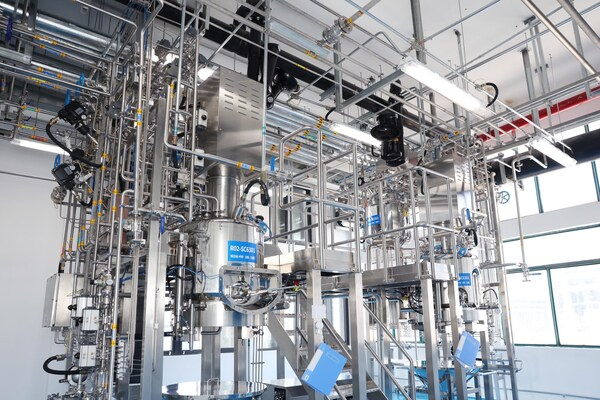
由世界经济论坛牵头并联合麦肯锡开展的全球灯塔网络倡议,代表了当今全球制造业智能制造和数字化的最高水平。入选的“灯塔工厂”也是具有榜样意义的“数字化制造”和“工业化4.0”示范者。CXO UNION-CXO联盟(cxounion.cn)
联合利华正致力于通过数字化、智能制造的升级,持续提升供应链的灵活性和高效性。近年来,凭借人工智能模型、数字化创新工具、柔性生产线、全程自动化操作的工厂等优势,联合利华的合肥工业园、太仓冰淇淋工厂和天津调味品工厂先后被评为“灯塔工厂”。至此,联合利华在全球共6家灯塔工厂,中国占据了半壁江山。

韩女士负责全球供应链管理业务及中国和北亚地区的供应链数字化转型,她带领三家联合利华工厂获评“端到端灯塔工厂”,可谓战绩赫赫。
Q1:联合利华供应链这几年遇到了哪些挑战,为什么要推广数字化转型?
联合利华食品营养业务首席供应链执行官韩芳珺:在联合利华,不同业务单元的挑战有所不同。在个人和家庭洗护用品方面,我们不断自我挑战,做更高端、更创新的产品组合,更快速的新产品落地或者更多的定制化。
在食品业务方面,主要目标是在2025年以前,服务超过100万家B端餐饮用户,带给消费者和食品营养品用家更美味、更健康的产品。从这个使命来讲,我们的挑战不只是研发更好、更健康的产品,更是要精准定位目标客户和目标用家。在一二线客户持续发展的同时,向更广阔的地区和城市渗透。
同时,不同业务也有一些共性的挑战。CXO UNION-CXO联盟(cxounion.cn)
第一,当前业务模式呈多元化。直播、拼多多、抖音等新电商的蓬勃发展,给业务带来很多新的增长。新品的研发和迭代很快,需求的波动性大,多品种、小批量的个性化产品需求对我们整个供应链、生态伙伴、工厂、物流在柔性、灵活性和反应速度上都提出了更高的要求。CXO UNION-CXO联盟(cxounion.cn)
第二,业务的生态圈和供应链的生态圈越来越多样,也越来越复杂。
随着业务的扩展,需要合作的生态圈伙伴可能不是以倍计、以10倍计,有的时候是以百倍计在增长,依靠过去的人海战术已经没办法满足了,传统的运作方式显然已经不能适应现在的客户、市场和业务的需求。
Q2:按照传统的运营模式,由于变化太大了,再勤勉也做不到(更)敏捷、更快速、更下沉、更ToC化,只能靠数字化转型来实现,这是一个非常鲜明的主题。在打造灯塔工厂的过程中,您遇到了怎样的困难?又是如何加以解决的?
联合利华食品营养业务首席供应链执行官韩芳珺:回顾这几年的历程,我觉得挑战和机遇主要来自三个方面。第一,数字化的方向对还是不对?是优先自动化还是信息的数字化?用例往哪个方向走,先走IT,还是OT,还是走IT和OT的integration(集成)?CXO UNION-CXO联盟(cxounion.cn)
第二,试错成本应该怎样控制?因为总是有一个trial and error(试错)的过程,没有失败就不可能有成功。怎样把失败的试错成本控制到最低,也是需要不断考虑和探讨的。CXO UNION-CXO联盟(cxounion.cn)
第三,团队从愿景到理念,再到技能,实现共同认知和具备岗位充足能力是企业面临的共同挑战。
如何解决?第一,大家要统一思想。就像前面所说的,用传统的方式勤能补拙,可以把效率提高到150%,甚至200%,但是当你的需求以十倍、百倍增长时,传统的方式是不可能完成的。因此,即使数字化转型很困难,方向看不清楚,也必须要统一思想,坚信数字化是唯一的出路,是唯一正确的方向。CXO UNION-CXO联盟(cxounion.cn)
第二,试错成本应该怎样控制到最低,怎样更快地培养和满足内部所需的能力和技能。我们的体会是,放开思想,大胆走出去,请进来,不要觉得全都得靠自己的能力,靠自己的团队。我们可以走出去,将生态伙伴请进来,大家一起蹚出一条更好的路。CXO UNION-CXO联盟(cxounion.cn)
Q3:对此我深有体会。一些高管告诉我,打造灯塔工厂,首先公司一把手要重视,他的角色是引路人,或者宣贯者和促进者,指明大方向。第二个,您讲到“走出去,请进来”,大规模地do and see(边做边看),因为看见了,所以相信。联合利华跟很多国内的初创企业合作,请进来可能有些风险,会有一些试错,但也是追求快速、实现敏捷的过程,如何平衡?
联合利华食品营养业务首席供应链执行官韩芳珺:首先,要培养一种企业文化,从某种程度上鼓励或者激励团队去试错。CXO UNION-CXO联盟(cxounion.cn)
初创企业对试错的容忍度会更高,也愿意跟我们投资,做一些新的东西。这确实需要有一定比例的投资为试错做准备,这部分可能是没有回报的。CXO UNION-CXO联盟(cxounion.cn)
Q4:最让您感到骄傲的案例是什么?数字化转型对组织和个人带来的最大变化又是什么?
联合利华食品营养业务首席供应链执行官韩芳珺:在四五年里,联合利华的数字化布局从第一家生产个人和家庭洗护用品的合肥工厂,拓展到太仓的冰淇淋生产基地,再扩展到天津的食品工厂,我们用比较短的时间,把第一家的家庭和个人洗护经验复制和迭代到冰淇淋工厂,再迭代到食品工厂,让大家相信,只要有对的理念、对的方法、对的合作伙伴,数字化经验可以很快复制到不同行业。特别是太仓工厂是全球第一家冰淇淋灯塔工厂,天津工厂是全球第一家调味品灯塔工厂,我们对不同的品类去复制、去迭代、去推广,这是我感到骄傲的案例。CXO UNION-CXO联盟(cxounion.cn)
Q5:从合肥到太仓再到天津,从1到N的复制推广是怎样实现的?
联合利华食品营养业务首席供应链执行官韩芳珺:我有两点心得。第一,虽然不同的业务板块挑战不一样,但大部分是共通的。团队很清楚,数字化方案不只是成功应用在某一个事业部或者某一个品类上,而是可以成功应用在任何品类。
第二,要凝聚起对相关品类非常有深度,有专业知识的那群人,他们在数字化转型过程中的作用是非常重要的。
Q6:打造灯塔工厂,你有没有什么“秘密武器”可以分享?
韩芳珺:我觉得倒也不是什么秘密武器,可以分享三点心得。CXO UNION-CXO联盟(cxounion.cn)
第一,数字化转型一定要以业务为基础。以业务需求为出发点、为合作点、为归结点,把数字化和业务的需求、业务的成长结合起来,跟业务发展相辅相成。
第二,要有信心、理念。我们现在的要求是,工厂和供应链发现任何问题,解决方案必须是100%的数字化。
第三,数字化人才梯队的建设。我们有可能在这四五年解决了很多现在的问题,但是中长期和长远还是会有更多挑战。我们需要有一个人才梯队,确保内部的数字化人才持续迭代。CXO UNION-CXO联盟(cxounion.cn)
就像你说的,看得更多,会发现更多的不足。所以我相信加入灯塔网络只是一个起点,而绝不是终点。
Q7:我这两天体会到,欧美工厂和中国工厂在文化、机制、管理上有一些不同。您也提到,以前是 in China,for China(立足中国,服务中国),现在可能要 in China,for global(立足中国,服务世界)。那么,欧美和中国企业在数字化转型的管理做法上有什么不同?能不能互相学习,互相借鉴。
联合利华食品营养业务首席供应链执行官韩芳珺:这个问题非常好,也不太容易实现。我们的食品营养业务,在全球拥有超过60家工厂,我去实地看过超过一半的工厂,比较有感触。CXO UNION-CXO联盟(cxounion.cn)
我觉得,中国这10年在工厂、生产和供应链的数字化转型等方面,走在很前面,特别是应用和推广做得非常好。我举个例子,联合利华全球有6家灯塔工厂,中国3家,占了半壁江山。数字化转型和灯塔旅程在中国的推进速度比较快,而且相应的生态伙伴合作也非常好。
在欧美,做数字化转型和灯塔工厂跟中国的情况不太一样。首先,大部分中国工厂比较年轻,比如说合肥个人洗护工厂始建于2002年,在中国属于历史比较长了,但也就二十几年。CXO UNION-CXO联盟(cxounion.cn)
欧美很多工厂都超过了100多年,欧洲一半以上的工厂历史比Kilbourn还要长, 100多年历史的工厂也很多,那么历史的包袱相对来说更重一点,因为基础建设的更新迭代比做新的尝试更昂贵也更难一些。
其次,生态伙伴不同。在欧美,新技术和新方案的落地和应用比较慢,也比较少,那么实施的成本就比较高。所以成本的可行性和生态伙伴的多样性和可选性,是一大挑战。
我觉得从in China,for China到现在in China,for global,将更多中国的人才、技术和理念带到欧美,带到全球更多的工厂,将是一个非常振奋人心的旅程。CXO UNION-CXO联盟(cxounion.cn)
Q8:再具体一点,您认为中国哪些东西可以输出欧美?中国的工程师、数字化转型的领导人,从欧美的管理层、经理层又能学到什么?
联合利华食品营养业务首席供应链执行官韩芳珺:举个例子,合肥工厂通过5G实现拉动式的物料处理运作系统,打通整个AGV的指挥中心,从5G到设备POC,到MES,到call-off的互联、互通、互动,把每家工厂本来需要150多号人的纯手工物料系统,转变为纯自动控制的拉动式运作系统,这样的成功案例在国外可以比较快地去复制、实施,因为国外的人力成本比较贵。CXO UNION-CXO联盟(cxounion.cn)
至于向欧美的职业经理人学习,Digital twins(数字孪生)在欧美有很多非常好的用例, Kilbourn 工厂也有很多非常好的用例。据我了解,联合利华在中国已经开始布局Digital twins,但整体而言我在中国见到还不太多,这些案例可以比较快地推广到中国。CXO UNION-CXO联盟(cxounion.cn)
最近一二十年的发展,中国的企业和企业家做了很多自我探讨和探索,在数字化转型的旅程上走得非常好,但在更负责任地企业发展方面,还可以做更多。欧美的“更负责任的数字化转型”,对于受到影响的员工,帮助他们提升技能,共同进步和发展。CXO UNION-CXO联盟(cxounion.cn)
欧美企业对数字化转型给员工、对工人产生的影响是很看重,员工的技能提升,对员工的关爱和培养,我觉得这些是值得中国企业借鉴的。
另一个中国企业这两年在加速改进可持续绿色工厂和清洁能源的转型,国外有些地方比中国开展更早一点,也更快一点,我觉得也可以加以学习。CXO UNION-CXO联盟(cxounion.cn)
Q9:往前看2~3年,您作为联合利华全球食品营养业务首席供应链执行官,未来数字化转型需要做哪些重要的事情?
联合利华食品营养业务首席供应链执行官韩芳珺:一是通过数字化转型打造有领域专长的更精细化的供应链,兼具敏捷和韧性。CXO UNION-CXO联盟(cxounion.cn)
第二,加强供应链的韧性。这几年外部环境的压力,从新冠疫情到全球变暖,农产品收成不稳定等对全球供应链产生非常大的压力,建立端到端的韧性非常重要。CXO UNION-CXO联盟(cxounion.cn)
从这个意义上来说,灯塔工厂除了在自己的工厂做数字化转型,还应该把上游、下游,从供应商到客户全部连在一起,(实现)数字共通,数字共赢。我们在中国这三家是端到端的灯塔工厂,而国外很多灯塔工厂只局限在工厂本身,所以怎么去做端到端的供应链灯塔工厂,我觉得是需要进一步探索和发展的。
第三,我个人非常有激情,也非常想要去做的是让供应链成为对环境和社会向好的力量。数字化转型除了提升效能、节约成本,还可以减碳,做可再生、可持续的农业,减少食品浪费,为消费者提供更健康的产品,这些是我们在数字化转型方面谈的还不够充分的。CXO UNION-CXO联盟(cxounion.cn)
Q10:灯塔工厂以效率、成本为导向形成了一些成功做法,在这个基础上,数字化转型也让到端供应链更加敏捷、更有韧性,并且更可持续,这是一个非常重要的触发转型的目标和趋势。最后,请您总结一两句寄语给正在进行数字化转型的同仁和朋友们。
联合利华食品营养业务首席供应链执行官韩芳珺: Revolution is the accumulation of evolution。翻译成中文的大概意思是 “不积跬步,无以至千里”,或者说最终的质变,是在累积量变后达成的质变。再高远的数字化目标也要一步一步去实现的。最关键是先行动起来,迈出第一步,迈出第二步,再迈出第三步,我们就走在数字化的路上了,然后就能走得更远。CCXO UNION-CXO联盟(cxounion.cn)
数字化转型既要仰望星空,聚焦方向,也要脚踏实地,一步一步按照既定目标去实现。中间可以有试错,出问题,但大方向要对,要有决心,能够走出去,请进来,我觉得是一条光明的康庄大道。

英文翻译:
The Global Lighthouse Network Initiative, led by the World Economic Forum and conducted in conjunction with Mackenzie, represents the highest level of smart manufacturing and digitalization in the global manufacturing industry today. The selected “Lighthouse Factory” is also a model of “digital manufacturing” and “Industrialization 4.0” demonstration.
Unilever is committed to improving the flexibility and efficiency of the supply chain through the upgrading of digital and intelligent manufacturing. In recent years, with the advantages of artificial intelligence models, digital innovation tools, flexible production lines, and fully automated factories, Unilever’s Hefei Industrial Park, Taicang ice Cream factory and Tianjin Seasoning Factory have been rated as “beacon factories”. At this point, Unilever has a total of six lighthouse factories in the world, and China occupies half of the country.CXO UNION-CXO联盟(cxounion.cn)
Ms. Han is responsible for the global supply chain management business and the digital transformation of supply chains in China and North Asia, and she has led three United Lihua factories to be recognized as “end-to-end Beacon Factories”.CXO UNION-CXO联盟(cxounion.cn)
Q1: What challenges has Unilever faced in its supply chain in recent years and why is it promoting digital transformation?
Fang Jun Han, Chief Supply Chain Officer, Unilever Food and Nutrition Business: At Unilever, the challenges are different for different business units. In terms of personal and household care products, we constantly challenge ourselves to do more high-end, more innovative product portfolios, more rapid new product landing or more customization. CXO UNION-CXO联盟(cxounion.cn)
In the food business, the main goal is to serve more than 1 million B-end catering users by 2025, bringing more delicious and healthier products to consumers and food nutrition users. From this mission, our challenge is not only to develop better and healthier products, but also to accurately target customers and target users. While the first and second tier customers continue to develop, they penetrate into broader regions and cities.
At the same time, different businesses have some common challenges.
First, the current business model is diversified. The vigorous development of new e-commerce such as live streaming, Pinduoduo and Tiktok has brought a lot of new growth to the business. The research and development and iteration of new products are fast, the demand is volatile, and the demand for personalized products with multiple varieties and small batches puts higher requirements on the flexibility, flexibility and reaction speed of our entire supply chain, ecological partners, factories and logistics.CXO UNION-CXO联盟(cxounion.cn)
Second, the business ecosystem and the supply chain ecosystem are increasingly diverse and complex.
With the expansion of the business, the need to cooperate with the ecosystem partners may not be multiplied, to 10 times, sometimes a hundred times in the growth, relying on the past crowd tactics have been unable to meet, the traditional mode of operation obviously can not adapt to the current customer, market and business needs. CXO UNION-CXO联盟(cxounion.cn)
Q2: According to the traditional operating model, due to too much change, no amount of diligence can do (more) agile, faster, deeper, more ToC, can only be achieved by digital transformation, which is a very distinct theme. What difficulties did you encounter in the process of building the lighthouse factory? And how to solve it?
Han Fangjun, Chief Supply chain Executive of Unilever’s food and nutrition business: Looking back on the course of the past few years, I think the challenges and opportunities mainly come from three aspects. First, is digital going in the right direction or the wrong direction? Is automation or digitization of information a priority? Which direction do use cases go, IT first, OT first, or integration of IT and OT?
Second, how should trial and error costs be controlled?
Because there is always a process of trial and error, there can be no success without failure. How to control the failure of trial and error cost to the minimum, but also need to continue to consider and explore. CXO UNION-CXO联盟(cxounion.cn)
Third, the team from vision to concept.
And then to skills, to achieve common cognition and have sufficient capacity for the position is a common challenge facing enterprises.
How to solve it? First, we should unify our thinking. As I said before, the traditional way of hard work can compensate for stupid, can increase efficiency to 150%, even 200%, but when your needs are increasing by ten times, a hundred times, the traditional way is impossible to accomplish. Therefore, even if digital transformation is difficult and the direction is not clear, we must unify our thinking and firmly believe that digital is the only way out and the only right direction.CXO UNION-CXO联盟(cxounion.cn)
Second, how to minimize the cost of trial and error, and how to develop and meet the capabilities and skills needed internally more quickly. Our experience is to open your mind, boldly go out, please come in, don’t feel that you have to rely on your own ability, on your own team. We can go out and invite ecological partners in, and we can wade out a better road together.
Q3: I have experienced this. Some executives told me that to build a lighthouse factory, the first person in charge of the company should pay attention to his role as a guide, or a propagator and facilitator, pointing out the general direction. Second, you talk about “go out, please come in,” do and see on a large scale, and because you see, you believe. Unilever cooperates with many domestic startups. Please come in, there may be some risks, there will be some trial and error, but it is also the process of pursuing speed and achieving agility. How to balance?
Fang Jun Han, Chief supply chain Officer, Unilever Food and Nutrition Business: First of all, it is necessary to cultivate a corporate culture that in some way encourages or motivates the team to trial and error.CXO UNION-CXO联盟(cxounion.cn)
Start-ups will be more tolerant of trial and error and willing to invest with us to do something new. It does require a certain percentage of investment in preparation for trial and error, which may not pay off.
Q4: What case are you most proud of? What are the biggest changes that digital transformation will bring to organizations and individuals?
Han Fangjun, Chief Supply Chain Executive, Unilever Food and Nutrition: In four or five years, Unilever’s digital layout expanded from the first factory in Hefei, which produced personal and household care products, to the ice cream production base in Taicang, and then to the food factory in Tianjin. In a relatively short time, we copied and iterated the experience of the first home and personal care to the ice cream factory, and then iterated to the food factory, and convinced everyone that, With the right idea, the right approach, and the right partners, digital experience can quickly be replicated across different industries. In particular, the Taicang factory is the world’s first ice cream lighthouse factory, and the Tianjin factory is the world’s first condiment lighthouse factory. We copy, iterate and promote different categories, which is a case that I am proud of. CXO UNION-CXO联盟(cxounion.cn)
Q5: From Hefei to Taicang and then to Tianjin, how is the replication promotion from 1 to N realized?
Han Fangjun, chief supply chain executive of Unilever’s food and nutrition business: I have two observations. First, while the challenges are different for different business segments, they are mostly common. The team is well aware that the digital solution is not only successfully applied to one business unit or one category, but can be successfully applied to any category. CXO UNION-CXO联盟(cxounion.cn)
Second, to gather a group of people who are very deep and have professional knowledge of relevant categories, their role in the digital transformation process is very important.
Q6: To build a lighthouse factory, do you have any “secret weapons” to share?
Han Fangjun, chief supply chain executive of Unilever’s food and nutrition business:I don’t think it’s a secret weapon. I can share three things.
First, digital transformation must be business-based. Taking business needs as a starting point, as a point of cooperation, as a focal point, combining digitalization with business needs and business growth, and complemicating business development.
Second, we need to have confidence and ideas. Our requirement now is that any problem found in factories and supply chains, the solution must be 100% digital. CXO UNION-CXO Union (cxounion.cn)
Third, the construction of digital talent echelon. We may have solved a lot of the current problems in these four or five years, but there are still more challenges in the medium and long term. We need to have a talent pool to ensure that the internal digital talent continues to iterate.
Like you said, the more you look, the more flaws you find. So I believe that joining the Lighthouse Network is just a starting point, not an end point.
Q7: I have realized in the past two days that there are some differences between European and American factories and Chinese factories in terms of culture, mechanism and management. You also mentioned that before it was in China, for China (based in China, serving China), and now it may be in China, for global (based in China, serving the world). So, what are the differences between the management practices of European, American and Chinese companies in digital transformation? Can we learn from each other, learn from each other.
Fang Jun Han, Chief Supply chain Executive of Unilever’s food and nutrition business: This is a very good question. But it is not easy to achieve. Our food and nutrition business has more than 60 factories around the world. And I have visited more than half of them. CXO UNION-CXO Union (cxounion.cn)
In my opinion, China has taken the lead in the digital transformation of factories, production and supply chains in the past 10 years, especially in application and promotion. For example, Unilever has six lighthouse factories in the world, three in China, accounting for half of the country. Digital transformation and the lighthouse journey are moving faster in China, and the corresponding ecological partnership is also very good. CXO UNION-CXO Union (cxounion.cn)
In Europe and the United States, doing digital transformation and lighthouse factories is not quite the same as in China. First of all, most Chinese factories are relatively young, for example, Hefei personal care factory was built in 2002, which is a long history in China, but it is more than 20 years.
Many factories in Europe and the United States are more than 100 years old, more than half of the factories in Europe are longer than Kilbourn, and there are many factories with a history of more than 100 years, so the burden of history is relatively heavier, because the updated iteration of infrastructure is more expensive and more difficult than making new attempts.
Second, ecological partners are different.
In Europe and the United States, the landing and application of new technologies and new solutions are slower and less, so the cost of implementation is relatively high. So the feasibility of cost and the diversity and choice of ecological partners is a big challenge.
I think it will be a very exciting journey from in China, for China, to now in China, for global, to bring more of China’s talent, technology and ideas to Europe and the United States, to more factories around the world.
Q8: More specifically, what do you think China can export to Europe and the United States? What can Chinese engineers and digital transformation leaders learn from European and American managers?
Han Fangjun, Chief Supply Chain Executive, Unilever Food and Nutrition: For example, the Hefei factory realizes the pull material handling operation system through 5G, and gets through the command center of the entire AGV, from 5G to equipment POC, to MES, to call-off interconnection, interworking and interaction, transforming the pure manual material system that originally required more than 150 people in each factory into a pure automatic control pull operation system. Such successful cases can be replicated and implemented relatively quickly in foreign countries, because foreign labor costs are more expensive. CXO UNION-CXO Union (cxounion.cn)
As for learning from professional managers in Europe and the United States.
There are many very good use cases for Digital twins in Europe and the United States, and there are many very good use cases in the Kilbourn factory. As far as I know, Unilever has begun to lay out the Digital twins in China, but on the whole, I have not seen too many in China, and these cases can be promoted to China relatively quickly.
In the past decade or two.
Chinese enterprises and entrepreneurs have done a lot of self-exploration and exploration, and are well on the journey of digital transformation, but more can be done in terms of more responsible enterprise development. The “More Responsible Digital Transformation” in Europe and the United States will help affected employees upgrade their skills and progress and develop together.
European and American enterprises attach great importance to the impact of digital transformation on employees and workers. The improvement of employees’ skills and the care and training of employees are worth learning from Chinese enterprises, I think.
Another Chinese company has been accelerating the transformation of sustainable green factories and clean energy in the past two years. Some places in foreign countries started earlier and faster than China, and I think we can learn from them. CXO UNION-CXO Union (cxounion.cn)
Q9: Looking ahead 2-3 years, as the chief supply chain Officer of Unilever’s global food and nutrition business, what are the important things you need to do for digital transformation in the future?
Han Fangjun, Chief supply chain Executive of Unilever’s food and nutrition business: One is to build a more refined supply chain with domain expertise through digital transformation, which is both agile and resilient. CXO UNION-CXO Union (cxounion.cn)
Second, strengthen the resilience of the supply chain. In recent years, external environmental pressures, from the COVID-19 pandemic to global warming, and agricultural crop instability have exerted great pressure on the global supply chain, and it is important to build end-to-end resilience.
In this sense, in addition to doing digital transformation in its own factory. Lighthouse Factory should also connect upstream and downstream, from suppliers to customers, (to achieve) digital common and digital win-win. Our three lighthouse factories in China are end-to-end, while many overseas lighthouse factories are only limited to the factory itself. So how to do end-to-end supply chain lighthouse factories, I think it needs to be further explored and developed. CXO UNION-CXO Union (cxounion.cn)
Third, what I’m very passionate about and really want to do is make the supply chain a force for good for the environment and society. In addition to improving efficiency and saving costs. Digital transformation can also reduce carbon, do renewable and sustainable agriculture, reduce food waste, and provide consumers with healthier products, which we have not talked about enough in digital transformation.
Q10: Building on the success of Lighthouse’s efficiency and cost-oriented practices, digital transformation also makes the end-to-end supply chain more agile, resilient, and sustainable, which is a very important goal and trend that triggers transformation. Finally, please summarize one or two words to colleagues and friends who are undergoing digital transformation.
Han Fangjun, chief supply chain executive of Unilever’s food nutrition business: Revolution is the accumulation of evolution. Translated into Chinese, it probably means “no steps, no even a thousand miles”. Or the final qualitative change is the qualitative change achieved after the accumulation of quantitative change. No matter how lofty the digital goal is, it must be achieved step by step. The key is to act first, take the first step, take the second step. And then take the third step, we are on the road to digital, and then we can go further. CXO UNION-CXO Union (cxounion.cn)
Digital transformation is not only to look up at the stars, focus on the direction. But also to be down-to-earth, step by step in accordance with the established goals to achieve. There may be trial and error in the middle, and there may be problems. But the general direction must be right. We must have determination, and we must be able to go out, please come in. I think it is a bright road.
本文由CXO UNION-CXO联盟(cxounion.cn)转载而成,来源于CEO訪談网;编辑/翻译:CXO UNIONCXO联盟小U,审核/翻译:CXO UNIONCXO联盟小C。
如需加入CXO UNION(CXO联盟)高管社群,请联系社群小伙伴哦~
免责声明: 本网站(http://www.cxounion.cn/)内容主要来自原创、合作媒体供稿和第三方投稿,凡在本网站出现的信息,均仅供参考。本网站将尽力确保所提供信息的准确性及可靠性,但不保证有关资料的准确性及可靠性,读者在使用前请进一步核实,并对任何自主决定的行为负责。本网站对有关资料所引致的错误、不确或遗漏,概不负任何法律责任。
本网站刊载的所有内容(包括但不仅限文字、图片、LOGO、音频、视频、软件、程序等) 版权归原作者所有。任何单位或个人认为本网站中的内容可能涉嫌侵犯其知识产权或存在不实内容时,请及时通知本站,予以删除。
如需加入CXO UNION(CXO联盟)高管社群,请联系社群小伙伴哦~

免责声明: 本网站(http://www.cxounion.cn/)内容主要来自原创、合作媒体供稿和第三方投稿,凡在本网站出现的信息,均仅供参考。本网站将尽力确保所提供信息的准确性及可靠性,但不保证有关资料的准确性及可靠性,读者在使用前请进一步核实,并对任何自主决定的行为负责。本网站对有关资料所引致的错误、不确或遗漏,概不负任何法律责任。
本网站刊载的所有内容(包括但不仅限文字、图片、LOGO、音频、视频、软件、程序等) 版权归原作者所有。任何单位或个人认为本网站中的内容可能涉嫌侵犯其知识产权或存在不实内容时,请及时通知本站,予以删除。
Search
Popular Posts
-

2024数字化灯塔案例评选申报开启!
“2024数字化灯塔案例评选”于3月正式启动,诚挚欢迎业界同仁自荐和推荐,一起推动产业数字化进程,助力赋能企业…
-

2024 X-Award星盘奖申报通道已开启!
X-Award星盘奖是数字化转型服务、IT服务行业重要的商业奖项,旨在表彰行业里提供杰出数字化转型服务与IT服…
-

2024 N-Award星云奖申报通道已开启!
N-Award是数字化转型领域重要的商业奖项,旨在表彰那些以非凡的远见、超群的领导才能和卓越的成就来激励他人的…